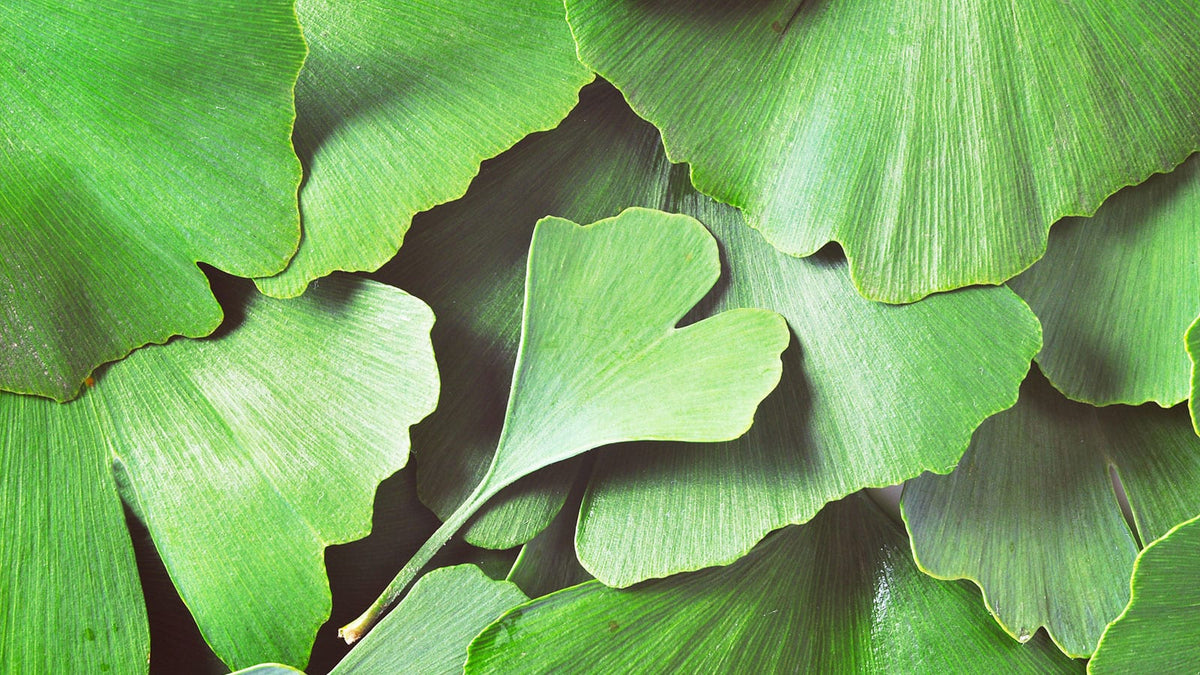
The ginkgo tree is said to have existed on Earth for 300 million years, making it one of the oldest plant species of all. In Asia, it is regarded as a sacred ornamental plant and a venerable source of vitality. In medicine, ginkgo is primarily used to improve age-related cognitive decline, but it has also proven effective in stressful professional and personal situations. Ginkgo leaf extract is available in many forms, such as tablets, capsules, coated tablets, drops, or juices.
The Tree of the Millennium
The ginkgo originates from China and is now cultivated worldwide as a medicinal plant. The tree reaches heights of up to 40 m and an age of approximately 1,000 years. A special feature is its root system. Both underground and on the soil surface, it can form woody thickenings from which shoots or so-called adventitious roots can develop. The ginkgo blossoms in the spring and produces round seeds surrounded by a thick seed coat. In autumn, it sheds its characteristic fan-shaped leaves. The German "Tree of the Year" Board of Trustees named the ginkgo the Tree of the Millennium, calling it a monument to environmental protection and peace.
What is in Ginkgo biloba?
With ginkgo, the secondary plant compounds are of particular interest. Ginkgo extracts contain valuable ingredients such as
flavonoid glycosides, terpene lactones (including ginkgolides A, B, and C), and bilobalide. In addition, the leaves contain ginkgolic acids, which are largely removed during the extraction process due to their toxic and allergenic properties.
How does Ginkgo biloba work?
Ginkgo extracts protect nerve cells and promote blood circulation down to the smallest vessels (microcirculation). Furthermore, they increase the oxygen supply to cells, possess antioxidant properties, and inhibit platelet aggregation. Ginkgo biloba is used for cognitive decline and forgetfulness, as well as for dizziness, balance disorders, and tinnitus. Ginkgo preparations therefore play a role, particularly in degenerative diseases associated with aging.
What should I consider when taking it?
You should not use ginkgo extracts if you are hypersensitive or pregnant. Very rare side effects include gastrointestinal complaints, headaches, or allergic reactions. Ginkgo has a blood-thinning effect, so you should consult your doctor before taking it concurrently with anticoagulants.
• Would you like to know more about Ginkgo biloba? You can read more about it here.