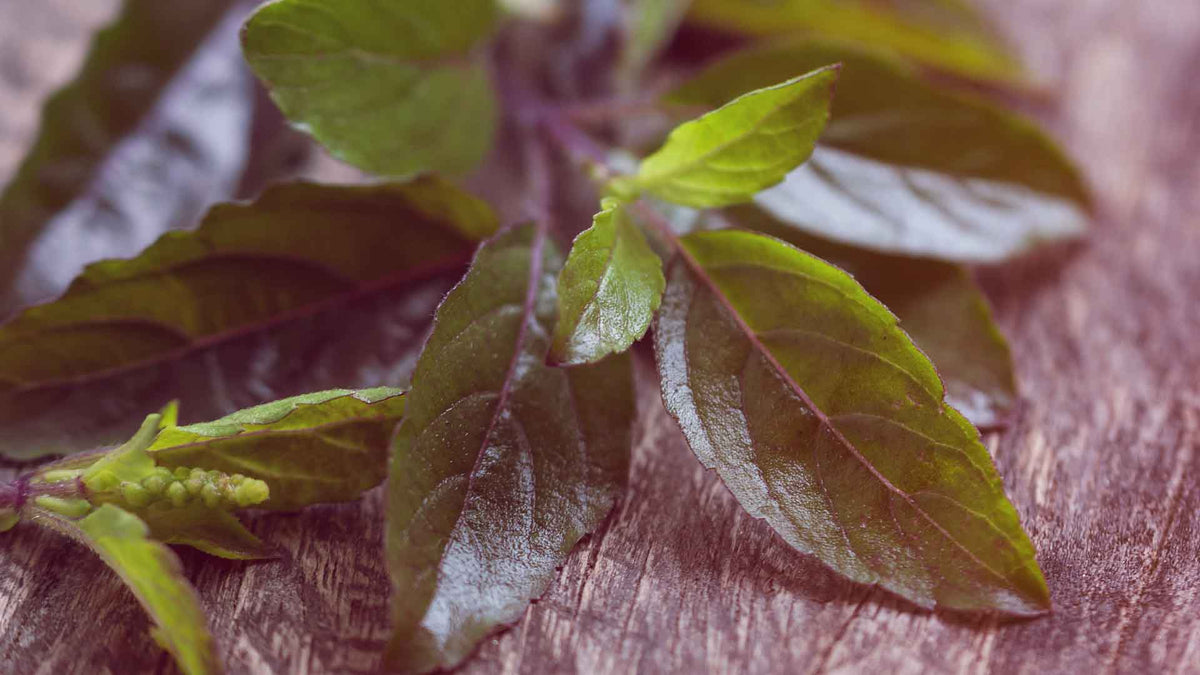
Holy Basil, or Indian basil, is also known by the name "Tulsi." This term comes from Sanskrit and translates to "the incomparable one." And indeed: the medicinal herb, which has been revered in India for thousands of years for its healing powers, is truly incomparable.
What makes Holy Basil so special?
In Hinduism, Tulsi basil is considered the holiest plant of all. It is said that its power is so strong that merely touching it is enough to cleanse the body and "wash away" the sins of the soul. We know from Hindu scriptures that holy basil represents the presence of the supreme Vedic god Vishnu and is intended to bring protection and enlightenment to people. For this reason, the "holy herb" is often found in the courtyards and gardens of India as a spiritual center and a sacred place of prayer.
Tulsi basil, botanically known as Ocimum tenuiflorum L., possesses antioxidant, immune-boosting, antiseptic, digestive, and calming properties, and has a positive effect on cholesterol levels. Its potential applications are diverse.
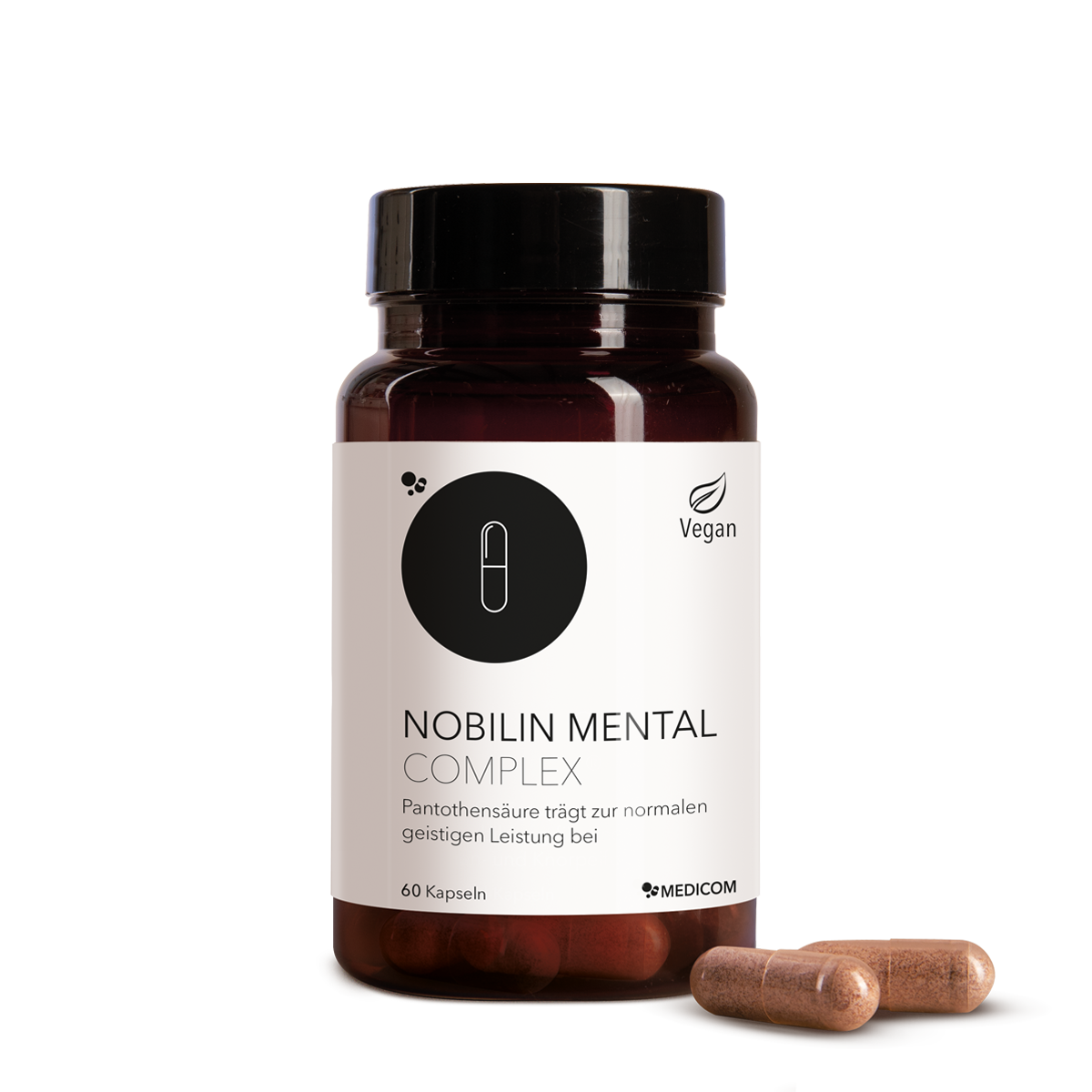
Nobilin Mental Complex
With Lion's Mane medicinal mushroom & 4 B vitamins for the brain
What are the active ingredients in Holy Basil?
In addition to essential oil and the eugenol it contains, which gives it its clove-like fragrance, the plant is rich in flavonoids and tannins. The proportion of antioxidants is therefore significantly higher than in the traditional European version of basil.
- Essential oil, such as eugenol
- Flavonoids
- Tannins
- Antioxidants
How can Indian basil be used?
The "holy basil" is a herbaceous plant that can reach a height of up to 100 centimeters. Its stems are woody, and its feathered leaves often have fine hairs. Indian basil is native to the tropics and subtropics of Asia. There, it has long held a firm place in Ayurvedic healing traditions. It is not without reason that Holy Basil is considered a true "elixir of life" in its homeland of India. The "Queen of Herbs" unfolds its comprehensive effects not only as a tea or as a spice in Thai cuisine.
Potential uses for Indian basil:
- As a spice in Thai cuisine
- As a tea or infusion
- For the heart: Tulsi basil is also said to have a positive effect on cholesterol levels, meaning it can support a heart-healthy diet
- For defense and all-around protection: Holy Basil has antiseptic properties and also promotes the body's natural healing powers. The high content of antioxidants strengthens the immune system and prevents damage from free radicals
- For the stomach and intestines: it has calming, regulating, and digestive effects
- Overall well-being: contributes to general relaxation and the balance of body and mind
Conclusion
Long known in Hinduism, Indian basil is also making its way to us. Thanks to the rich aroma of this basil variety, it can be used not only in the kitchen but also has numerous positive effects on the human organism.
Find products with natural ingredients here.