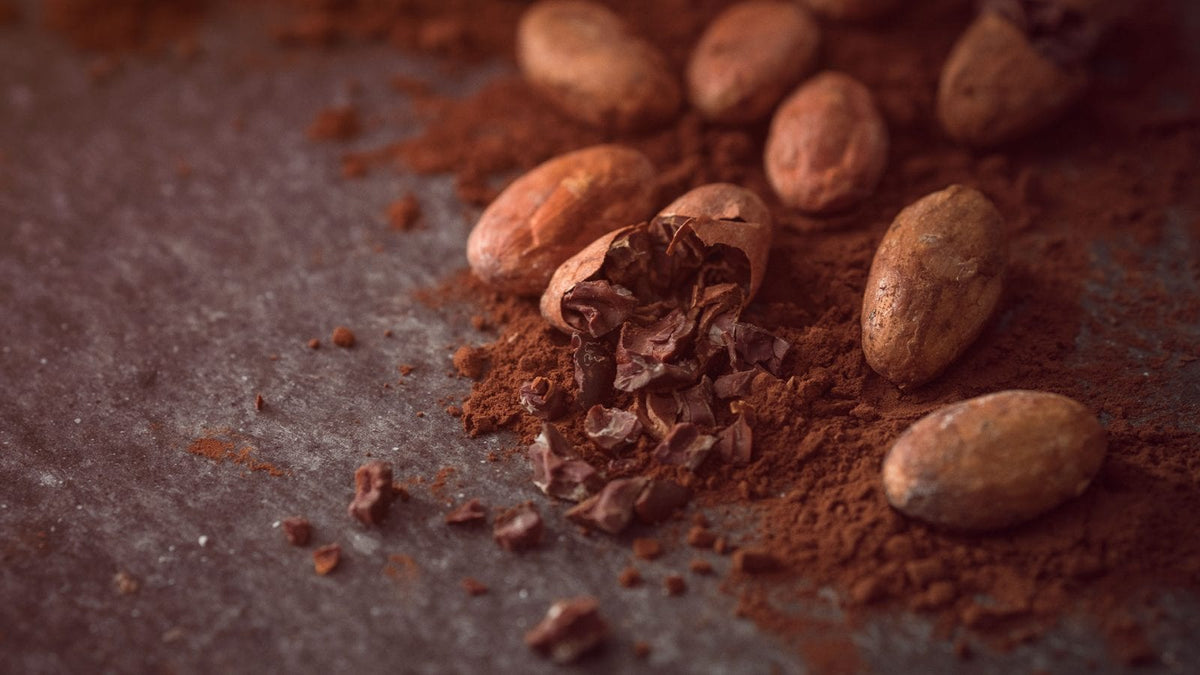
It is not for nothing that the cacao plant is also called "Theobroma cacao," which translates to the "food of the gods." Since the 14th century, cacao has been considered a natural remedy, revered by the indigenous people of South America as a "gift from God." Aztec king Montezuma is said to have consumed up to 50 cups of the sacred "xocólatl" drink daily to maintain his strength and vitality. Beyond the culinary pleasure that brings us sweet moments in the form of chocolate, cacao is also the talk of the town among nutritionists. This is because in its raw form, the superfood cacao boasts particularly healthy ingredients.
History of the cacao bean
On its way from Central America to Europe, the cacao bean found its place during the Renaissance. At first, however, raw cacao did not meet with much approval; it was only when milk and sugar were added that it became the cocoa drink we know today. Until the 19th century, cacao remained a luxury good, as only a few could afford it. The word "cacao" is derived from the Olmec "kakawa" and was later adopted by the Maya. The cacao tree owes the name "Theobroma cacao" (food of the gods) to the Swedish botanist Carl von Linné in the mid-18th century.
Cacao plant
Originally native to the Amazon region, large areas of cacao cultivation are now found primarily in Africa. The slender, evergreen understory tree bears green-yellow to red fruits all year round, which grow to 30 centimeters in length and contain up to 50 seeds: the cacao beans. Due to their bitter taste, the beans are fermented or treated with steam. Their subsequent roasting serves to make it easier to remove the shell and to obtain a mild aroma.
Valuable tonic
As early as the 16th century, raw cacao was sold in pharmacies as an aphrodisiac and tonic. Medical writings from the 16th to 19th centuries mention it repeatedly. In more recent times, nutrition researchers have dedicated themselves extensively to the ancient fruit and have been able to identify around 300 different ingredients. Raw cacao is attributed with numerous health-promoting effects, which is primarily due to its antioxidant properties. Depending on its regional origin, the pure bean contains, in addition to minerals, protein, dietary fiber, and caffeine, valuable polyphenols such as flavanols.
Cacao protects the heart
It is the high flavonoid content, including in particular the flavanols catechin and epicatechin, that makes cacao so valuable. Raw extract even contains five times more epicatechin than an apple. The positive effect of this well-studied secondary plant compound on the cardiovascular system is undisputed. Cacao flavanols improve the elasticity of blood vessels and promote normal blood flow, having mild blood pressure-lowering and anti-inflammatory effects. Cacao offers our heart not only strong antioxidant protection but is also said to have a beneficial effect on the brain and responsiveness.
Natural
Anyone who believes they are doing their health a favor by consuming more chocolates is unfortunately mistaken. In addition to health-promoting polyphenols, many cocoa products provide significant amounts of sugar, which in the long run harms not only the figure but also one's health. Furthermore, the content of flavanols is greatly reduced by the industrial roasting of cacao beans. In order to benefit from the health-promoting, antioxidant ingredients, one should ideally use unfermented, unroasted, natural raw cacao, for example in the form of cacao nibs.
You can find a delicious smoothie recipe with cacao nibs here.