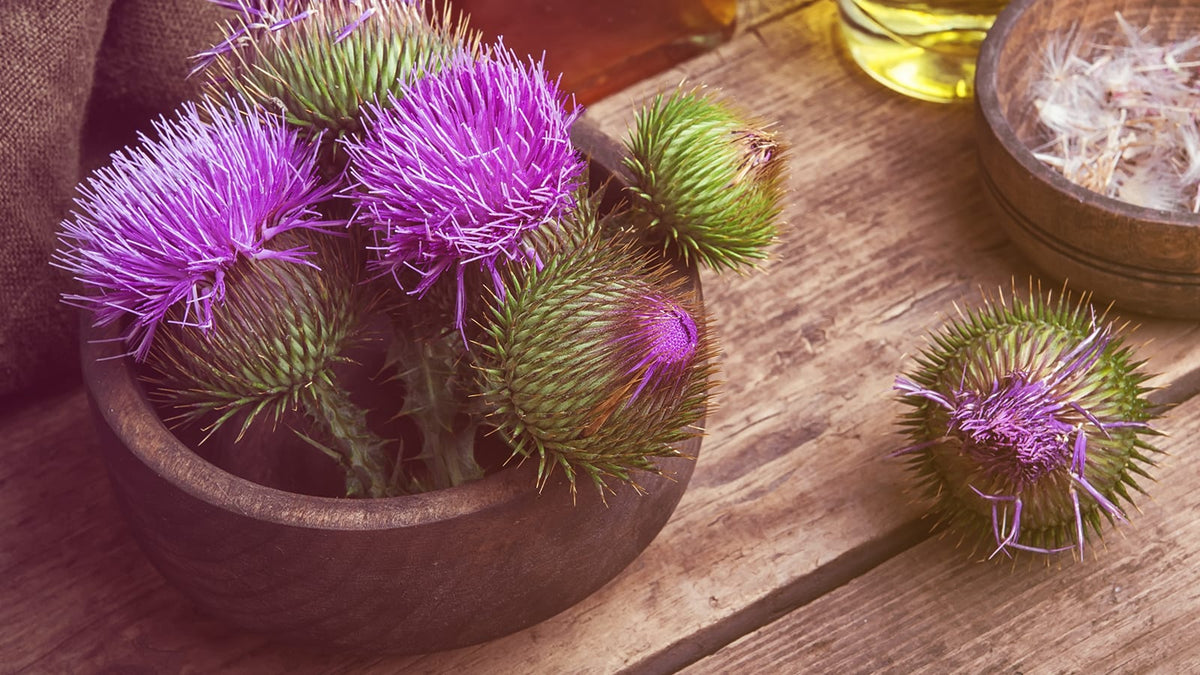
Milk thistle (Silybum marianum) is an annual to biennial plant from the daisy family (Asteraceae) that grows up to 1.5 m tall. Its stem is erect and slightly branched, while its pinnately lobed leaves are white-spotted, hairless, and have whitish thorns along their edges. Milk thistle blooms from June to September, producing purple, spherical flower heads surrounded by pointed bracts. The smooth, elongated achene fruits are shiny black-brown and have a whitish tuft of hair (pappus) at the tip.
Distribution and Use of Milk Thistle
Milk thistle is primarily found in the Mediterranean region but has long since spread to other continents, where it is considered an invasive species. The plant prefers barren, dry, and stony sites along paths and pastures. In the 19th century, medical professionals discovered the healing power of milk thistle fruits for the liver. They are administered for conditions including digestive disorders and inflammatory liver diseases. When crushed, the fruits are used to make infusions, extracts, teas, and tinctures.
Ingredients and Effects
The fruits of the milk thistle contain approximately 3% silymarin, a mixture of the flavanolignan derivatives silybin, isosilybin, silychristin, and silydianin. Furthermore, the plant, also known as St. Mary's thistle, contains fatty oil, including linoleic and oleic acid, as well as protein. These ingredients support the liver by weakening liver-damaging substances and stimulating the regeneration of liver cells. Preparations made from milk thistle fruits are used for conditions including toxic liver damage and as supportive treatment for chronic inflammatory liver diseases. Additionally, such preparations stimulate bile production and provide relief for digestive difficulties with symptoms such as bloating and a feeling of fullness.
Dosage Instructions for Milk Thistle
You should not use milk thistle preparations if you suffer from hypersensitivity to plants in the daisy family or from gallstones. You should also avoid intake if you have a blockage or inflammation of the bile ducts or gallbladder. There are no known side effects, other than the occasional observation of a mild laxative effect. The recommended average daily dose is 12 to 15 g of the herb or milk thistle preparations corresponding to 200 to 400 mg of silymarin.
You can find further information on milk thistle and the active ingredient mixture silymarin here.
• Are you interested in products containing milk thistle? You can learn more here.
• You can find information on the topic of digestion here.