Reishi. Ever heard of it? No, it’s not some trendy new word combining sushi and Reiki – it’s a mushroom. Without a doubt, fungi are among the greatest mysteries on the planet. Since they combine both plant and animal characteristics, they form a kind of third class of eukaryotic organisms. Learn more about this medicinal mushroom now.
And even though we know a lot about their physiology, ecology, and distribution, we are only now discovering their true potential for nutrition and medicine. While it was possible to derive the effective antibiotic penicillin from fungi, the latest studies point to a much wider range of applications for certain species.
It was recently shown at the University of Malaysia that consuming certain types of mushrooms may be able to delay Alzheimer's disease or reduce its symptoms. The reason for this lies in bioactive compounds that apparently stimulate nerve growth in the brain. Eating mushrooms can also help with diabetes and high blood pressure.
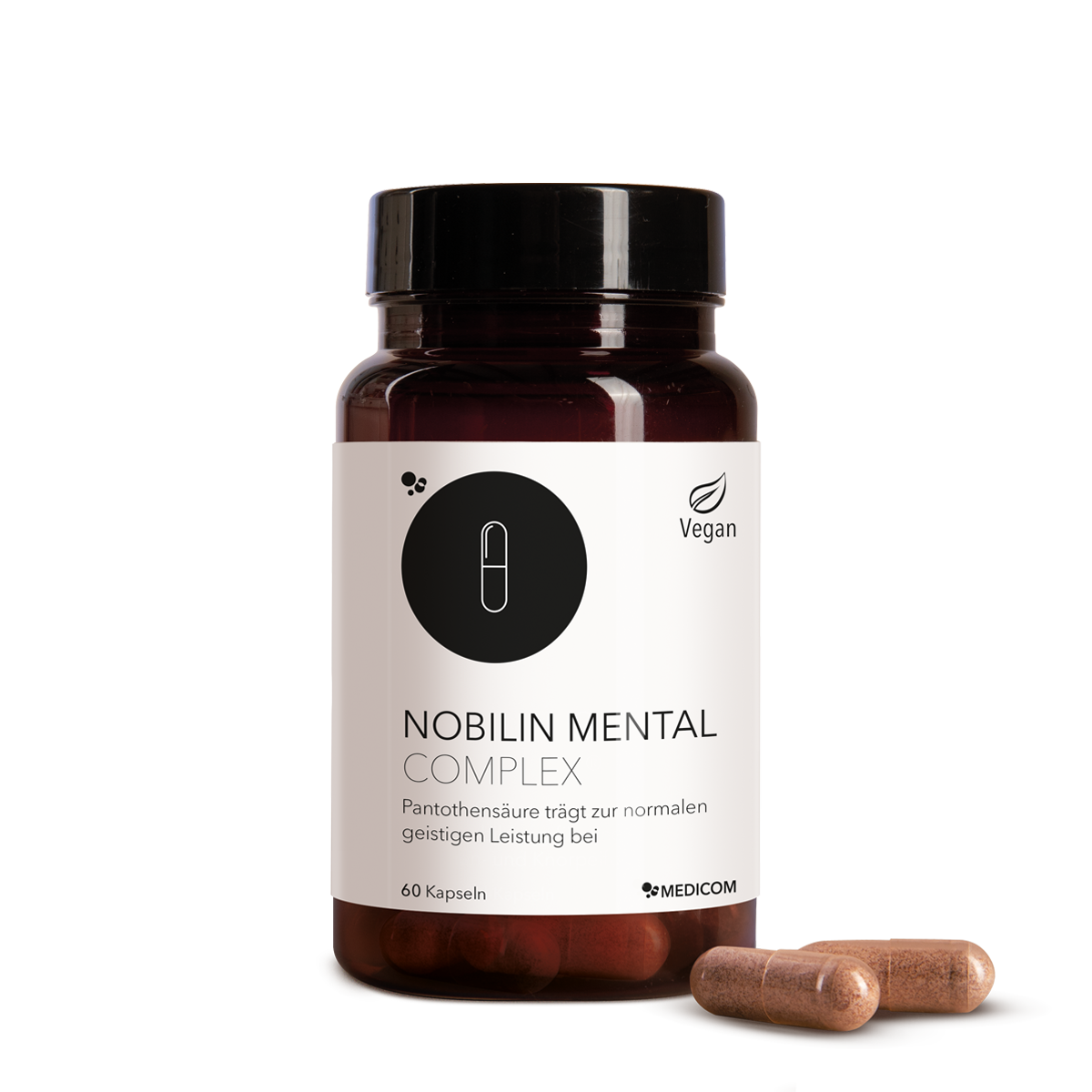
Nobilin Mental Complex
With Lion's Mane medicinal mushroom & 4 B vitamins for the brain
Reishi has long been known in Chinese healing arts
One of the most versatile mushrooms, anchored in Asian medicine for thousands of years, is Reishi (Ganoderma lucidum), known in our regions as the lingzhi or varnished bracket. It is found almost everywhere on the globe and grows primarily on oaks. Its cap is up to 3 centimeters thick and sits on a lateral stem approximately 10 to 20 centimeters high. The surface of the cap is covered with a shiny, lacquered layer, which can turn from red to dark brown during its one-year life cycle. Because of its bitterness, it is not an edible mushroom, but all the more effective as a medicinal mushroom. Its effects on general health are so diverse that it is called the "mushroom of eternal life" in China, and is even hung in homes as a talisman.
What makes Reishi so special?
With many plant substances, it is the combination of ingredients that triggers very specific effects in the body. This is also true for Reishi. If you still want to highlight one or two characteristic substances of the mushroom, polysaccharides, including beta-glucan (a natural dietary fiber), and triterpenes (secondary plant compounds) are particularly notable. Just like animals, fungi store energy reserves in the form of polysaccharides.
These carbohydrates not only provide energy in the short term, they also have strengthening and immune-system-stabilizing effects. This is because beta-glucans attach themselves to receptors on immune cells, which causes them to release important messenger substances. Beta-glucans are also important for a heart-healthy diet, as they have a positive influence on cholesterol levels.
Polysaccharides and triterpenes – good for your defenses
The second group, the triterpenes, are the mushroom's own defense substances against attacking microorganisms and bacteria. And they work for us humans just as they do for the mushroom, meaning they are antibacterial and anti-inflammatory. There is evidence that the triterpenes in the Reishi mushroom can alleviate allergies by inhibiting histamine release; they also possess liver-strengthening properties. The numerous possible uses make Reishi a sensible companion for preventing everyday ailments.
Reishi concentrate
This mushroom, so widely used in Chinese medicine, is available as a Reishi concentrate. When buying Reishi, look for organic quality. In capsule form, it is well-tolerated and tasteless.