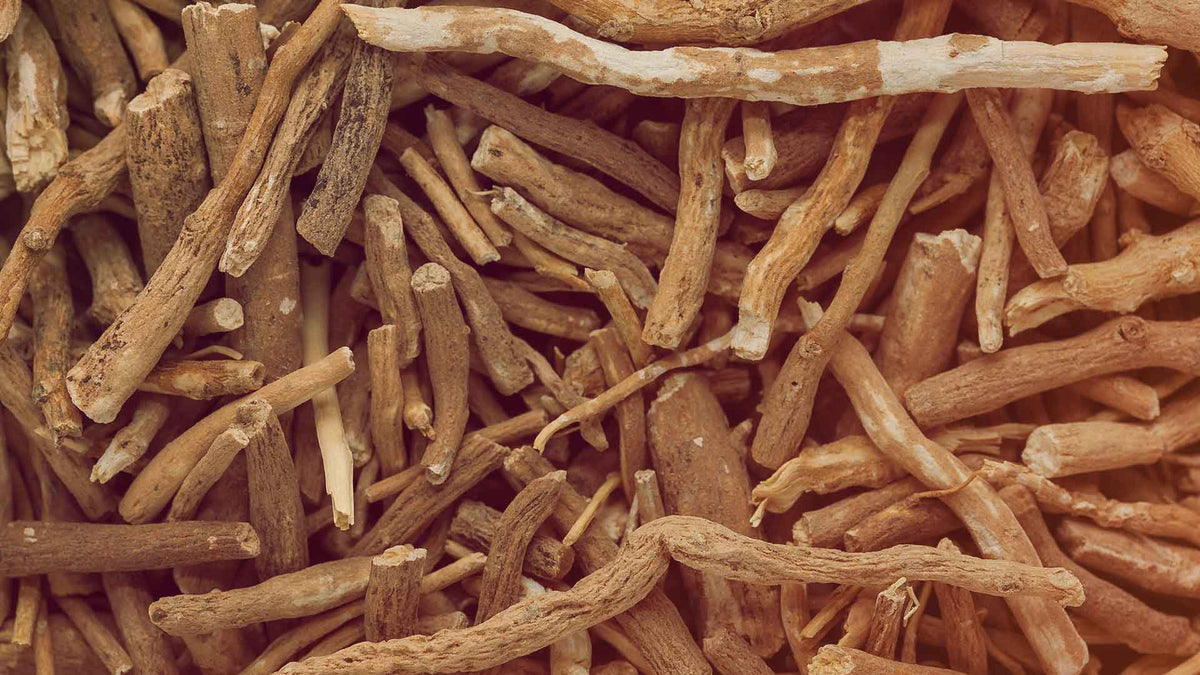
Ashwagandha (Withania somnifera) is native to Africa and Asia and has held a firm place in traditional Indian medicine for thousands of years. In our latitudes, too, people are increasingly swearing by this wholesome root.
Due to its popularity, this perennial berry plant, which can grow up to 1.5 m in height, is now also cultivated in regions around the Mediterranean. It is characterized by oval-shaped leaves up to 10 cm in length, but above all by its round, red berries with a diameter of about 8 mm. The Latin name for the ashwagandha plant is Withania somnifera. In this country, this plant from the nightshade family is also known as the sleeping berry, winter cherry, or horse root.
Ashwagandha in Ayurveda
Under the name Ashwagandha, the plant has been used in traditional Indian medicine, "Ayurveda," for more than 3,000 years, where it is considered one of the most important herbs. Even today, Ashwagandha is found in natural remedies and dietary supplements. The Ashwagandha roots and extracts made from them are used for this purpose. For external use, pastes made from parts of the roots and leaves are applied.
Ingredients and effect
The most important components of the roots include various alkaloids and, above all, the valuable withanolides. These are naturally occurring compounds, namely secondary plant substances. Among alternative medicine practitioners, Ashwagandha is considered an adaptogen and is said to support the body in better adapting to external circumstances and internal processes.
• Would you like to learn more about herbal products? You will find what you are looking for here.