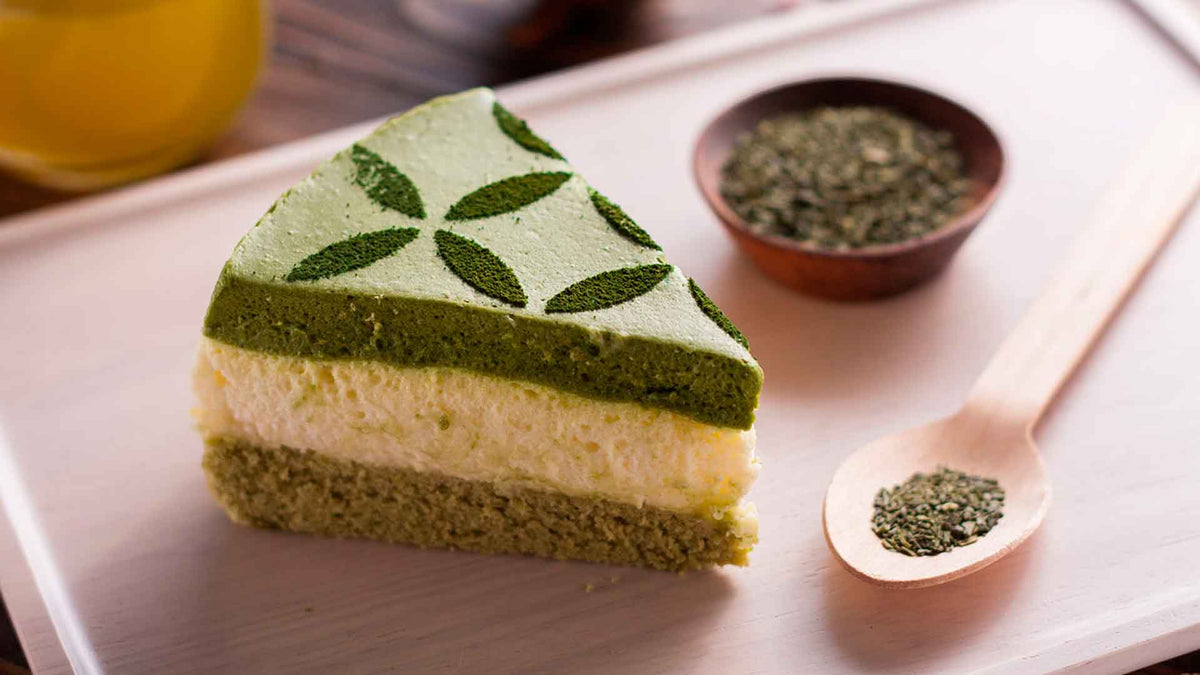
“If green had a taste, it would be matcha,” says Gretha Scholtz, whose love for the green tea from Japan became so boundless that she wrote a cookbook about matcha. Medicom asked her about her book and her love for this healthy green delicacy.

Medicom: You love the culinary arts, food, and international cuisine in general. What was it about matcha that captured you so much that you decided to write an entire cookbook about it?
Gretha Scholtz: I have always been in love with matcha because it looks like vibrant green cocoa and tastes so completely different from any other tea. It has a very unique flavor. It is creamy and silky smooth. Matcha is reminiscent of microgreens, nutrients from the sea, cane sugar, and chlorophyll, and of course it tastes very umami (the Japanese word “umami” means meaty, savory, delicious, and is considered the fifth quality of taste alongside sweet, sour, salty, and bitter). The Japanese use matcha in numerous dishes, and now you can find it almost everywhere in the West, from organic restaurants in Soho to Michelin-starred gourmet restaurants in Paris.
Its delicate flavor harmonizes perfectly with eggs, cream, and white chocolate, for example in a white chocolate mousse or a green tea tiramisu. Cheesecake becomes an unforgettable taste experience with it, and it also works wonderfully in a fluffy buttercream as a frosting for cupcakes. Savory dishes also certainly benefit from this complex flavor. It tastes delicious in marinades, dips, pesto, or nut butter, while simultaneously multiplying the absorption of antioxidants. Tempura chicken with matcha salt is one of my favorite foods. Matcha mayonnaise? Divine! Green muesli? It’s hard to imagine a better way to start the day! The variety of possibilities is endless.
Medicom: Matcha seems to be very fashionable. Your cookbook is just one example among many. What makes matcha more than just a trend, but a sustainable benefit for our diet?
Gretha Scholtz: Matcha may be very popular now, but it is far more than a passing fad. The health benefits are far greater than those of most so-called “superfoods.” The unit used to measure the content of antioxidants or radical scavengers in food and drink is the ORAC value (which stands for “Oxygen Radical Absorbance Capacity”). The higher the ORAC value, the higher the antioxidant capacity of the food. On the ORAC scale, there is no other natural product that has even remotely the same level of radical scavengers as matcha (apart from cloves). Matcha has 6.5 times more antioxidants than goji berries, 17 times more than wild blueberries, 50 times more than pomegranates, and 111 times more than broccoli.
Medicom: Is it truly a health-giving and beauty-enhancing substance, as you suggest in your cookbook?
Gretha Scholtz: The green color of matcha is due to the chlorophyll it contains. Matcha contains an exceptionally high level of chlorophyll. Chlorophyll, in turn, is highly effective at purifying the blood and establishing ideal blood alkalinity. It supports the body in excreting heavy metals and chemicals. Chlorophyll is also a powerful radical scavenger. Antioxidants act as anti-inflammatory and antiviral agents in the body.
For centuries, women in Japan have been using matcha for face masks. It is a wonderful remedy for the skin. When applied to the skin, matcha tea can help mitigate sun damage by neutralizing free radicals; it also has an anti-inflammatory effect. Green tea extract can also be extremely helpful in fighting rosacea by reducing redness and inflammatory reactions. The antioxidants contained in matcha can also be helpful in fighting acne by inhibiting sebum production and increasing skin elasticity.