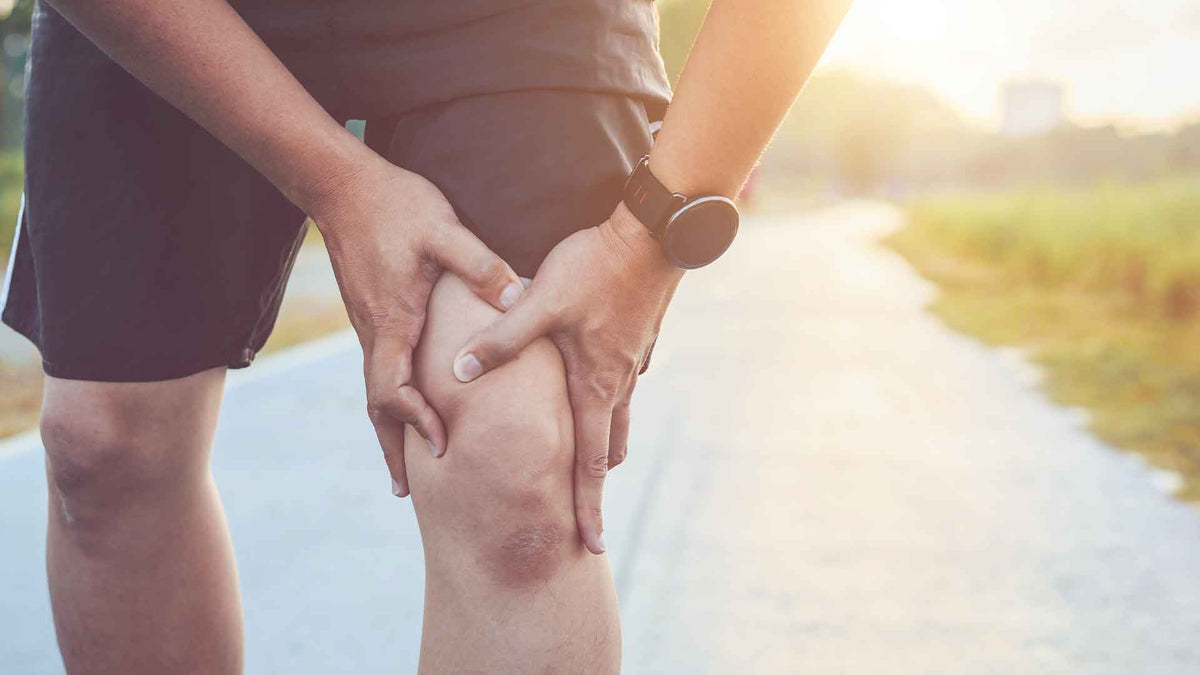
Hip and knee replacement surgeries are on the steady rise. What can you do to avoid a procedure or get back in shape quickly after surgery? We spoke with Prof. Heller about the key issues surrounding the hip and knee. One thing is certain: Proper prevention, muscle training, and rapid recovery are closely linked.

Medicom: Hip or knee joint prostheses have become a standard procedure in orthopedic surgery.
Prof. Heller: Yes, because there are currently over 400,000 such procedures per year in Germany. Nevertheless, I prefer to avoid the term "standard" per se, since every surgery represents a challenge and requires thorough execution.
Medicom: Which diagnosis makes the use of an artificial joint necessary?
Prof. Heller: Primarily, it is wear-related diseases, i.e., conditions that lead to cartilage damage. This is usually the normal wear and tear that occurs in many people for no apparent reason—that is, without an externally identifiable cause—cartilage overload, cartilage deficiency or inferiority, or it is due to congenital factors, such as hip misalignments that develop in childhood.
Medicom: One hears and reads about sarcopenia time and again. What exactly is it, and does it affect everyone?
Which muscle groups does it particularly apply to, and why?
Prof. Heller: Sarcopenia is, in essence, the natural process of muscle loss as one ages. Muscles and bones are organs that either densify when subjected to stress, like bone, or grow when exercised, like muscle. Lack of physical activity leads to a weakening of the muscles, especially in the extremities, which in turn leads to the terrible cycle of lack of strength, poor coordination, and then, of course, the frequent falls associated with aging.
Therefore, prophylaxis is extremely important. A slow, progressive muscle loss begins as early as age 30, which can be halted by exercise. From the age of 70, you can no longer fully halt the decline, but you can counteract it, and it is possible to build muscle through training at any age.
You can build muscle through training at any age
Medicom: How quickly does one lose muscle mass? Is it different for men and women?
Prof. Heller: Muscle loss is relatively homogeneous; I do not believe there are significant differences between men and women. However, men often have a higher level of physical activity, which may make the muscle loss less pronounced. Men do, however, die earlier, so in old age, more women suffer from the usual fractures or suffer more frequently from osteoporosis (bone loss). The loss of muscle mass is slow and gradual, always a few percent per year, but leads to serious limitations in the long run.
In addition to reduced muscle strength, there is automatically a limitation in mobility, coordination, and balance. There are statistics that assume that if muscle strength is at 100% at age 50, it will likely be reduced to 40% to 45% by age 90.
The loss of muscle mass is slow and gradual, always a few percent per year.
Medicom: What is the best way to counteract the loss of muscle mass?
Prof. Heller: You can counteract it through physical activity and a protein-rich diet. This means moving for 45 minutes three times a week. Extensive walking, dancing, hiking, or a little strength training is enough. Also, for example, don't take the elevator but climb the stairs, don't stand on moving walkways at the airport but walk instead, don't make gardening too comfortable with aids, but mow the lawn yourself. Simply make everyday life a little more strenuous.
Medicom: It is recommended that patients properly build muscle again before the procedure. However, this is sometimes difficult because it increases the level of pain?
Prof. Heller: You are preaching to the choir. It is recommended nationwide to do this. Of course, one should improve knee mobility and strengthen the muscles bridging the knee and hip. It would be most sensible to train coordination before the procedure and learn how to use crutches, as this is often difficult for older patients. As soon as the pain is gone, you can work on building muscle again.
Medicom: Bones also become more fragile in old age, and fractures are more common. Can this also be prevented with
exercise?
Prof. Heller: Of course, this can also be prevented through exercise. But if there is a hormonal or metabolic problem, this is not enough. In that case, medical prevention with fluorides, Vitamin D, and appropriate medication is necessary.
Medicom: What about nutrition? What should one pay particular attention to here?
Prof. Heller: For the muscles, a protein-rich diet is important, and for the bones, a calcium-rich diet. Personally, I would, of course, supplement with the standard vitamins and consume proteins.
Medicom: Patients are mobilized very soon after the procedure. What does the rehabilitation process look like and what time frame should be expected?
Prof. Heller: Nowadays, patients are indeed mobilized on the first day after surgery. Some get up on the first day and then begin intensive exercises, which they perform under inpatient conditions for about a week. This is followed by three weeks of rehabilitation, which is carried out on an outpatient or inpatient basis. In my estimation, it takes patients six weeks to get over the hump with their hip prosthesis; after three months, they should have forgotten about it. With a knee joint, it takes about six months until you can forget about the joint.
For the hip, we generally achieve a satisfaction rate of 98%, while for the knee, it is only 80%. However, 20% of patients are not entirely satisfied, even if nothing went wrong during surgery.
There is a hereditary component to hip and knee joint disease.
Medicom: Is there a predisposition for the degeneration of the knee or hip joint?
Prof. Heller: There is a hereditary component to hip and knee joint disease. If parents or grandparents have similar ailments, it is highly likely that you will too. If you have developing osteoarthritis, you cannot avoid it. What is important for every type of osteoarthritis is to move the joint sufficiently so that the cartilage that still exists is nourished. Cartilage is only nourished through joint movement, as it has no blood vessels itself and requires joint fluid to be maintained and nourished. Furthermore, the joint-stabilizing muscles must be trained to ensure optimal power transmission and to prevent overloading the joint.
Medicom: Statistically speaking, how many people require a joint replacement and in which age group do most procedures take place?
Prof. Heller: Statistics show that we have 400,000 joint procedures per year: 220,000 hips and 180,000 knees. You can calculate the relative values yourself. 20% of patients are younger than 60, and the rest are distributed among the other age groups. The main age group is between 70 and 80. However, it also makes sense to offer joint replacement to patients over 80 so that they can keep themselves fit. In this age group, we also perform revision surgeries, as the prostheses implanted at a younger age (around 50 to 60) may eventually loosen and need to be replaced.
Medicom: What role does demographic change play regarding the age structure of the population, and what scenario awaits us if more emphasis is not placed on prevention and education?
Prof. Heller: Demographic change is significant and is currently leading to major discussions, as it naturally results in more and more artificial joints being implanted. An incredibly large number of people from the baby boom generation are getting older and entering the phase where they need artificial joints. Every day, out of our 15 to 20 prostheses, two to four patients are from the 1960s birth cohorts. Education and prevention must be carried out here, of course. Nevertheless, we will not be able to limit the number of hip and knee surgeries. They will increase in the coming years—and this is due to demographics alone.
The message must be to act against sarcopenia (muscle loss), to strengthen the muscles, and to get osteoporosis under control in women.
Medicom: What should be done?
Prof. Heller: The message must be to act against sarcopenia, to strengthen the muscles, and to get osteoporosis under control in women. While we have mainly spoken about arthrotic changes so far, there are also a large number of hip prostheses for femoral neck and thigh fractures, and prevention is just as important here as it is with sarcopenia.
The message must always be to get plenty of exercise: a) to strengthen the bones, b) to maintain muscle mass, and c) to move the joint through its range of motion and adequately nourish the cartilage.
• Here you will find good tips on how to support your muscles. Great recipe ideas with hemp protein powder.
• Here you can find health products that support your joints.