
Springtime means pollen time. In spring, the urge to go outside and enjoy nature is at its peak. But what brings joy to some, causes suffering for others. Almost 15 percent of the total population suffers from so-called hay fever. And the trend is rising. What helps? What are the best tips for pollen allergies? Read more here.
Pollen allergy: Symptoms and causes
The increase in pollutants and climate change are seen as some of the reasons for pollen allergies. For many pollen allergy sufferers, constant sneezing, itchy and watery eyes, and severe coughing have now become constant companions.
With hay fever, or more generally, pollen allergy, allergic reactions are triggered primarily by pollen from grasses, trees, and plants. Due to their microscopic size, this pollen (also known as flower dust) can be carried by the wind up to 1.5 kilometers high and 300 kilometers away during the plants' flowering period.
When these microscopic pollen grains from flowers and grasses come into contact with the mucous membranes of the nose and mouth, the intense sneezing and itching begins for those affected. Typical symptoms of hay fever include a constantly running nose (known as allergic rhinitis), frequent sneezing, severe itching in the nose, as well as burning, often itchy, and watery eyes. These symptoms often severely restrict the general well-being of the people affected. Being out in nature can then become an ordeal.
This is caused by an oversensitive immune system that responds to otherwise harmless substances with an allergic reaction. A strengthened immune system can help the body deal better with allergies.
For pollen allergies: Which vital nutrients can help?
Especially now, as an allergy sufferer, you should strengthen your immune system. Focus on nutrients that support your defenses. Because the immune system is constantly challenged by the allergy, a deficit of immune-strengthening vital nutrients arises. Therefore, it is important to pay special attention to the following vitamins, minerals, and trace elements when dealing with hay fever.
Vitamin C and zinc, as well as vitamin D, are considered the great immune talents. Vitamin C and zinc are said to act like a natural antihistamine because they reduce histamine release in the body. Less histamine release in the body means fewer allergic reactions, which are so typical during pollen season, such as allergic rhinitis. Furthermore, vitamin C and zinc help to strengthen the immune system, as it is particularly challenged during this time.
Calcium and magnesium are also considered natural allergy remedies, as they cause certain immune system defense cells, known as mast cells, to release less histamine. The body also needs magnesium for calcium transport. Calcium can soothe itching. Therefore, it makes sense to take calcium as a preventative measure.
A home remedy that can alleviate hay fever symptoms is nasal irrigation with salt water. This flushes the pollen out of the nose while disinfecting the mucous membranes. Eucalyptus oil can also be very helpful, as it inhibits the release of certain chemical messengers and thus reduces the allergic reaction.
Since black seed oil is credited with regulating the immune system, the oil is also considered a natural remedy for alleviating allergic reactions like hay fever.

Black cumin oil
Valuable fatty acids, popular in medicine
Besides black seed oil, quercetin is also frequently mentioned. This secondary plant compound is extracted from the flowers of the Japanese pagoda tree and is considered an important antioxidant. In naturopathy, quercetin is regarded as a natural antihistamine for allergies, such as seasonal hay fever. It blocks the release of histamine and is often used in combination with vitamin C.
Which medications help against hay fever?
It is important to have pollen allergies treated, as they can develop into further illnesses. Affected individuals are more susceptible to asthma or the development of additional allergies. Part of treating hay fever involves avoiding contact with pollen. So-called pollen calendars indicate when certain pollen is airborne.
For the treatment of mild hay fever, medications with so-called mast cell stabilizers are suitable. These prevent the release of histamine, which is responsible for the allergic reaction, thus suppressing the symptoms. Mast cell stabilizers are used preventatively before an allergy appears, which prevents both immediate and delayed reactions. Another type of medication is antihistamines. These block histamine receptors so that the effect of histamine is weakened.
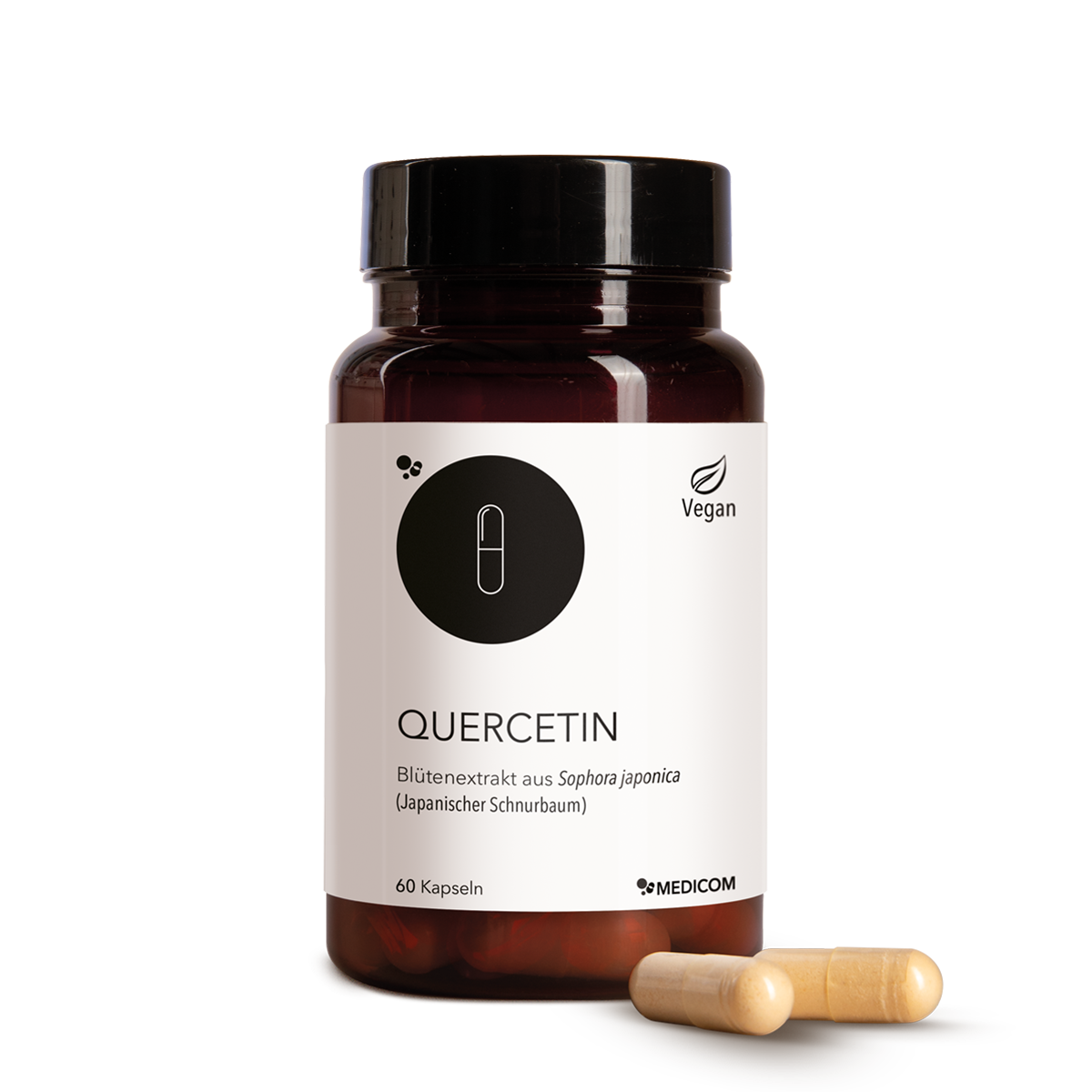
Quercetin
Natural antioxidant for cells
Therapy through desensitization
A somewhat longer method is hyposensitization. Over about three years, the body is gradually accustomed to the allergen so that, in the end, allergic reactions no longer occur. For this, standardized, highly diluted pollen extracts are injected or administered as tablets or drops. For more difficult cases of hay fever, there is treatment with glucocorticoids, but this treatment should be limited in time, otherwise side effects can occur.
Generally, allergy sufferers report that taking hay fever remedies such as anti-allergy medication and antihistamines alleviates the symptoms, but can also make them tired. According to the German Pollen Information Service Foundation, newer hay fever medications no longer have this side effect. Those affected by allergies should discuss this with their doctor and test individually which preparation is suitable for them.
Alternative healing methods for hay fever
Anyone who wants to try alternative healing methods can resort to acupuncture. After six to eight sessions, those affected are usually symptom-free for a year. Doctors suspect that acupuncture calms the immune system and thus alleviates symptoms.
8 tips for pollen allergies
1. Avoid sports or physical exertion during the flowering season, as you breathe more deeply while exercising and thus inhale more pollen.
2. Ventilate only briefly—ideally in the morning in the city, and in the evening in the countryside—and keep windows closed afterwards, even at night.
3. To prevent nighttime allergy attacks, do not take off clothes that have been exposed to pollen in the bedroom.
4. Pollen also gets stuck in your hair. Wash your hair before you go to bed.
5. Do not dry your laundry outdoors during the flowering season.
6. Pollen also gets stuck on glasses and frames. Wearers of glasses should clean them regularly.
7. A fine dust filter for the vacuum cleaner helps you suck up the pollen as well.
8. Similar options exist for the car. A pollen filter can be retrofitted and keeps the interior of the car almost completely pollen-free.
And one more tip: If you don't yet know exactly which pollen you are allergic to, keeping a diary is helpful. Notes on symptoms can provide the treating physician with important clues for a diagnosis. You can also have an allergy test performed, the so-called prick test. You can find a pollen calendar and further information and tips on the topic of pollen allergies here.
Conclusion
Pollen allergy is caused by an excessive reaction of the immune system. Anyone suffering from an allergy should focus on strengthening their immune system. Immune-strengthening vital nutrients can alleviate symptoms and discomfort. Definitely visit an allergist so that you can apply a suitable therapy. Pay attention to hygiene in the household and avoid or minimize contact with pollen as much as possible.
• Would you like to know how you can strengthen your immune system? Find out more here.