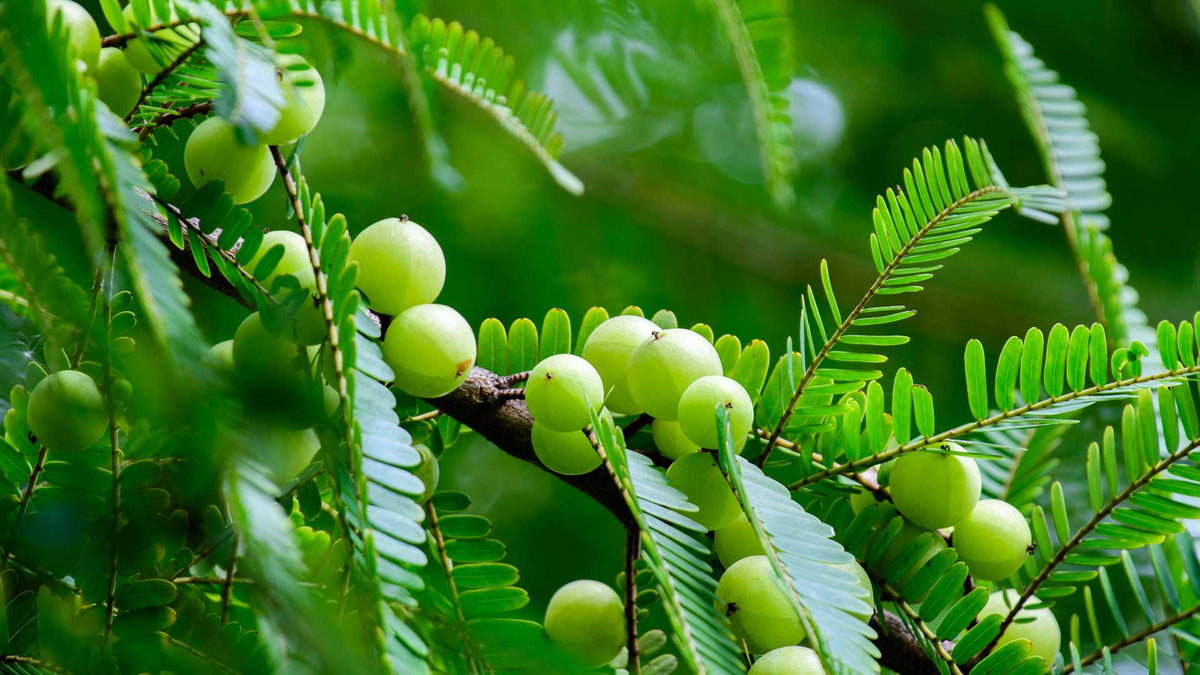
A classic of traditional Indian medicine, the Charaka Samhita, states: "Amalaki is the best rejuvenator of all." This refers to the berries of the Amla tree, which is revered as "sacred" in India. In Ayurveda, they have been considered a guarantee of youth and beauty for many centuries. On top of that, they are said to counteract a range of ailments and strengthen resistance. Today, we know that Amla berries contain more vitamin C than lemons. Better still: research has recognized the enormous antioxidant effects of these exotic fruits. Antibacterial and antiviral properties make Amla the ultimate superfood.
Legendary Superfruit
According to an Indian legend, the creator god Brahma was so moved at the end of an eon that he began to weep. Where his tears touched the earth, a previously unknown plant soon grew: the Amla tree. It is said that the god's love for all his creatures manifests within it. One of the names for the Indian gooseberry is therefore "Dhatri," meaning "nourishing mother." In Ayurveda, Amla is one of the three "king fruits" in the legendary rejuvenator Triphala ("three fruits").
Amla in Indian Cuisine and Cosmetics
Amla is one of the few fruits that covers five of the six Ayurvedic tastes: sour, bitter, astringent, pungent, and sweet. If you bite into the raw berry, it tastes extremely sour and bitter at first, causing the mouth to contract (astringent). Only afterwards can a sharp and, above all, a sweet note be perceived. Therefore, Amla berries are generally not eaten raw, but served in powdered form as a tea. Amla is also frequently found in India in pickles, chutneys, jams, or fruit juices. The popular berries are also used as an ingredient in skin salves, hair masks, or hair oil, as they are said to clarify the complexion and give hair shine and fullness.
Amla as a Healing All-Rounder
In Ayurveda and alternative medicine, Amla berries are said to have many more positive effects on the human organism: Regular consumption is not only intended to strengthen the immune system and nourish the skin and hair. The berry's ingredients are also believed to ward off unwanted viruses, bacteria, and fungi, positively influence blood sugar levels and cholesterol levels, and bring the body into balance. And those are far from all the areas that Amla is associated with.
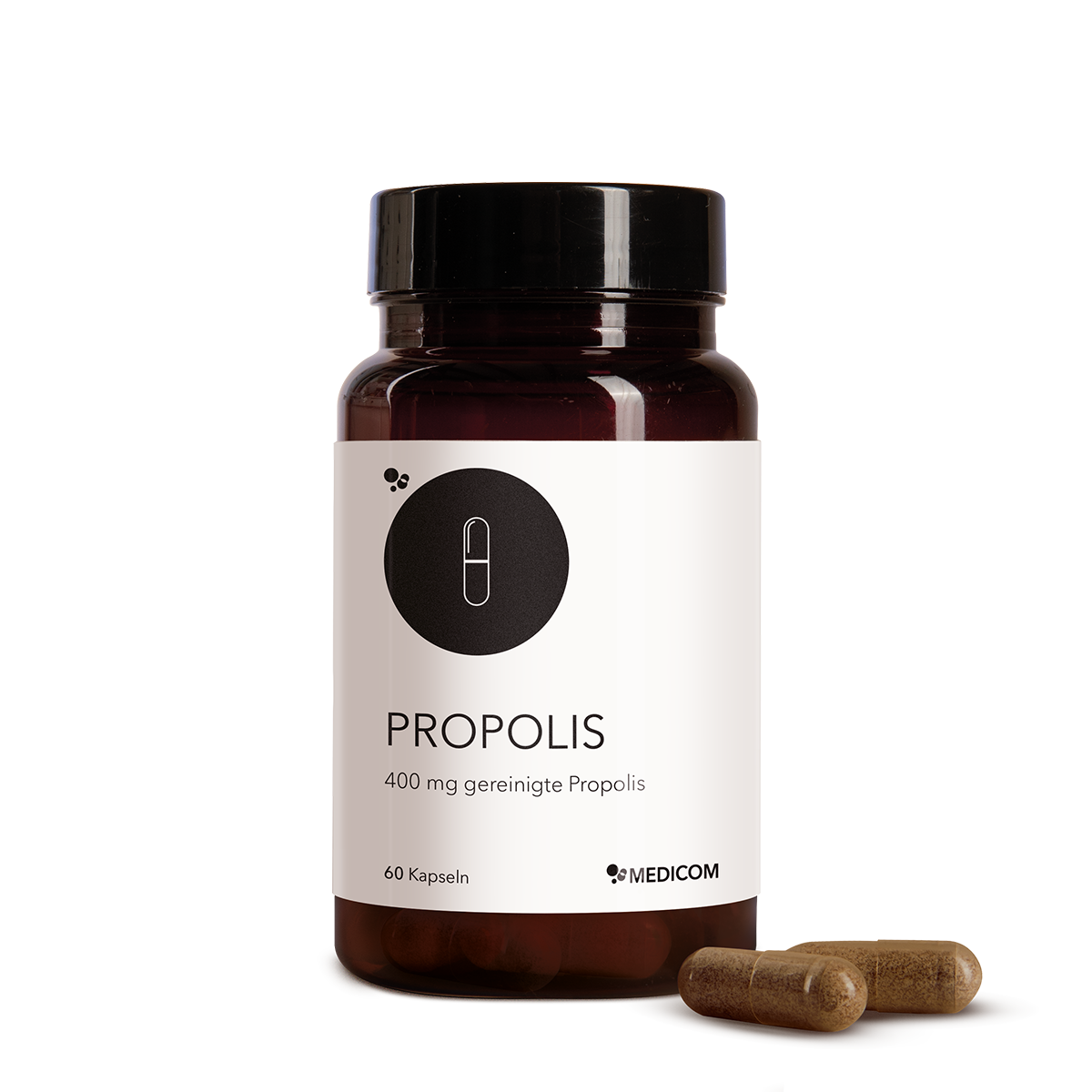
Propolis
The Power of the Beehive: Propolis
The Strongest Antioxidant Among Fruits
Amla likely owes these pleasant properties to its ingredients, especially the polyphenols as well as vitamin C. Among other things, these have strong antioxidant properties, meaning they ward off free radicals and thus fight cellular aging. Free radicals multiply due to physical and mental stress, environmental toxins, or poor nutrition. They damage cells and thereby promote lifestyle diseases and premature aging. The antioxidants in the Amla berry, on the other hand, defend healthy cells and thus protect the entire organism. It is no wonder, then, that this exotic fruit is becoming increasingly popular in Europe as a superfood and "Indian beauty secret."