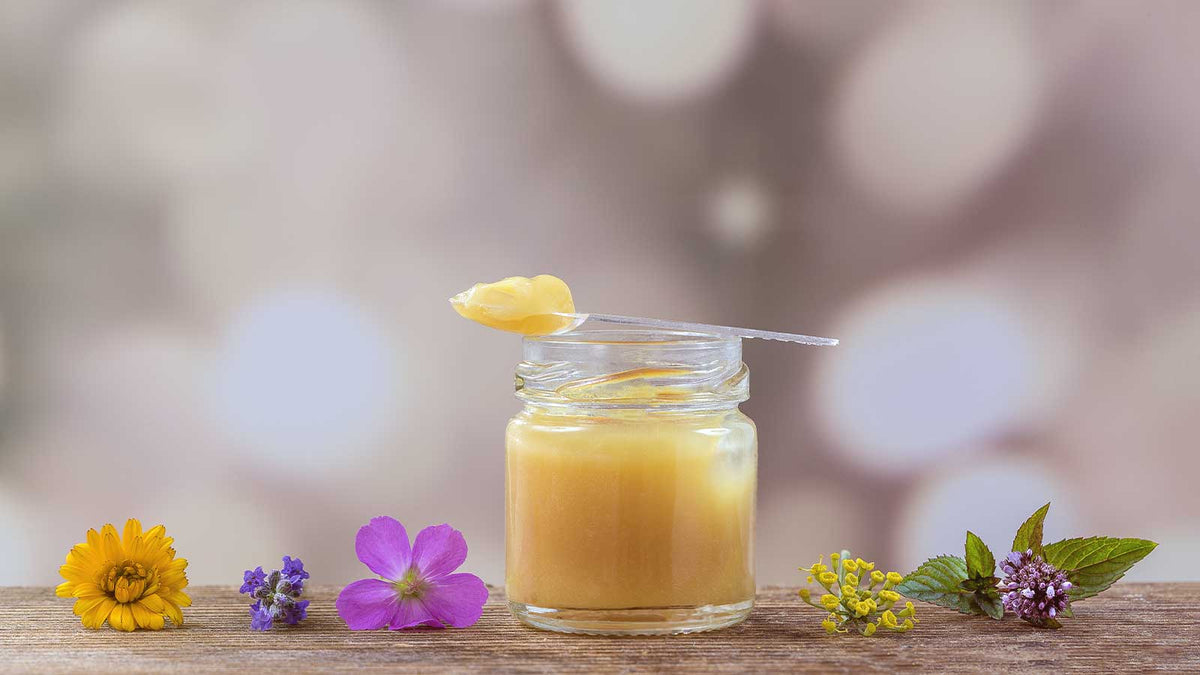
Royal jelly is an extremely nutrient-rich mixture of glandular secretions from bees. It consists, among other things, of vitamins, minerals, amino acids, hormones, proteins, fats, sterols, sugar, and water in a unique composition. In natural medicine, it is considered a strengthening tonic for activating the body’s self-healing powers.
This unique natural product is produced in the glands of honeybees. They use it to feed all their offspring during the first three larval stages. After that, only the future queen bee receives this special food juice until her cell is sealed, while the remaining bees live on pollen and honey. Thanks to this special diet, queen bees live about 40 times longer than the less royally fed worker bees. This is why royal jelly is also known as queen bee jelly. Incidentally, the mixture of secretions fulfills another important function for the bees: as a component of a purely biological two-component adhesive, it helps to fix the queen larvae in special honeycomb cells.
What is in Royal Jelly
In addition to protein, B vitamins, trace elements, and carbohydrates (sugar), the nutrient fluid also contains fats and amino acids, as well as interesting ingredients such as biotin, folic acid, neopterin, niacin, pantothenic acid, riboflavin, thiamin, and juvenile hormone. It is therefore a true superfood, which likely also contains some as-yet-undiscovered active ingredients. The content of the fatty acid 10-hydroxy-2-decenoic acid is considered the primary measure of product quality.
Propolis
The Power of the Beehive: Propolis
A Strengthening Tonic in Folk Medicine
In traditional folk medicine, the queen bee's food juice, like the other bee product propolis, is considered a natural tonic that promotes the healing process and resistance, stimulates the appetite, counteracts states of exhaustion, and generally improves well-being. Royal jelly is also said to help with food intolerances and menopause symptoms and, on top of that, to accelerate the healing process after illnesses. Royal jelly is also said to strengthen the immune system and is considered by natural health practitioners to be a substance that activates self-healing powers. In cosmetics, people also rely on a purported anti-aging effect of royal jelly.
However, there are currently few clear studies on the purported health effects. An exception is a Japanese study from 2012, which examined the effect of royal jelly on humans over a period of six months. The result was positive: the test subjects showed improved blood circulation, were mentally fitter, and were better able to digest glucose.
What I should keep in mind when taking Royal Jelly
Due to the high proportion of amino acids and proteins, taking dietary supplements containing royal jelly can lead to allergic reactions in certain people. Skin reactions, facial swelling, asthma attacks, vomiting, and diarrhea have been observed. If you suffer from asthma or are allergic to insect stings, you should consume royal jelly only with caution. Consumption is not recommended for pregnant or breastfeeding women.
• Are you interested in propolis? You can find it here.