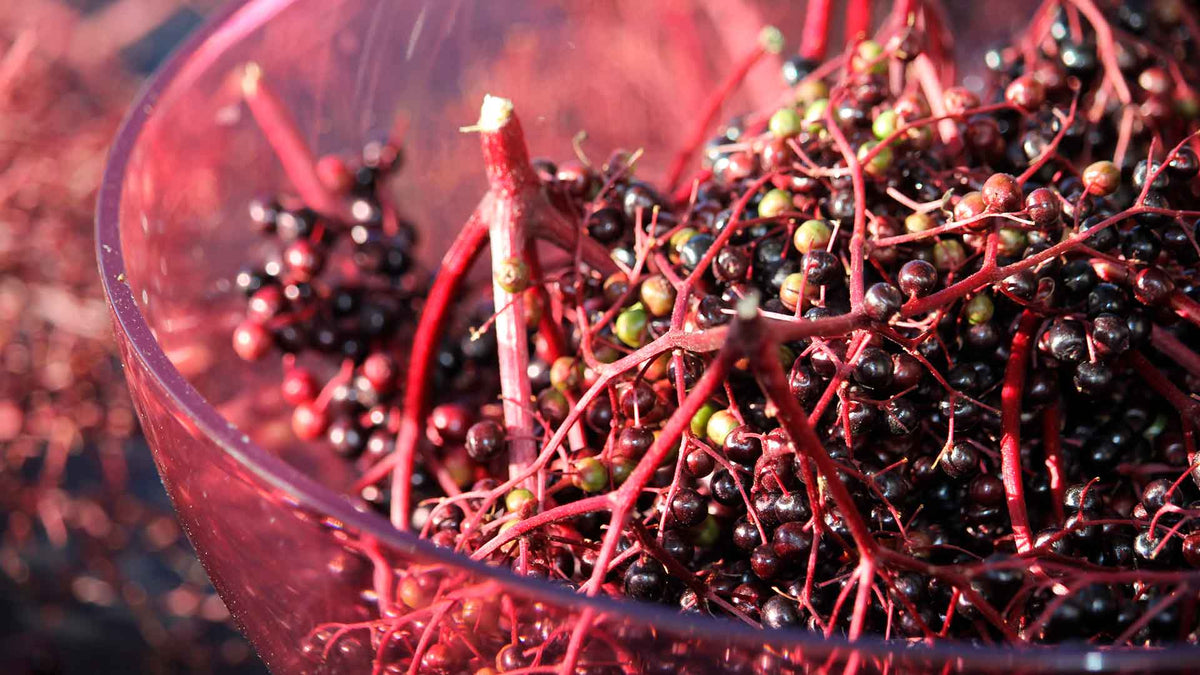
Small and precious. When eaten raw, the elderberry is slightly toxic. But when processed into juice or tea, it is considered very valuable for our health. Read everything you need to know about the elderberry here.
At a glance
The elderberry bears the botanical name Sambucus nigra and belongs to the honeysuckle family (Caprifoliaceae). The black-violet berry is also commonly known as black elder. It grows as a shrub or tree up to 8 meters high. Its crown and root system are highly branched. The flowering period is in the summer from May to July. At that time, the sweet scent of the white blossoms is so enticing that many insects, especially butterflies and beetles, are drawn to them. The stone fruits are also known as elderberries and ripen in late summer. The berry is initially reddish, later turning black-violet during the ripening phase. Due to the dispersal of seeds by birds and mammals, elder is found very frequently throughout Central Europe.
Where can you find the elderberry?
In addition to Central Europe, the elderberry shrub can be found in Western and Central Asia as well as in North Africa. Due to its frost resistance, it even grows up to the mid-mountain regions of the Alps. It is also found in Austria. The traditional cultivation area there is Styria.
Elderberry: How it is used
Elder has several uses. It is used both as a medicinal remedy and as food. In medicine, it is primarily the berries and blossoms that are used. The berries contain a very strong pigment, known as anthocyanins (secondary plant compounds). These were once used to dye hair, as well as leather goods and wine. Today, it is also used as a food coloring. Because of the valuable cold-pressed elderberry oil extracted from the seeds, it is also used as an ingredient in the cosmetic industry. Elder blossoms are used in pancakes. Elder blossoms can also be found in sparkling wine and lemonades. Once sufficiently heated, they are also enjoyed as juice, jam, purée, or wine.
What's inside the black berry
Elderberry fruit juice or blossom tea is used for bladder and kidney complaints. Elderberry is also recommended for colds. It stimulates kidney function and helps with detoxification of the body. Furthermore, the high content of vitamins and antioxidants strengthens the immune system in a natural way.
Caution when consuming elderberries
But caution is advised! Consuming raw or insufficiently heated elderberries can lead to nausea and vomiting.
• Would you like to learn more about medicinal plants for well-being? You can find more information here.