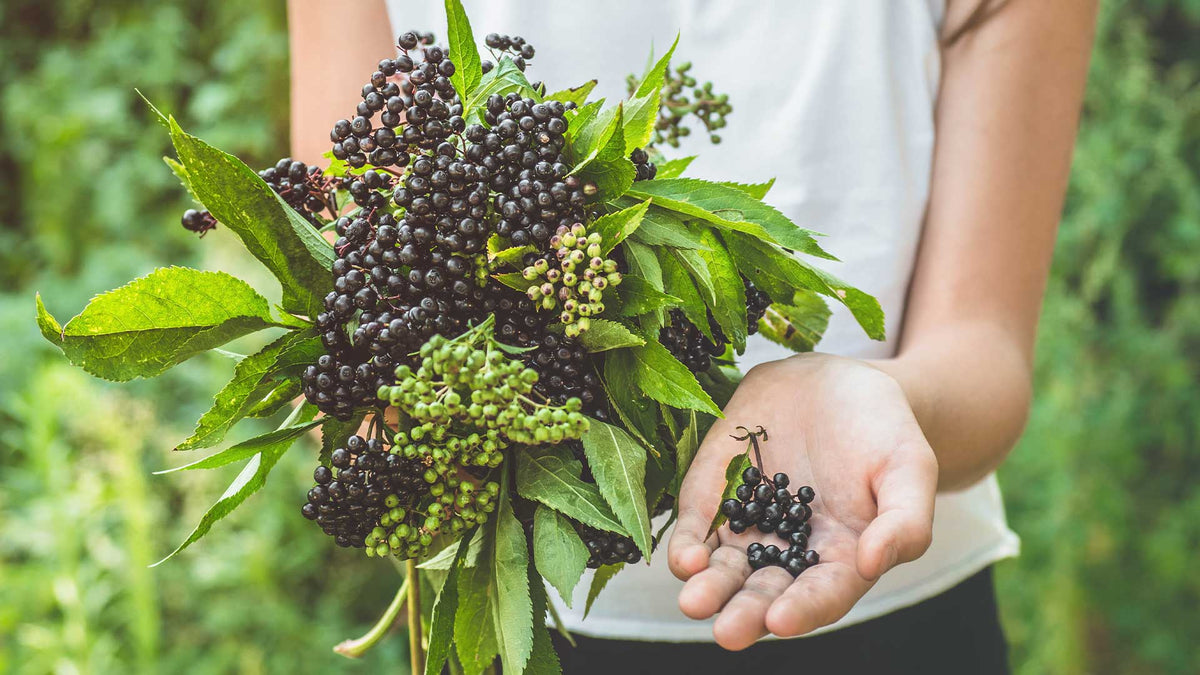
Elderberry (Sambucus nigra) is a plant in the moschatel family (Adoxaceae). This shrub or small tree, also known as black elder, reaches heights of up to eight meters and is heavily branched in both its crown and root system. The elderberry blooms from May to July, with its white flowers having a distinctively sweet scent that attracts many insects, especially butterflies and beetles. In late summer, the stone fruits of the elder shrub, popularly known as elderberries, ripen. Initially red, they turn black as they mature.
Distribution and Use
The elderberry shrub can be found in Europe, West and Central Asia, and North Africa. Due to its frost resistance, it can survive cold winters, growing as high as the mid-mountain regions of the Alps. Elderberry is used both as food and as a herbal remedy. Medicinally, the berries and flowers are of interest.
Hugo and Elderberry Syrup
Nowadays, the berry juice is also used as a food coloring and in the cosmetics industry. Culinary-wise, elderflowers are very popular for their aroma in the production of lemonades, sparkling wine, and as an ingredient in aperitif drinks like Hugo. They can also be baked into small pancakes or deep-fried. Once sufficiently heated, the berries are also enjoyed as juice, syrup, jam, purée, or wine.
The most important ingredients
Almost all parts of the elderberry plant contain cyanogenic glycosides and lectins and are therefore toxic. An exception is the ripe, dark berries. Although they also contain cyanogenic glycosides, they are considered harmless to health in small quantities. However, like the flowers, they are rich in Vitamin C and Vitamin B as well as essential oil. Added to this are the flavonoids and anthocyanidins of the berry.
What elderberry helps with
Fruit juice or flower tea made from Sambucus nigra are considered remedies for bladder or kidney problems and colds. They stimulate kidney activity and help detoxify the body. The high
content of vitamins and antioxidants strengthens the immune system. However, consuming raw or insufficiently heated elderberries can lead to nausea, cramps, and vomiting.
You can learn more about elderberry and its positive effects here.
• Are you interested in products that support the immune system? Find out more here.