
Tired, lethargic, lacking energy? Sometimes the reason can be as simple as a nutrient deficiency or the consequences of taking medication. This is very much the case with vitamin B12. People who follow a vegan diet, those who take certain medications, and seniors should keep an eye on their vitamin B12 status.
What does vitamin B12 do in my body?
Vitamin B12, also medically known as cobalamin, is a water-soluble vitamin that belongs to the B-vitamin group. Cobalamins are the only known cobalt-containing natural substances. Vitamin B12 is a component of important enzymes and is involved in essential metabolic processes in the body, primarily in the formation of red blood cells (erythrocytes) and cell division. In addition, B12 supports healthy nerve function, as it is essential for building myelin sheaths (sheaths that surround nerve fibers). Vitamin B12 is able to convert the amino acid homocysteine into methionine, thereby lowering the homocysteine concentration in the blood. An excessively high homocysteine level can lead to cardiovascular diseases. That is why vitamin B12 is also a type of detoxifier. Since the body has considerable reserves in the liver, a lack of vitamin B12 intake only leads to deficiency symptoms in adults after months or even years.
Which foods contain vitamin B12?
Since your organism does not produce B12 itself, you must consume the vitamin through food or dietary supplements. Meat, and especially offal such as liver, contains a lot of cobalamin. Fish, seafood, eggs, quark, and milk are also rich in B12. Through bacterial fermentation, plant-based foods such as sauerkraut, seaweed, and shiitake mushrooms can also contain nutrients that strongly resemble B12. However, the respective amounts of these so-called B12 analogs in these products vary very strongly. The bioavailability is also generally unclear.
A study1 from the University of Kent now offers some hope for vegans. It shows that plants such as garden cress absorb vitamin B12 when grown in a certain way. Until then, plant-based B12 remains a dream. Therefore, according to the current state of knowledge, a purely plant-based supply of vitamin B12 without corresponding supplements is considered impossible. You should also keep in mind that with a mixed diet, your body can only absorb and utilize about 50 percent of the B12 contained in food.
What are the reasons for a vitamin B12 deficiency?
In addition to a purely plant-based diet, various diseases also lead to an undersupply of vitamin B12, including above all digestive tract complaints such as gastritis, inflammation of the intestines, or surgical interventions (removal of parts of the stomach or intestine). Especially in old age, supply bottlenecks often occur because the absorption of the vitamin is frequently reduced, e.g., due to digestive disorders or reduced stomach acid production. The intake of certain medications such as proton pump inhibitors (omeprazole), antacids, but also metformin (for the treatment of type 2 diabetes mellitus) or drugs for seizures also interfere with the absorption of vitamin B12 from food.
What are the symptoms of a vitamin B12 deficiency?
You may recognize a lack of B12 by:
- pale skin
- chronic fatigue
- lack of drive and concentration
- muscle paralysis
- unsteady gait or false sensory perceptions
- forgetfulness
- depressive moods
These symptoms have been observed with a B12 deficiency. However, as these symptoms can also point to a deficiency of another nutrient (e.g., folic acid deficiency) or multiple nutrients, you should always consult a doctor in case of doubt and have your B12 level checked.
To prevent a deficiency or to remedy an existing one, you should ensure a regular intake of B12-containing foods or take vitamin B12 supplements as needed. In special cases, a B12 injection administered by a doctor is even required.
How much vitamin B12 do I need?
In 2018, the German Nutrition Society (DGE) increased the recommended reference values for the daily intake of B12 for adults from 3 micrograms to 4 micrograms. However, larger amounts of B12 are found in your liver. It takes months to years for you to completely use up these reserves. But then deficiency symptoms will occur.
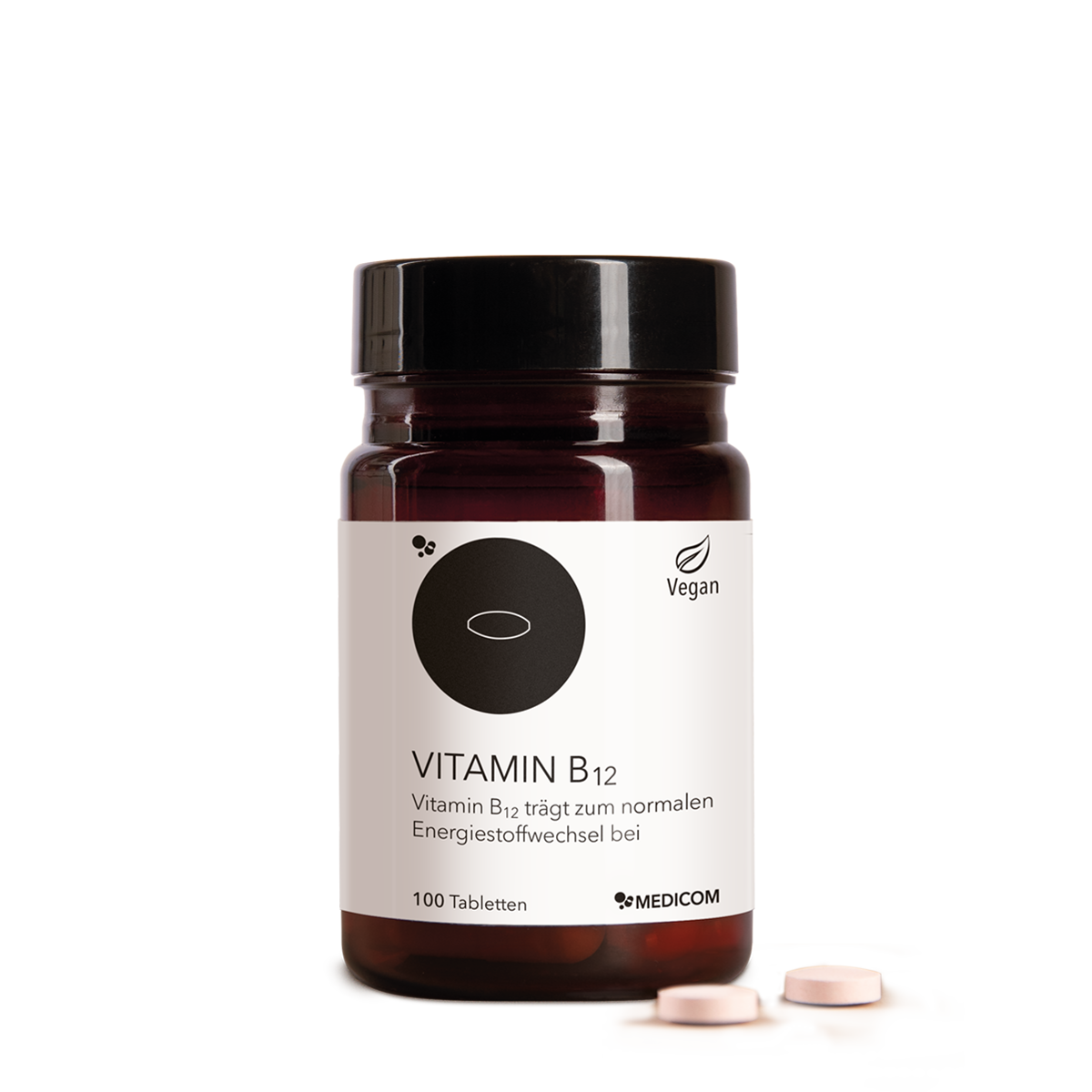
Vitamin B12
For energy and nerve health
Worth knowing about energy and nutrition
Through our diet, we can contribute a lot to supporting our energy and preventing fatigue. Foods with vitamin B12, iron, and Q10 should therefore be on the daily menu. Otherwise, you should pay attention to these "energy robbers."
What can drain my energy:
- Do you sleep well? How is your sleep quality? During sleep, many important repair works and metabolic processes take place. If we get too little sleep, the body cannot regenerate sufficiently. We usually feel the effects of a bad night the next morning in our own body. We are tired and find it difficult to concentrate.
- How are your blood values? Blood is lost during menstruation. An iron deficiency also makes itself felt. Iron, but also vitamin B12, are involved in the formation of red blood cells. Red blood cells are important because they transport oxygen and the cells are supplied with oxygen.
- Too much stress? Distress, also called negative stress, robs you of energy in the long run. If you are under stress, the body releases the stress hormone cortisol. The body is then in a "constant state of alert." The result: stress is exhausting and makes you tired.
- Do you take medication? Certain medications can lead to fatigue. These can include blood pressure reducers, antihistamines, strong painkillers, sedatives, and sleeping pills.
Conclusion
Vitamin B12 is involved in important metabolic processes in our body. It reduces fatigue, promotes the normal function of the immune system, and contributes to normal neurological and psychological functions. As a vegetarian, vegan, during pregnancy, or in advanced age, a vitamin B12 deficiency may be present. To prevent a deficiency or to remedy an existing one, you should ensure a regular intake of B12-containing foods or use a vitamin B12 supplement as needed.
Find out more here about the active ingredient vitamin B12.
Source reference:
1. www.kent.ac.uk/news/science/17966/university-scientists-make-vitamin-b12-breakthrough