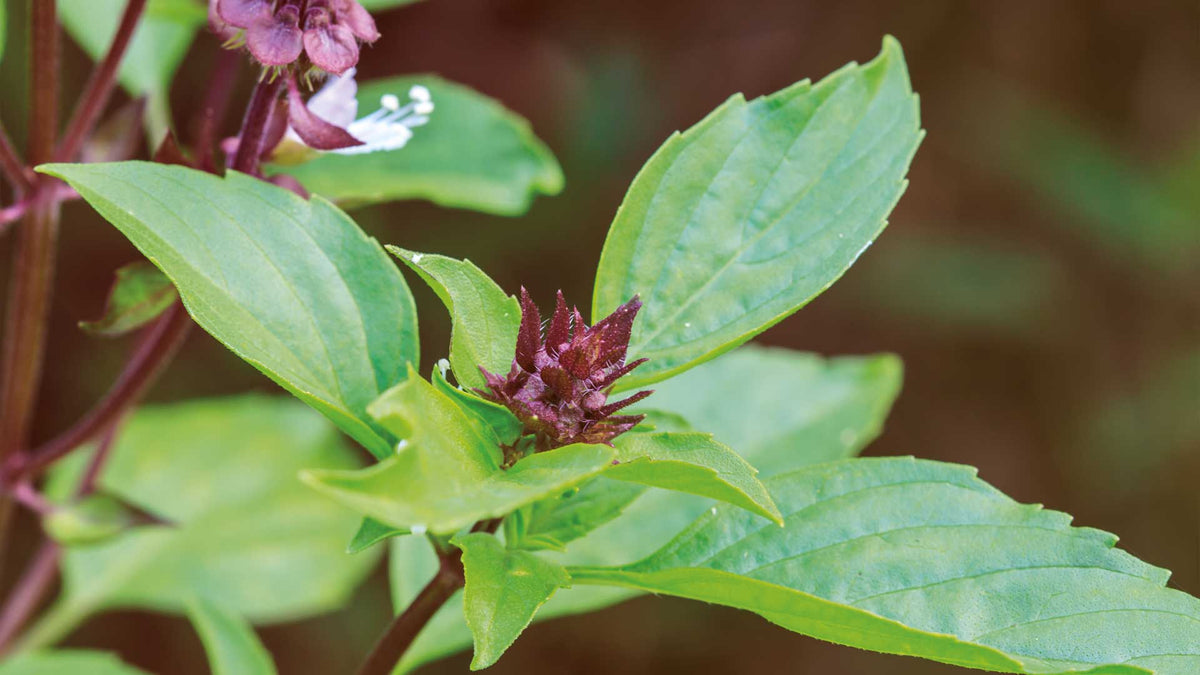
Indian basil (Ocimum tenuiflorum L.) is a perennial, herbaceous plant from the Lamiaceae family that has long been known in Indian medicine. Here, it is becoming increasingly popular as a preparation in dietary supplements and is also offered under the name "Holy Basil".
The plant reaches heights of approximately 1 m and often has a woody stem and hairy branches. It can also be identified by its opposite, pinnate leaves, which feature fine hairs. The flowers are arranged in false whorls and have white to pink petals. Round nutlets develop from them.
Distribution and Use
Indian basil is native to the tropics and subtropics of Asia, where it prefers loose, nutrient-rich soil. The beneficial effects of its essential oil have been known to Hindus for thousands of years, giving the plant a firm place in the traditional Indian healing art of Ayurveda. Tulsi, as the shrub is called in the ancient Indian language of Sanskrit, is considered both sacred and healing. Sacred, because according to their belief, Vishnu, one of the highest Vedic deities, manifests through Indian basil and provides protection. Therefore, the healing plant is often found in gardens and courtyards as a spiritual center and place of prayer, where the essential oils are also said to keep pests away. As a food, it is used in tea blends or as a spice in Thai cuisine.
Indian Basil: Ingredients and Effects
For the Indian people, Tulsi is a guarantee of a long, healthy life. In addition to the essential oil and the eugenol it contains, Indian basil provides flavonoids and tannins. Compared to other types of basil, the plant is characterized by a higher proportion of antioxidants. Besides its strong antioxidant effect, Indian basil has immune-strengthening, antiseptic, and digestion-promoting properties. Due to its soothing effect, Indian basil also calms a stressed nervous system and improves your general well-being. Furthermore, it is said to provide internal warmth and have a positive effect on cholesterol levels.
What you should consider when taking Indian basil
An excessive dosage of a Holy Basil preparation can make you tired. You should also avoid using Tulsi during pregnancy, while breastfeeding, and for infants and young children.
If you would like to learn more about Holy Basil in Ayurveda and its effects on your well-being, read on here.