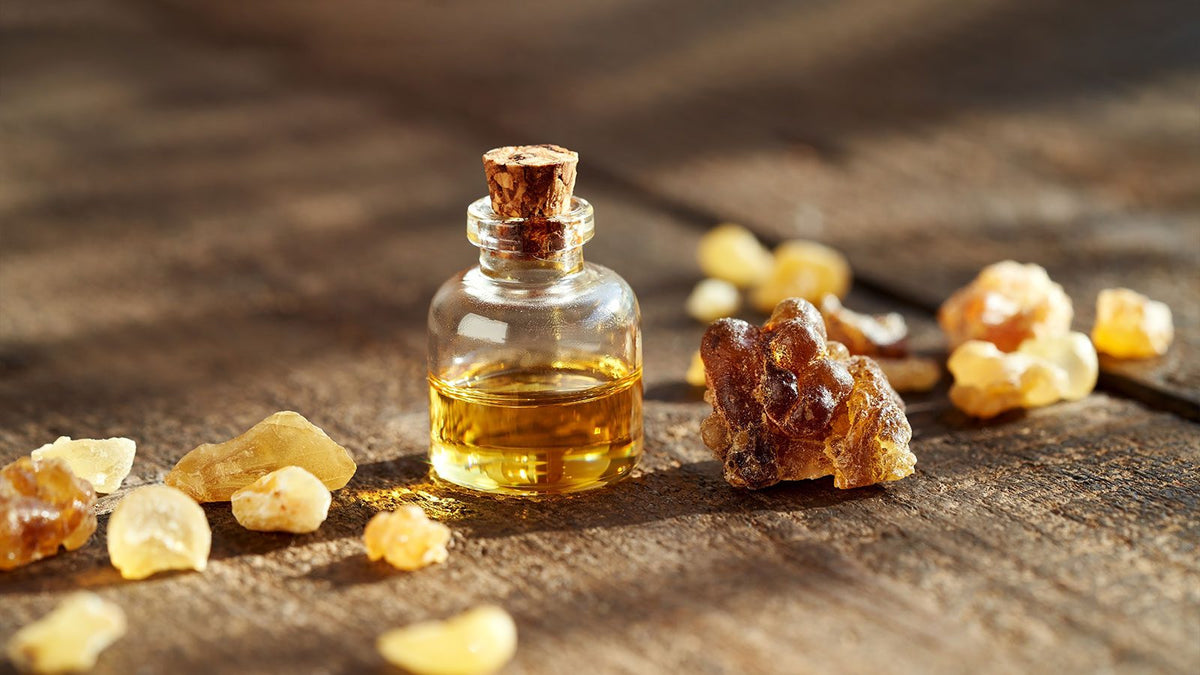
Since time immemorial, humans have used the resins of certain trees not only for ritual incense burning but also for medicinal purposes. In the traditional Indian healing art of Ayurveda, frankincense (synonym: olibanum) is said to have been used 5,000 years ago under the name "Salai Guggal" for its anti-inflammatory and pain-relieving effects against various ailments—above all, joint pain and rheumatic complaints.
What types of frankincense are there?
The German word "Weihrauch" is derived from the Old High German term for "sacred incense." Frankincense played a role in both ritual occasions and medicine as early as antiquity. "Frankincense" refers on the one hand to the smoke produced when burning certain substances, and on the other to the tree resins themselves. In a narrower sense, frankincense is the air-dried gum resin obtained from trees of the genus Boswellia.
The species used for frankincense production grow in Africa (Boswellia carterii, Boswellia papyrifera), on the Arabian Peninsula (Boswellia sacra), and in India (Boswellia serrata). For medicinal purposes, the resin obtained from Indian Boswellia trees is among the most popular.
What are the characteristics of the Boswellia serrata species of frankincense?
Boswellia is a plant genus within the torchwood family (Burseraceae). Only four of the estimated 24 species are used to produce frankincense. The most well-researched of these is the Indian frankincense tree (Boswellia serrata). It thrives in dry, hilly to mountainous regions such as Gujarat, Rajasthan, Bihar, Orissa, and parts of the western Himalayas.
Boswellia serrata reaches heights of up to eight meters and owes its name to Dr. James Boswell of the Royal Botanic Garden Edinburgh, after whom all Boswellia species have been named. The term "serrata" is derived from the Latin "serra," meaning "saw." This refers to the serrated shape of the leaves of the frankincense tree. When burned, its resin gives off a refreshing, lemony scent.
Why is frankincense used for joint pain?
In the traditional Indian healing art of Ayurveda, frankincense has had a firm place for thousands of years under the name "Salai Guggal" and is used for, among other things, rheumatic ailments, joint and muscle pain, or arthritis.
The "Indian frankincense" obtained from the frankincense tree (Boswellia serrata) consists largely of resins and the boswellic acids contained therein. In addition, "Indian frankincense" contains essential oils and mucilages.
Studies also suggest that these ingredients have an anti-inflammatory effect by suppressing pro-inflammatory messengers (leukotrienes) in white blood cells. Physical and functional ability improved, and pain could be reduced.
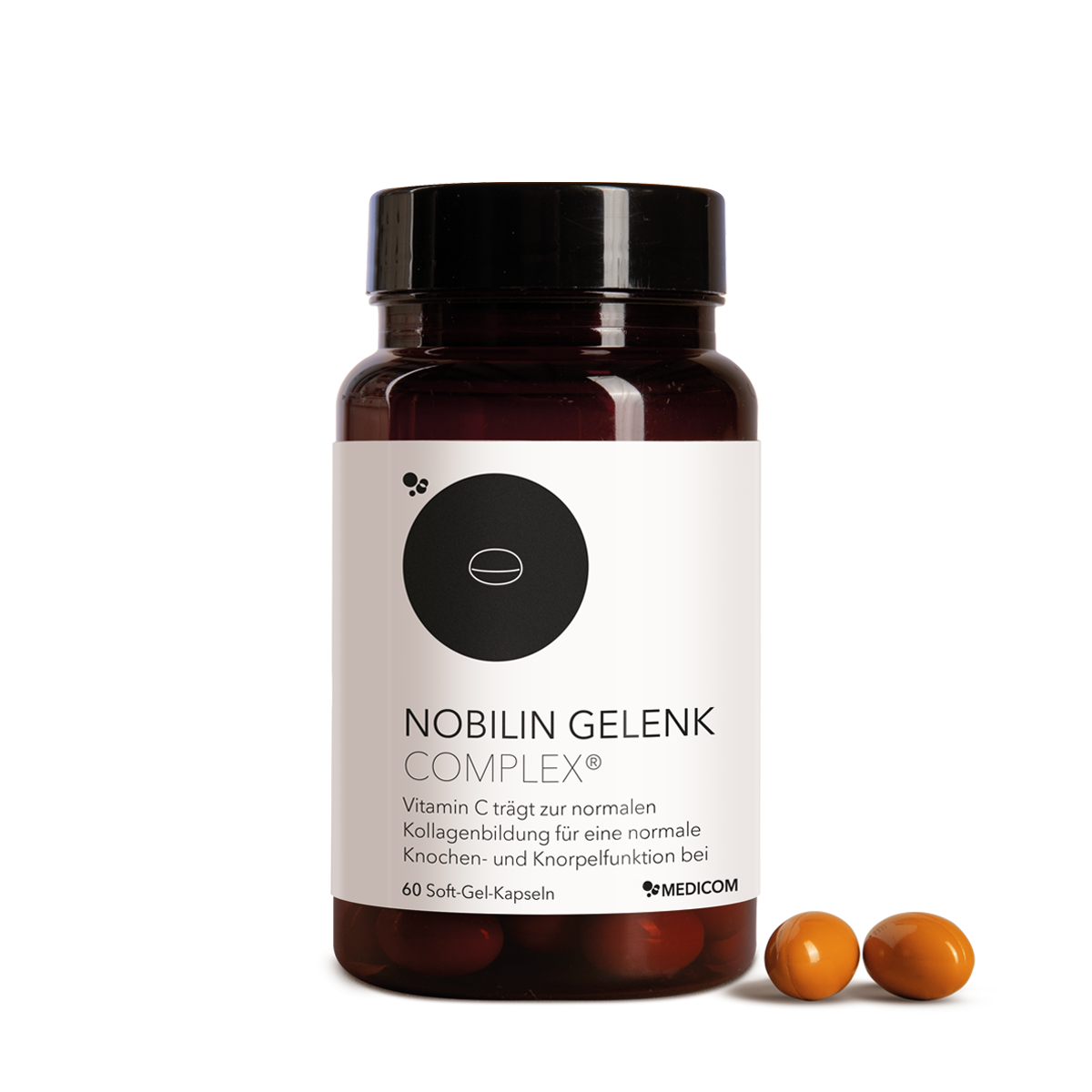
Nobilin Joint Complex®
With curcumin extract, frankincense and hemp oil
What is the history of frankincense from antiquity to the present day?
Frankincense was considered a precious commodity as early as antiquity. It was transported over long distances under heavy guard, primarily via the so-called Incense Route. It stretched from Oman through Yemen and Gaza to Damascus. One major buyer was the Roman Empire. In ancient Rome, frankincense was used not only for ritual purposes but also, for example, for wound cleaning and the treatment of respiratory diseases.
In Arabic textbooks of the Middle Ages, which draw on traditions from ancient Greece, there are descriptions of resin beads from Boswellia sacra or Boswellia serrata whose internal use was said to "strengthen the spirit and mind."
Well into the 19th century, preparations made from frankincense resin were also used in Europe for medicinal purposes before being displaced by new chemical-synthetic substances (primarily antibiotics). Only in the last few decades has there been a return to natural remedies, leading to a corresponding renewal of research.
Conclusion
Frankincense, especially Indian Boswellia serrata, is considered a natural remedy for muscle and joint pain. Studies indicate that boswellic acid has an anti-inflammatory effect because it suppresses pro-inflammatory messengers. Boswellia serrata was regarded as a medicinal plant in Indian Ayurveda, as well as in the Roman Empire and in Arab countries during the Middle Ages.
Would you like to know more about joint pain? Listen to this podcast with Prof. Döll: Treating joint pain with medicinal plants and mindfulness.