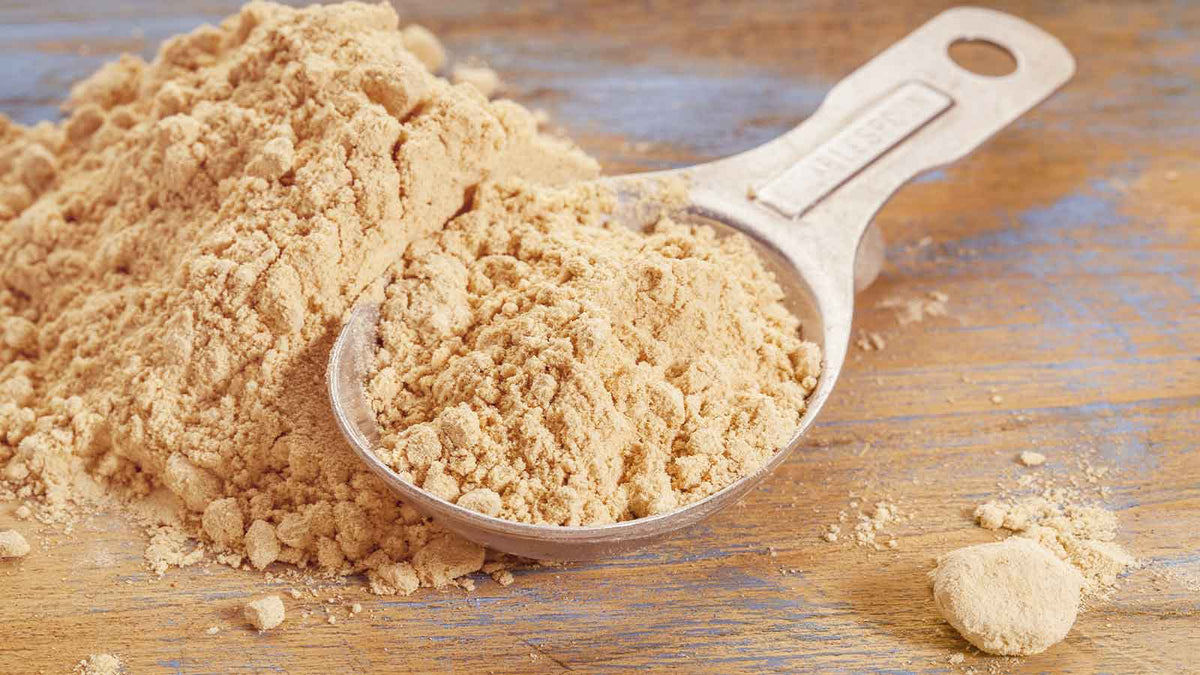
Sweet, caramel-like maca smoothie? Ever tried one? What is behind maca? The maca plant comes from the Peruvian High Andes. Its tuber is said to be particularly nutrient-rich. More information can be found in this overview.
Where does maca come from?
Maca (Lepidium meyenii) from the cruciferous family (Brassicaceae) is a biennial, herbaceous plant. It grows flat on the ground in the mountains, reaching a height of approx. 20 cm. From the root collar to the cotyledons, it develops a so-called hypocotyl tuber, in which it can store water. The stem lies on the ground, and the leaves are fleshy and pinnate. The hermaphrodite flowers grow in clusters and develop pods containing grayish seeds that are approx. 2 mm in size.
Maca originates from the Peruvian High Andes. At an altitude of 3,700 to 4,500 meters, maca is exposed to extreme wind and weather conditions. This makes maca a very resilient plant. Because its tuber consists of a main root from which many lateral roots sprout, it is also called "Andean ginseng" or "Peruvian ginseng." Various scientific studies suggest that maca can strengthen the body in both sexes.
How is the tuber used?
The roots, comparable to European swede or radish, are dried for storage. They can remain shelf-stable for up to seven years. Due to their high carbohydrate content, their taste is caramel-like and sweet. The roots are used to make soups, and maca flour is used for cookies, cakes, and chips. In Europe, the tuber is mainly available in the form of powder, capsules, or tablets.
Tip: Because of its sweet taste, the tuber is a popular ingredient in smoothies. Maca in powder form or as maca root concentrate from precisely dosed capsules is easy to use for maca smoothies.
What nutrients and effects does the maca tuber offer?
The dried maca tuber consists largely of carbohydrates and proteins, as well as a small amount of fat, and thus has a high nutrient content. It provides important minerals and vitamins, including primarily the minerals calcium, potassium, iodine, zinc, iron, copper, and manganese. Its vitamins include, for example, B2, B6, vitamin C, and niacin.
The root also contains various secondary plant compounds—especially mustard oil glycosides. In addition, the tuber is rich in antioxidants, has a revitalizing effect, and is considered a natural aphrodisiac. Maca supplements are generally well tolerated. At higher doses, slight restlessness and nausea may occur.
You can find more information on the subject of maca here.