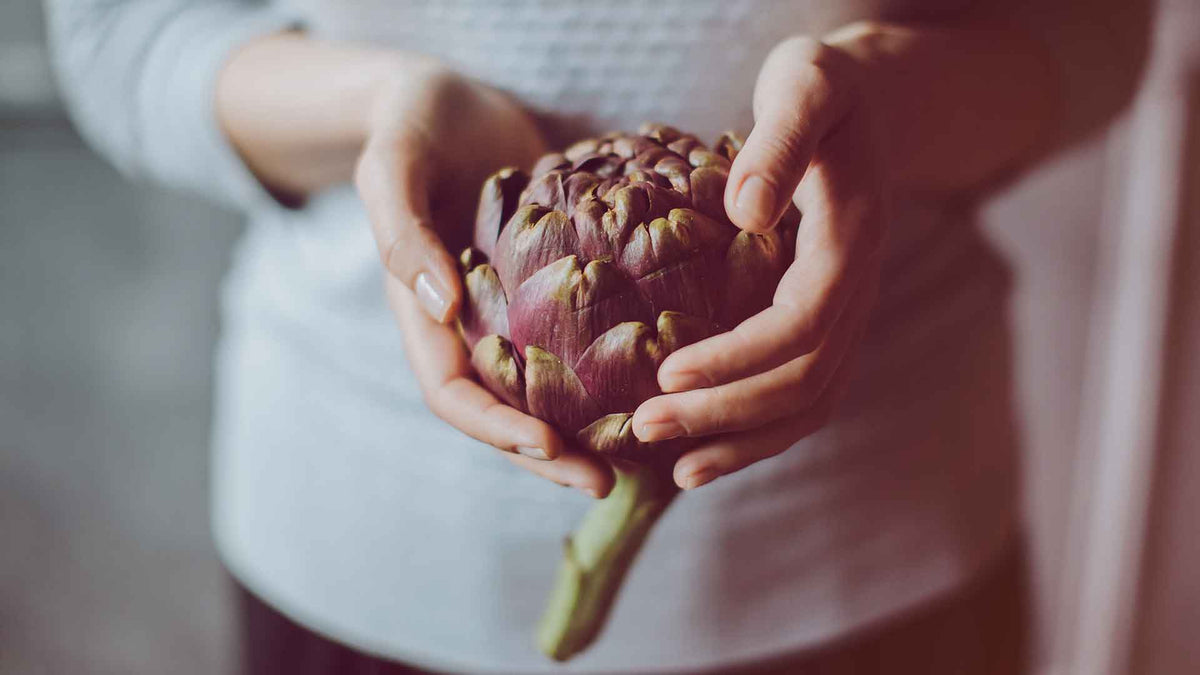
The so-called “food of the rich” and gourmet vegetable is a delight not only for the palate, but above all for your liver. Why? Artichoke leaves are interesting because they are traditionally used for digestive complaints such as bloating and a feeling of fullness. Get a complete overview of the artichoke right here.
Where does the artichoke come from?
This green delicacy was not known for long. Many people have enjoyed it while on vacation in the Mediterranean. But this green vegetable has a long tradition. Since ancient times, Cynara scolymus L., as its Latin name goes, has been considered a medicinal plant. It was cultivated in Egypt as early as 500 BC. It was a delicacy among Roman patricians and was also a staple of the Arab diet.
In the 15th century, the tasty medicinal plant appeared in France and England. Nowadays, you can find it everywhere. And it is grown wherever the climate allows, but especially in the Mediterranean region, Romania, Morocco, Algeria, and the USA (Florida). Artichokes also adorned Johann Wolfgang von Goethe's garden in Weimar. We know this from his correspondence with his wife, Christiane Vulpius. Today, the delicacy is also grown in Germany, for example in Rhenish Hesse and the Southern Palatinate.
Artichoke: Ingredients and effects
Artichoke leaves and the receptacle contain ingredients, and it is precisely these that are important for digestion and the liver, the great sewage treatment plant of our body. Of particular interest are the flavonoids (including luteolin) as well as chlorogenic acid, cynarin, and other bitter substances. As a medicinal plant, it is used for digestive complaints because it increases bile flow. This can help alleviate various digestive complaints such as a feeling of fullness and bloating. It also contributes to lowering blood lipid levels. Bile supports the liver, and the liver helps digestion. Not only that: the plant boosts fat digestion, improves our cholesterol levels, and protects cells as an antioxidant.
What artichoke products are available?
Artichoke leaf extracts, artichoke juice, and also artichoke tea are available in well-stocked health food stores and online shops. Artichoke leaf extracts in capsule form are popular.
What should you look out for with artichoke capsules?
If you have an existing allergy or bile duct obstruction, you should avoid products containing this medicinal plant entirely. If you suffer from gallstones, you should consult your family doctor before taking preparations regularly. The green delicacy is very digestible and a boon for digestion. Click here for a delicious recipe featuring the green delicacy.

Why is the artichoke good for the liver?
Artichoke leaves offer valuable cynarin, chlorogenic acid, and flavonoids (including luteolin). They act as something of a helping hand. The bile, or more precisely the production of bile fluid, is happy about the bitter substances from the green delicacy. Artichoke to bile: That is a true declaration of love for well-being. Good bile production helps with feelings of fullness, nausea, bloating, and upper abdominal discomfort. Bile supports the liver, and the liver helps digestion. Not only that: The medicinal plant boosts fat digestion, improves our cholesterol levels, and protects cells as an antioxidant.
Artichoke as a vegetable with a heart
For artichoke recipes, the closed flower head is used. The inner bracts and, above all, the artichoke heart, which is its fleshy receptacle, are considered a delicacy. The scale leaves of the flowers serve as food; they have a fleshy pulp on the inside that you scrape off with your teeth after a cooking time of about half an hour. There are also varieties where the leaves can be eaten entirely. The artichoke heart, which refers to the fleshy receptacle, is considered a special delicacy.
How do I prepare an artichoke?
How delicious! You have many options for how you can prepare this gourmet vegetable:
1. pickling
2. boiling
3. steaming
4. frying
This results in pickled artichoke hearts, artichokes cooked in white wine and garlic... There is a multitude of recipes. When buying, you should pay attention to one thing above all: Fresh artichokes can be recognized by their green leaves and the fact that the vegetable heads are heavy. Now you have the delicacy at home. If you cannot prepare it immediately, wrap it in a damp cloth. You can store the delicacy in the refrigerator for up to two days this way.
Artichoke for dipping
Here is a suggestion on how you can prepare the vegetable. Wash them thoroughly with water. Break off the stem and remove the lower, harder outer leaves. Then cut off the artichoke stem and drizzle it with lemon juice. Now you can let the vegetable boil in a pot of salted water with a few splashes of lemon juice for a good half hour. When the leaves come off easily, they are ready—ready to dip. Try them with various sauces made from herb cream cheese or with olive oil and balsamic vinegar. Dip leaf by leaf and work your way down to the heart with enjoyment.
What is the nutritional value of an artichoke?
Green, low in calories, and packed with nutrients
100 grams of artichoke: 22 kilocalories
Also in 100 grams of the edible part of the artichoke
-Protein: 2 grams
-Carbohydrates: 3 grams
-Vitamin A: 17 micrograms
-Potassium: 350 milligrams
-Calcium: 53 milligrams
-Magnesium: 2 milligrams
-Iron: 1.5 milligrams
What if you don't like artichokes?
What if you are not an artichoke fan but still want to naturally whip your digestion and liver into shape? No problem. Artichoke leaf extract is available in tablet form and as a bitter artichoke tea, which you can sweeten if needed.
Conclusion
The green vegetable is not only a wonderful delicacy, but it is also traditionally used for digestive complaints. The artichoke’s own bitter substance, cynarin, promotes bile flow, supports liver functions, boosts fat metabolism, and helps normalize blood lipid levels. If there are no allergies, artichoke capsules can support digestion.
• Are you looking for an artichoke product? Click here.