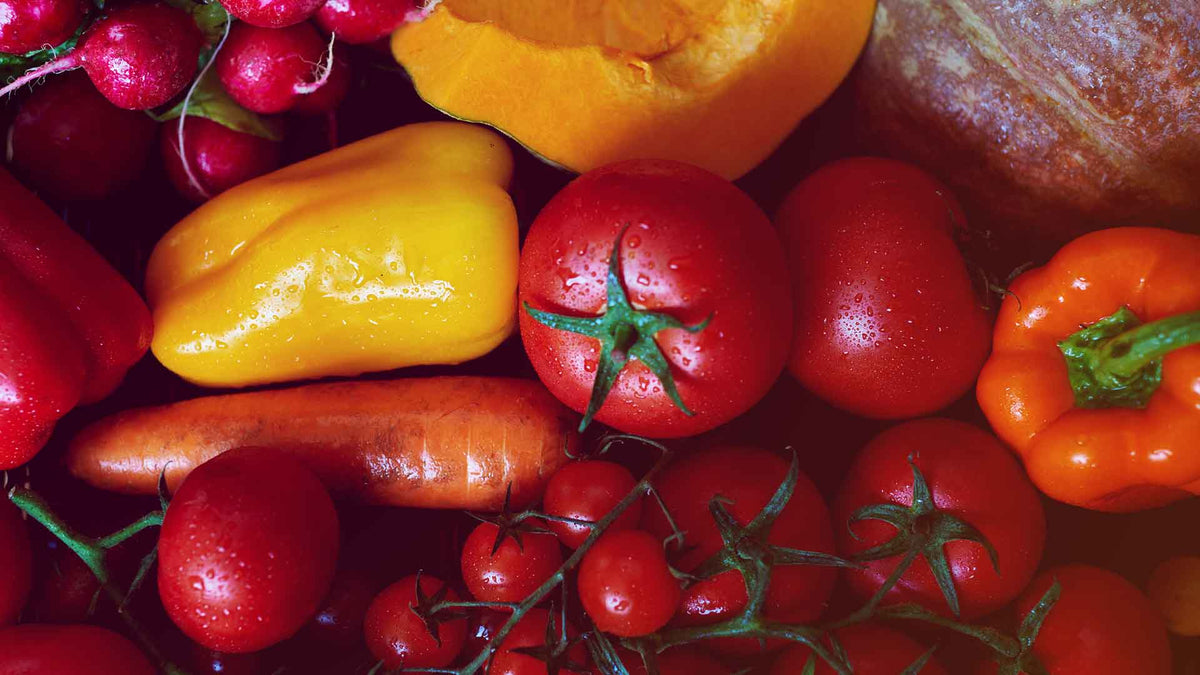
They are red, orange, yellow, and they have one thing in common: they are packed with secondary plant compounds. Bacteria, viruses, and germs in tomatoes and other produce are afraid of them, because secondary plant compounds protect plants from invaders. Get yourself a red plate. Here is why.
What are secondary plant compounds?
Red fruits and vegetables are rich in secondary plant compounds. They are responsible for the bright red, orange, or yellow color; in the case of reddish produce, it is beta-carotene, which is converted into vitamin A in the body. However, secondary plant compounds also protect the plant from invaders and act as highly potent antioxidants in our bodies. They can neutralize free radicals and are therefore important cell protectors. What protects our cells is good for our immune system, cardiovascular system, our skin, and our overall well-being. Beta-carotene is just one of many antioxidants. Important ones include: lycopene, polyphenols, phytosterols, proanthocyanidins, etc. You can find these in tomatoes, pumpkins, and cranberries, for example.
What does a tomato contain?
The tomato offers lycopene, an antioxidant and a form of internal sun protection. For nutrition experts like Dr. med. Anne Fleck, this Mediterranean fruit vegetable is an all-rounder. That is because the tomato contains lycopene, which belongs to the carotenoid group. It is highly antioxidative and responsible for the reddish color of tomatoes. The special chemical structure of this secondary plant compound makes it possible to bind and neutralize singlet oxygen (a free radical) created through oxidation. This makes lycopene an excellent internal defense for our cells.
Good to know: We ingest most of our lycopene through tomatoes and tomato products. Interestingly, the lycopene content of processed tomatoes or tomato products is significantly higher compared to fresh, raw tomatoes. This is because lycopene in oil-based or heated tomato products is particularly well utilized by our organism—or, in other words, particularly bioavailable.
That is not all. A standardized water-soluble tomato concentrate (WSTC II) can be extracted from the jelly surrounding the seeds of the red fruit. Lycopene is not the deciding factor here, as it is not present in that part; instead, other secondary plant compounds such as polyphenols and flavonoids are. This special tomato concentrate helps maintain normal platelet aggregation. It thus contributes to a healthy blood flow. This has even been confirmed by the EFSA (European Food Safety Authority). According to their findings, the positive effect occurs 1.5 hours after consuming 150 mg of WSTC II with a glass of liquid.
Which nutrients are in pumpkin seeds?
There are up to 800 different varieties of pumpkins. However, not all of them are edible. The pumpkin fruits that can be used in the kitchen contain seeds, just like many other fruits. In addition to unsaturated fatty acids, proteins, carbohydrates, trace elements, and vitamin E, the ripe, dried pumpkin seeds contain valuable phytosterols. These are found primarily in fatty parts of plants, such as seeds and kernels. Pumpkin seeds contain particularly high levels of phytosterols.
In natural medicine, pumpkin seeds are a classic for strengthening the bladder and the prostate. To please the palate, pumpkin flesh and pumpkin seeds can be used to conjure up many delicious dishes in the kitchen. They are in season from August. By November at the latest, they serve as decorations and ingredients for the soup pot.
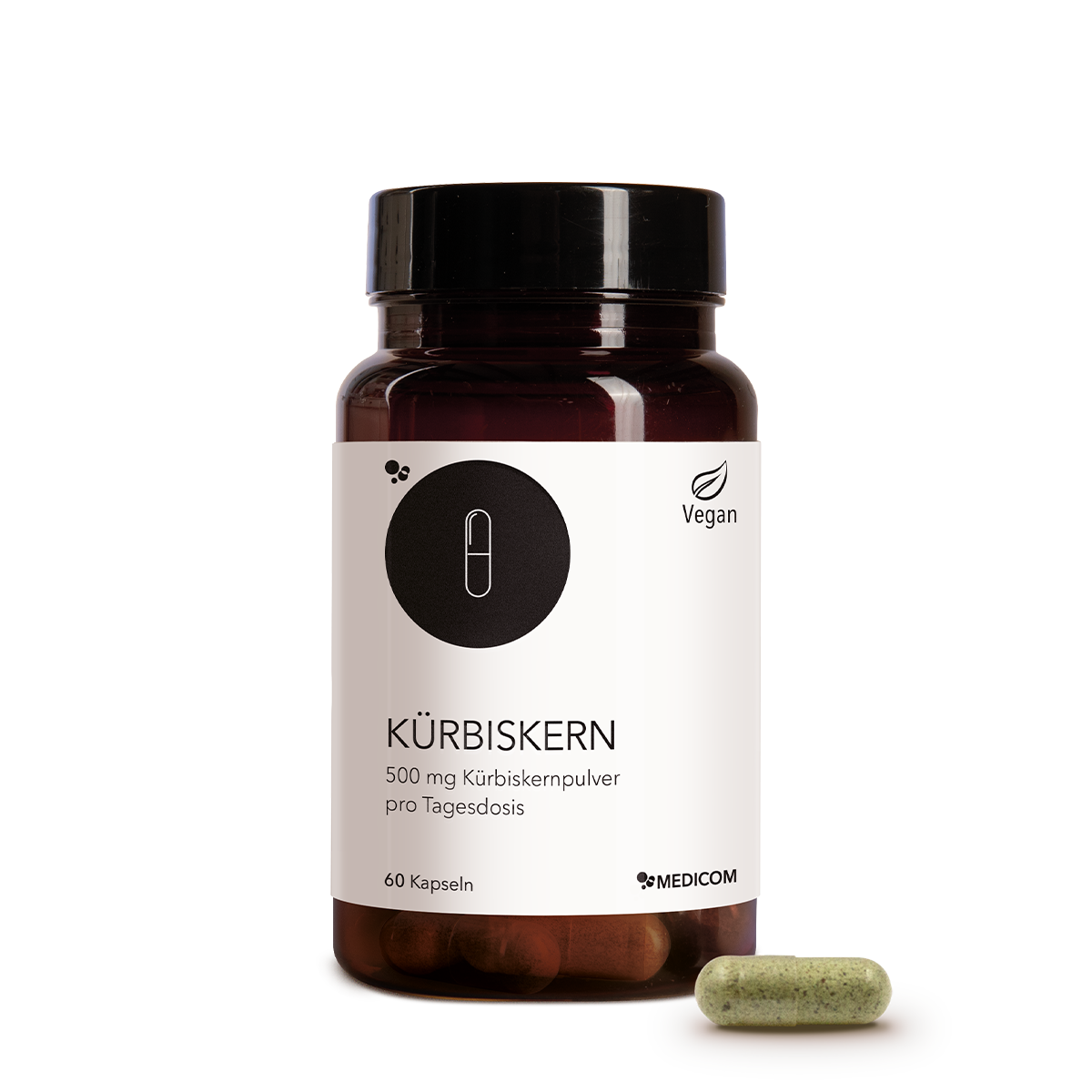
Pumpkin seed
Obtained from Styrian oil pumpkin
Those who like sweets and pumpkin flesh should try Spanish desserts with "cabello de ángel," which translates to "angel hair." It is made from the fruit flesh fibers, caramelized, and used as a sweet filling in puff pastry or processed into jam.
• Tip: Sweet and spicy
The sweet taste of pumpkin flesh can be ideally mixed with spicy flavors. A good example of this is pumpkin soup with ginger. Pumpkin seeds, with their nutty, bitter undertone, are also a quick and easy ingredient for salads.
What are cranberries good for?
Another fruit is considered in nature to be a supporter of the bladder, the gut, and the immune system. The bright red cranberry, also known as the bearberry, originally comes from North America. It serves its purpose in the kitchen primarily as a dried snack, in muesli, and in berry mixes. There is also compote, juice, and even lozenges and tea with cranberries. Muffins with this red, tart fruit are also very popular.
Anyone who eats cranberries benefits twice over. Tasting slightly more tart than a raisin, the fruit offers plenty of secondary plant compounds. Of particular interest are the so-called proanthocyanidins (PACs). These are tannins that prevent pathogens, such as Escherichia coli bacteria, from adhering to the gut or the mucous membranes of the urinary tract. Pathogens can lead to bacterial imbalances in the gut and urinary tract, causing inflammation and fungal infections. PACs from the cranberry fruit prevent bacteria from attaching themselves. The pathogens are then excreted through the urinary tract. In the gut, they ensure a healthy balance.
• Tip: Not all juice is created equal
When buying cranberry juice, make sure it is direct juice or "mother juice" (pure pressed juice). This is fruit juice that is fresh-pressed and bottled unfiltered, which means the valuable nutrients are largely preserved.
Conclusion
Secondary plant compounds are antioxidants. For plants, they serve as colorants and
protectors; for us, they protect against free radicals and strengthen our well-being. They possess many health-promoting effects.
• Would you like to know which health products contain secondary plant compounds? Click here.