1. What is dietary fiber?
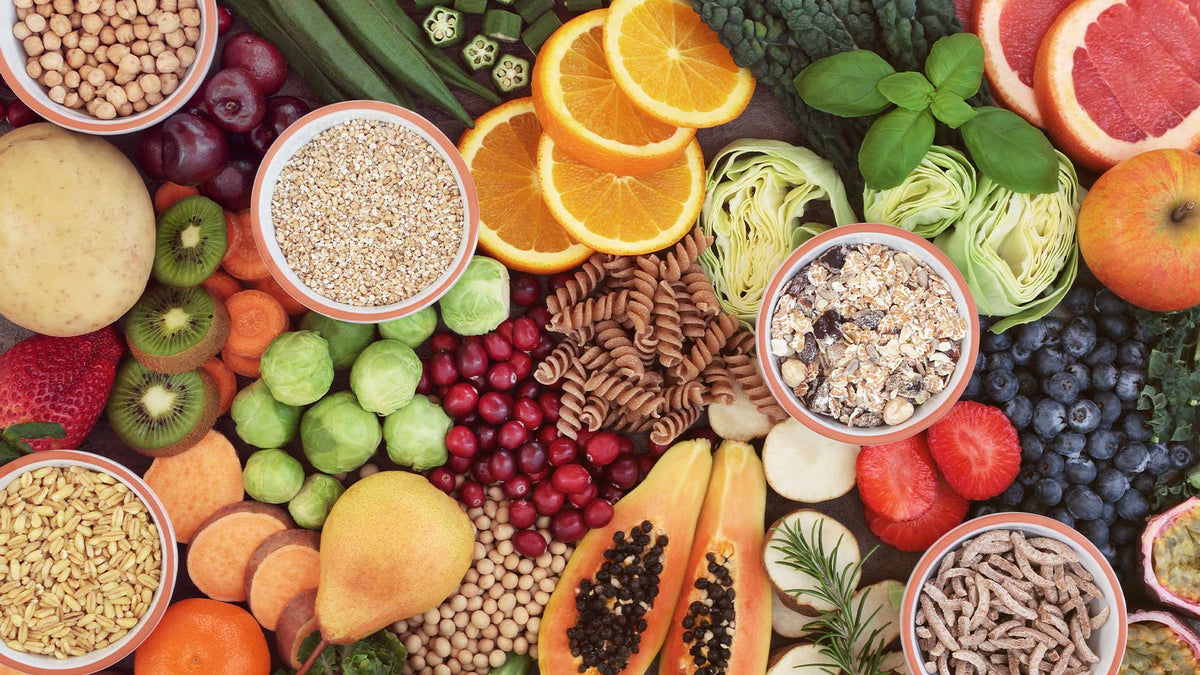
Dietary fiber consists of indigestible plant fibers found primarily in fruits, vegetables, legumes, seeds, and nuts.
2. What can dietary fiber do for your health?
It promotes digestive tract activity, helps with constipation, and supports gut flora. Due to its satiating properties, it can help curb cravings.
3. Two types of dietary fiber
- Water-soluble fiber: It dissolves in water and passes through the stomach unimpeded. It ferments in the large intestine, where it serves as food for "good" gut bacteria.
- Water-insoluble fiber: It is an excellent plant-based way to feel full because it swells in the stomach, thereby promoting a feeling of satiety, supporting bowel function, and increasing stool volume.
4. For gut health
As the latest findings show, our modern diet contains too little dietary fiber. Although nutritionists repeatedly recommend increased intake of dietary fiber through fiber-rich foods, very few people put this recommendation into practice.
5. How much dietary fiber is good?
Nutrition experts suggest 30 to 40 grams of dietary fiber daily. The German Nutrition Society (DGE) in Bonn recommends a daily minimum of 30 grams.
6. Dietary fiber deficit
According to the DGE, neither men nor women reach the recommended daily amount. On average, men only achieve 25 g and women 23 g daily. Furthermore, the National Consumption Study II reveals that 68 percent of men and 75 percent of women do not meet the recommended dietary fiber intake.
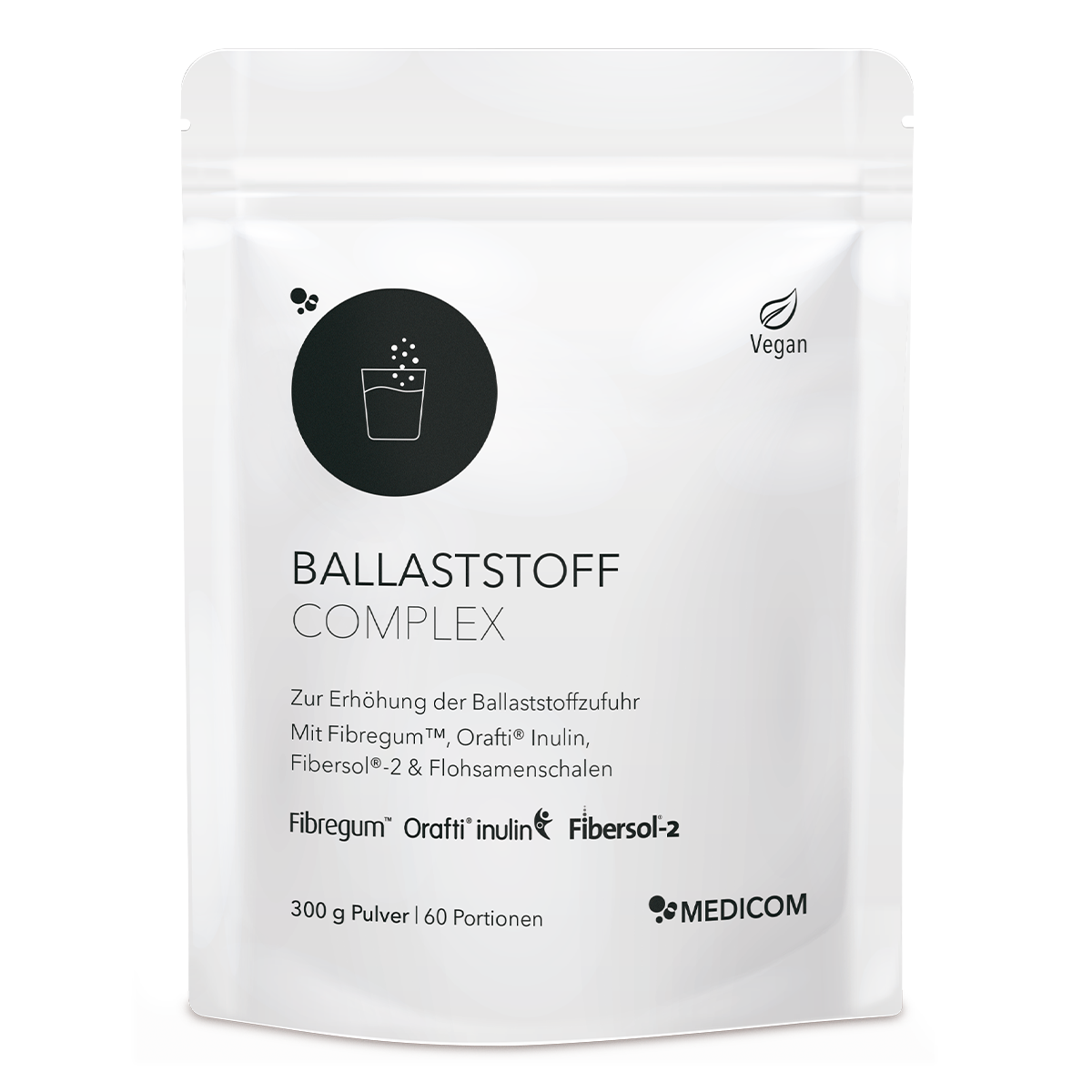
Fiber Complex
Fiber Powder: A Plus for Digestion
7. Fiber-rich foods
Anyone consciously watching their diet should definitely include these foods in their meal plan: whole grain products, fruits, and vegetables. When eating fruit, you should eat the peel whenever possible.
Tip: If you are taking extra fiber, you should also drink plenty of water, as dietary fiber binds a lot of water.