
Just think about the fact that you have had a hearty breakfast, and this simple thought alone could cause you to eat fewer calories over the course of the day. No, now it gets serious: A study shows how the power of thought determines your feeling of hunger.
We all have days where we feel like a bottomless pit. We could eat all day, shoveling food into ourselves without ever getting the feeling of being truly full. Bad ingredients for losing weight.
If you think you are eating a lot...
Your behavior, as well as external stress factors, play an important role in this feeling of cravings. While you are stressing at work or training like crazy for days, your mind is busy and perhaps thinking less about food. But there is another essential factor that influences your eating behavior, and that is breakfast.
Because if you think during breakfast that you are about to consume a substantially calorie-rich meal, this thought will spur you on throughout the day to quite simply eat fewer calories, and losing weight will become easier.
By the way, the whole trick also works the other way around. If you feel like your breakfast is "skimpy" and you think that you haven't actually eaten enough, you will try to compensate for this deficiency throughout the day. This was the finding of studies by the British Psychological Society.
Study on weight loss: The power of thought
In the study, the participants were divided into two groups. They all received a three-egg omelet. One group was told the omelet had two eggs. The other group was made to believe it was a four-egg omelet. Those who believed they had eaten a four-egg omelet did not experience hunger symptoms until four hours later, while those who thought they were eating a smaller meal reported feeling hungry again after just two hours. Furthermore, the two-egg omelet group ate significantly more at lunch and consumed considerably more calories over the course of the day.
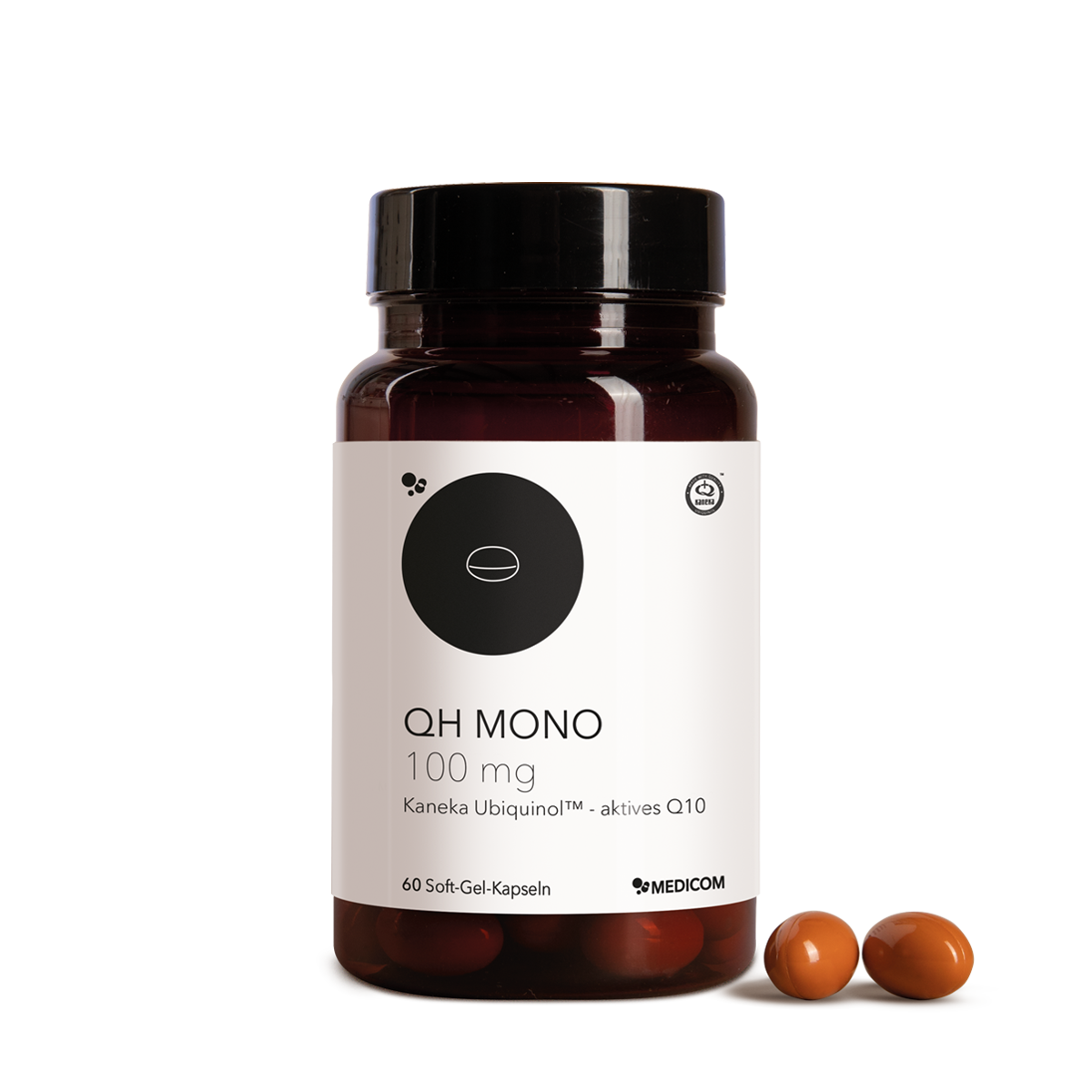
QH Mono 100 mg
High-dose bioactive coenzyme Q10
What controls our appetite?
"The analysis of ghrelin levels, an appetite-stimulating hormone, shows us that changes in the feeling of hunger and the calories consumed later have nothing to do with the different physiological reactions of the subjects to the food," said the study's author, Dr. Ph.D. Steven Brown, in a press release. "Therefore, memory of previous consumption, as opposed to physiological factors, may be a better target to investigate why expectations for a meal have an influence on subsequent feelings of hunger and calorie intake."
• Are you interested in weight loss products? You can read more about them here.