From the herbal medicine of antiquity to the discovery of vitamins: for centuries, humans have been concerned with the question of how diet and vital substances can support health and well-being. A brief journey through time in history.
Vitamin D for bones, folic acid for blood formation, vitamin C and zinc for the immune system. Ever since antiquity, humanity has known that a healthy diet is essential for the well-being of body and mind. The most famous sentence in this context is probably: "Let food be thy medicine and medicine be thy food..." It comes from the famous physician of Greek antiquity, Hippocrates of Kos (460 to 370 BC).
What good can nature, plants, food, and the vital substances they contain do for us? The ancient Egyptians were already preoccupied with this question. A brief journey into the past and present sheds light on how we can make use of the power of a healthy diet, its nutrients, and food supplements.
Herbal medicine: Since antiquity
The idea that food should be medicine and vice versa has lost none of its relevance today. Over the centuries, this guiding principle has been put into practice by many physicians, healers, and health-conscious people. For example, plants as therapeutic agents appear in many ancient texts: from ancient Egypt, Babylon, and India to China. The Indian healing art of Ayurveda and traditional Chinese medicine (TCM) are based on the healing power of plants. From Ashwagandha and turmeric to Zingiberaceae (the botanical name for ginger), there are many plants from Asian natural medicine that have also found their way into the West.
Medical book found between the legs of a mummy
One of the oldest medical books of antiquity, the "Ebers Papyrus" (1,500 BC), named after the Egyptologist Georg Ebers, describes medical topics such as gastrointestinal complaints and wound healing and even covers contraception. Around 800 instructions and 700 medicinal substances are mentioned. Anise and garlic are also listed. The Ebers Papyrus was acquired in the 19th century by the German Egyptologist Georg Ebers. He bought the "medical" collected manuscripts from a seller in the ancient Egyptian city of Thebes. It is still unclear today during which looting, in which sarcophagus, and with which mummy the papyrus collection was found.
Hildegard of Bingen: healthy, moderate eating
The knowledge from these texts was not lost. In the European Middle Ages, it was, among others, the monks and nuns who occupied themselves with knowledge of plants and their benefits. In the so-called scriptorium, a monastery's reading and writing room, they collected ancient texts, copied older ones, translated, revised, and supplemented the study of medicinal plants.
The famous abbess Hildegard of Bingen (1098 to 1179) also wrote medical texts and took up the ideas of Hippocrates. Her rules for living included an orderly lifestyle, a balanced combination of activity and rest, and healthy, moderate eating. A healthy diet is described as a cure for ailments and for long-term use for a healthy life. The natural power of plants ensures greater well-being and alleviates complaints.
20th century: Birth of the vitamins
However, it was not until the beginning of the 20th century that vital substances—that is, vitamins from nature, from plants, and animal products—were discovered and studied as such. There are currently 13 vitamins. They are divided into fat-soluble vitamins (vitamins A, D, E, and K) and water-soluble vitamins (vitamin C, B1, B2, niacin, pantothenic acid, vitamin B6, biotin, folic acid, and vitamin B12). Alongside vitamins, minerals and trace elements also fulfill important functions in the human organism. The most important include calcium, potassium, magnesium, sodium, phosphorus, chromium, iron, fluoride, iodine, copper, manganese, molybdenum, selenium, and zinc.
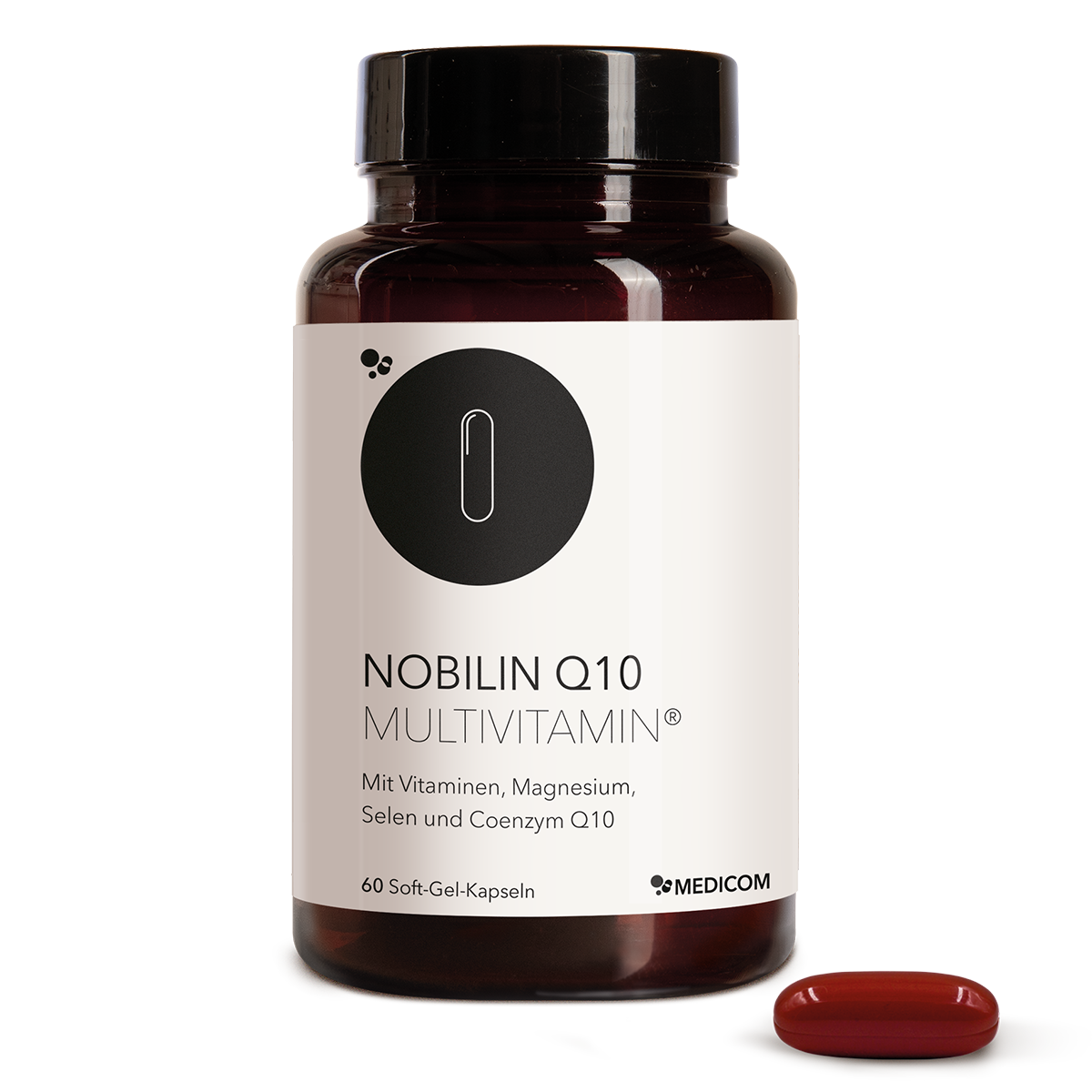
Nobilin Q10 Multivitamin®
Multivitamins with coenzyme Q10
• Discover the world of natural medicinal plants. You can find what you are looking for here.
• In the vital substance glossary of the Medicom blog, you will find further entries on medicinal plants. Click here to continue.