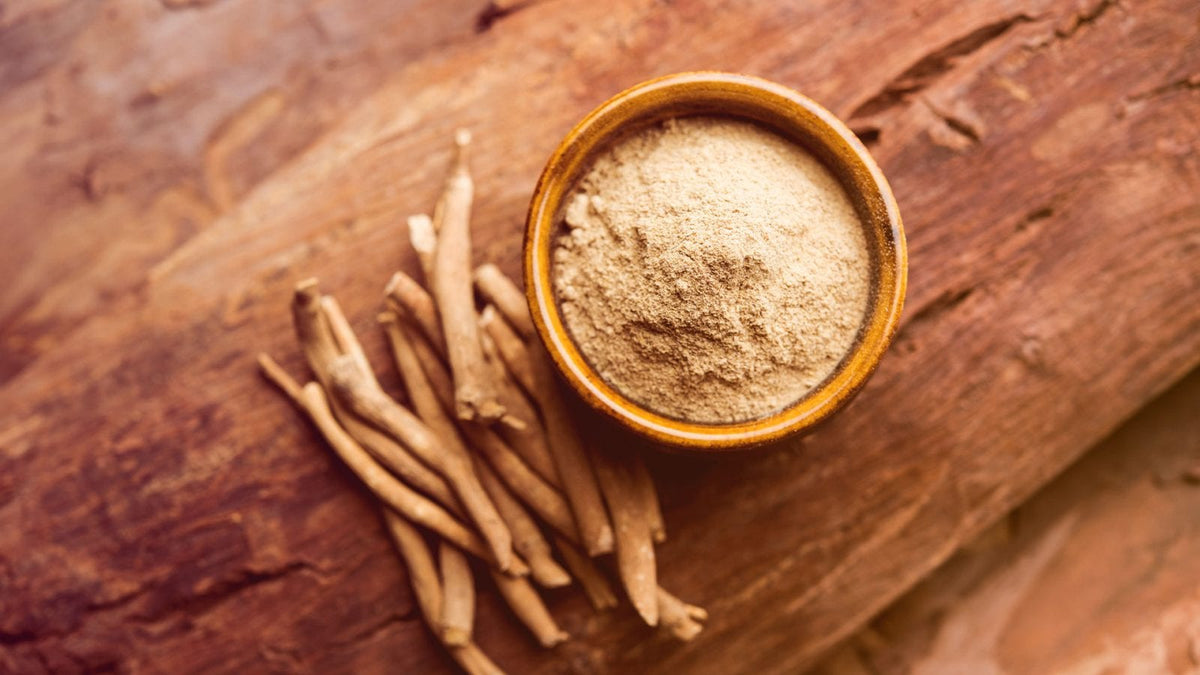
In the traditional Indian healing art of Ayurveda, the Ashwagandha plant has played an important role for about 3,000 years. In the ancient Indian language of Sanskrit, the name means "smell of a horse." This describes both the actual scent of the plant and also serves as a hint at the powers that Ashwagandha is said to bestow.
This nightshade plant is also known as winter cherry (Withania somnifera), sleeping berry, or Indian ginseng. The valuable active ingredients are found primarily in the root. The plant grows up to 1.50 meters tall. The roots are used for powder extract or as a preparation for tea. True to the tradition of Ayurveda, the root is cleaned with milk before being pulverized.
Active ingredients in Ashwagandha
The medicinal plant from Ayurveda contains withanolides. These chemical compounds have a positive effect on your body. In addition, the plant root contains alkaloids (anaferine, anahygrine, tropine, and withasomnine). Thanks to these ingredients, Indian ginseng has an antioxidant effect. It therefore possesses a variety of health-promoting effects.
Harmonization
According to studies, the ingredients of the sleeping berry have a positive effect on the balance of body and mind. This is why the plant is also considered nerve-supporting in Ayurveda.
Ashwagandha - Adaptogen
Ashwagandha is considered an adaptogen. Adaptogenic plants help the body to better respond to stressful situations. Indian ginseng is known in Ayurveda as a vital tonic.
Ashwagandha milk
If you would like to prepare a warm Ashwagandha milk, you only need to take a plant-based milk of your choice, for example, soy drink, oat drink, cashew drink, or almond drink. Bring the milk to a brief boil. Then add 1 teaspoon of Ashwagandha root extract while stirring. If necessary, you should use honey or your preferred sweetener, as the Ashwagandha root extract has a bitter taste.
• Would you like to learn more about adaptogens and herbal products? You can find what you are looking for here.