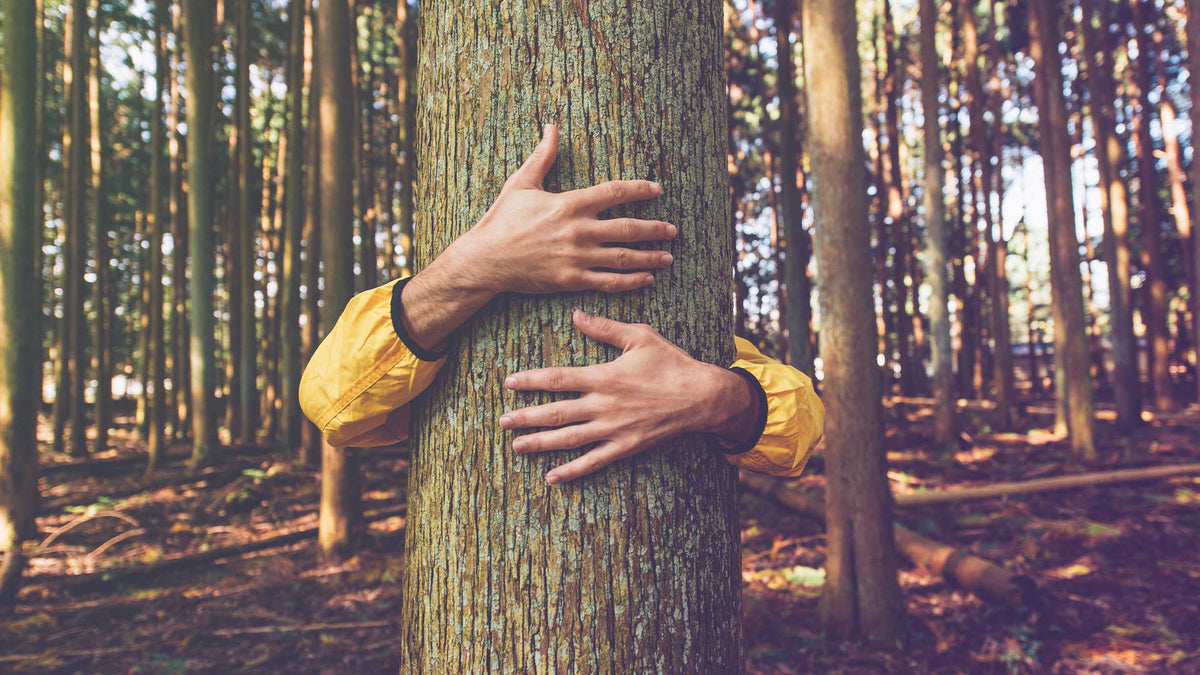
Sustainability is a topic of ever-increasing urgency. In her book "Saving the World Every Day" ("Jeden Tag die Welt retten"), journalist Julia Felicitas Allmann provides clear guidance for everyday decisions. Medicom spoke with the winner of the Dumont Journalism Award about topics including animal products, palm oil, sustainable internet use, and online shopping.
Medicom: "Saving the World Every Day": That sounds like an ambitious title. How did you get into the topic of sustainability?
Allmann: I first wrote an article that revolved around five questions about sustainability in everyday life. These were questions I was unsure about myself. So I did some research and then wrote about it. Following that, a publisher approached me with the idea of turning it into an entire book. Because I realized myself how many more potential questions there are, I thought the suggestion was great.
Medicom: How did you narrow down the topic, and how did you research it?
Allmann: It was important that these were topics where we could give the readers a clear answer. If the conclusion is always "it depends," no one benefits from that. To find the answers, I interviewed many experts, read studies, and checked databases. In the end, that resulted in 66 everyday questions for which I was able to provide an answer after extensive research.
Medicom: What are your three most important recommendations for people who want to live more sustainably?
Allmann: First: Consciously look at our own consumption and the background behind it. Everything we buy or eat has a story—and we often aren't even aware of it. For me, the first step is becoming informed, then each of us can decide for ourselves in which areas we want to take action to live sustainability consciously.
Second: Consume fewer animal products. I hadn't realized before what a climate burden dairy products also represent. Most people probably know that meat isn't good for the environment. But that, for example, 628 liters of water are used to produce one liter of milk—that was new to me.
I hadn't realized before what a climate burden dairy products also represent.
Third: Think about the environment when it comes to clothing as well. There are so many shocking reports about production conditions—yet we constantly shop at fast-fashion chains. And yet there are so many opportunities to buy second-hand or (even if it's more expensive) from fair-fashion labels. When I had my son, I was constantly advised to wash new clothes two or three times before wearing them to wash out all the pollutants. But where do they end up then? It's just a thought to let sink in.
Medicom: Why is consuming butter so much more harmful to the environment than margarine?
Allmann: Butter is considered by environmental experts to be one of the most climate-damaging foods of all. About 15 kilograms of CO2 are emitted for one kilo of butter—that's more than beef, which is estimated at 13 kilograms. It takes about 20 liters of milk to produce one kilo of butter, and as previously mentioned, the environmental impact of milk production is quite high.
Medicom: Tea, coffee, cocoa—what should we look out for when buying?
Allmann: Even if it sounds cliché: the most important thing is to buy products of organic quality and to pay attention to fair production. For coffee, for example, it is now being grown in some areas that are not at all suitable for it—but you have to meet the high consumption somehow. For coffee cultivation to succeed there, more fertilizers and pesticides have to be used. With organic coffee, we rule that out. With all three beverages, it's the case again that they have long production chains and travel long distances behind them. They are valuable foods that we shouldn't waste—so it's better not to pour half a pot of coffee down the drain because it's gone cold. Instead: plan better, handle them more consciously, and then enjoy.
The most important thing is to buy products of organic quality and to pay attention to fair production.
Medicom: Should we consume chia seeds or flaxseeds when it comes to sustainability?
Allmann: Here, the question of transport routes and the associated CO2 emissions is crucial. We can also get flaxseeds regionally, while chia seeds primarily come from Central America. Furthermore, their yield is lower—so more land is used than for flaxseeds.
Medicom: Why do you argue against boycotting palm oil in your book?
Allmann: The immense consumption of palm oil is a huge burden on the environment, that's clear. But many sellers, with the best of intentions, take care to avoid palm oil and instead reach for products that contain other oils as substitutes. However, with rapeseed, sunflower, or coconut oil, the yield is much lower, and the land requirement increases. It would be better to take a closer look at palm oil: there are labels like RSPO or FONAP that at least guarantee compliance with minimum standards. It would be best if we simply reduced our consumption of palm oil, for example, by buying fewer ready-made products and using less fuel. That would actually do us some good ourselves, too.
Medicom: Would you rather shop online or drive from the countryside into the city to go shopping?
Allmann: This actually depends on the circumstances: If I order ten T-shirts online, of which I return eight later, that is harmful to the climate—because returns in particular are a big problem. If I know exactly which product I need in which size and, in an ideal scenario, have it delivered climate-neutrally, then that can be better than driving into the city by car just for that one item. However, if I can do all my shopping for the winter with one shopping trip in the city center and would need five online orders to do that, then the drive would be okay.
Digital sustainability is now a huge topic, especially since sending large data packets consumes a lot of energy.
Medicom: How can one use the internet as resource-efficiently as possible?
Allmann: Digital sustainability is now a huge topic, especially since sending large data packets consumes a lot of energy—which is why streaming is also considered a CO2 guzzler. So, watching and sending fewer videos already helps. Otherwise: It's better to use Wi-Fi instead of mobile data and not use search engines so often, because every single query consumes energy. Often we already know exactly what destination we are heading to on the internet but are too lazy to type in the complete address. Naturally, we can and do not want to go without all these things ever again. But here too, it helps to make oneself aware of the background in order to give the planet a slightly better future through small changes.
• If you want to learn more about the topic of "sustainability," then continue reading here.
Jeden Tag die Welt retten (Saving the World Every Day). GU-Verlag, 2020. In her book, journalist Allmann presents simple sustainability tips for everyday life.