Vitamin D3 is a fat-soluble vital substance that you obtain through food. However, your body synthesizes the vast majority of it from sunlight. This can become difficult during the dark time of the year. Because even when the sun is shining, in winter it is too low in the sky to expose your skin to sufficient UV radiation. Apart from that, most of us spend far too much time indoors anyway. Yet, an adequate supply of vitamin D3 is particularly important for your health and well-being during the cold and flu season.
Why do I need vitamin D3?
Vitamin D3 is the most important vital substance in the vitamin D group. For example, it is central to your calcium metabolism. Calcium, in turn, is a key building block for your bones and teeth and is indispensable for their stability, growth, and regeneration. It increases the mineralization of your bones and can specifically help prevent osteoporosis. But vitamin D3 does not support your bones solely by enabling the absorption of calcium. Furthermore, the vitamin regulates important bone proteins and cells. Vitamin D3 is also indispensable for the stability of your immune system. A sufficiently high vitamin D3 level helps you to mobilize effective defense cells against infections caused by viruses, fungi, or bacteria. Various studies also suggest a positive influence of vitamin D3 on depressive moods and reduced memory performance.
Vitamin D3 – the sunshine hormone
Strictly speaking, vitamin D3 is not a vitamin at all. According to historical definition, vitamins cannot be synthesized by the organism in sufficient quantities. However, it is produced up to 100 percent in summer through sun exposure on your bare skin. In winter, however, the balance is significantly poorer. Now, foods with high levels of vitamin D are particularly important. But dietary supplements can also be helpful now to remedy or prevent a vitamin D deficiency. By the way, D3 is a precursor to the bioactive hormone form of vitamin D. One could therefore call it the sunshine hormone. When vitamin D deficiency is mentioned, it refers to a lack of the precursor, i.e., vitamin D3.
Which foods contain high levels of vitamin D3?
Cod liver oil and fish oil are particularly rich in vitamin D3. Fish and seafood such as eel, oysters, salmon, herring, and mussels also contain high levels of vitamin D3. In addition, significant amounts of the vital substance are found in liver, cheese, butter, milk, and eggs. If you follow a vegan diet, you can cover at least part of your requirements with porcini mushrooms, chanterelles, and button mushrooms, as well as with sprouts, rolled oats, margarine, and sweet potatoes.
How much vitamin D3 does your body need?
The German Nutrition Society (DGE) lists the recommended daily dose of vitamin D according to age. While infants who lack endogenous synthesis via sun exposure require 10 µg, or 10 micrograms, of vitamin D3 per day, people of all genders from the age of 1 should consume 20 µg of vitamin D3 daily through food. Pregnant and breastfeeding women do not have an increased requirement for this vitamin. A blood test can show whether you have a vitamin D deficiency and should supplement.
A widespread vitamin D deficiency?
A severe deficiency of vitamin D3 is rarely observed in the German population, but mild deficiency symptoms are very common. According to the Federal Office of Consumer Protection and Food Safety (BVL), almost 60 percent of Germans have an insufficient supply of vitamin D3 according to international criteria. Risk groups include people who rarely spend time outdoors. This primarily includes chronically ill people and those in need of care. Dark-skinned individuals also frequently suffer from a vitamin D3 deficiency, as the high melanin content of their skin shields them more strongly from UV-B radiation. Another risk group is the elderly, because the skin's ability to produce vitamin D3 decreases with age. Adolescents during growth spurts are also frequently undersupplied.
Are you lacking vitamin D3?
If at least one of the following points applies to you, then a supplemental intake of vitamin D3 could be useful for you:
- spending long periods of time indoors
- frequent fatigue in winter
- unbalanced diet or a diet consisting (almost) exclusively of plant-based food
- at retirement age
- during growth phases
- during menopause with hormonal changes
- dark complexion
- taking antiepileptic drugs
- if you have celiac disease, Crohn's disease, or nephrotic syndrome
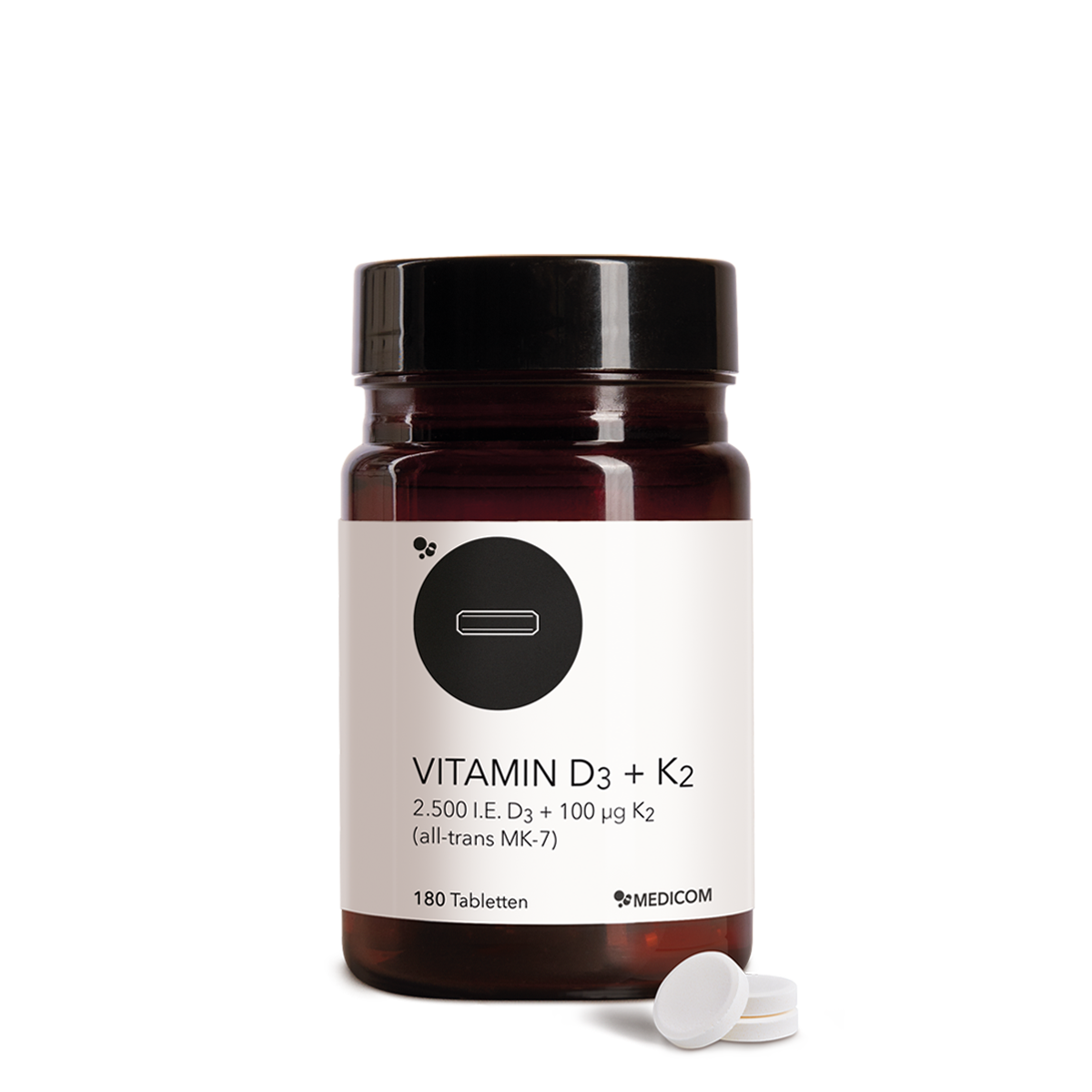
Vitamin D3+K2
The immune duo: Vitamin D3 + K2
What are the effects of a vitamin D3 deficiency?
Your organism needs vitamin D3 for a number of biochemical processes. Accordingly, the symptoms that can indicate a deficiency are diverse:
- sleep disorders
- fatigue
- nervousness
- concentration problems
- headaches
- hair loss
- growth disorders
- withdrawal and bad mood
- reduced muscle tone and strength
- cardiac arrhythmias
What should you keep in mind when taking vitamin D3?
Vitamin D3 is fat-soluble. While an excess of water-soluble vitamins such as vitamin C is simply excreted in the urine, your body stores vitamin D3 in the liver, fat, and muscles. Therefore, long-term overdosage can cause problems. In children, daily doses of 50 to 100 micrograms (2000 to 4000 International Units) can lead to cardiac arrhythmias or symptoms such as fatigue, headaches, and vomiting after a longer period. For adults, extremely high dosages of 500 micrograms (10,000 I.U.) or more as a daily substitution are considered concerning.
Good to know: Ideally, look for vitamin D3 products that are combined with vitamin K2, because together they ensure that calcium is deposited in the right places in the body.
Consequences of an overdose
It can lead to hypercalcemia (excessive calcium absorption) or hypercalciuria (increased excretion of calcium in the urine). You should also keep in mind that with permanently very high doses of vitamin D and a simultaneously poor supply of vitamin K2, a functional K2 deficiency can occur. Therefore, in case of doubt, you should always consult a doctor.
• You can find more on the topic of vitamin D here.