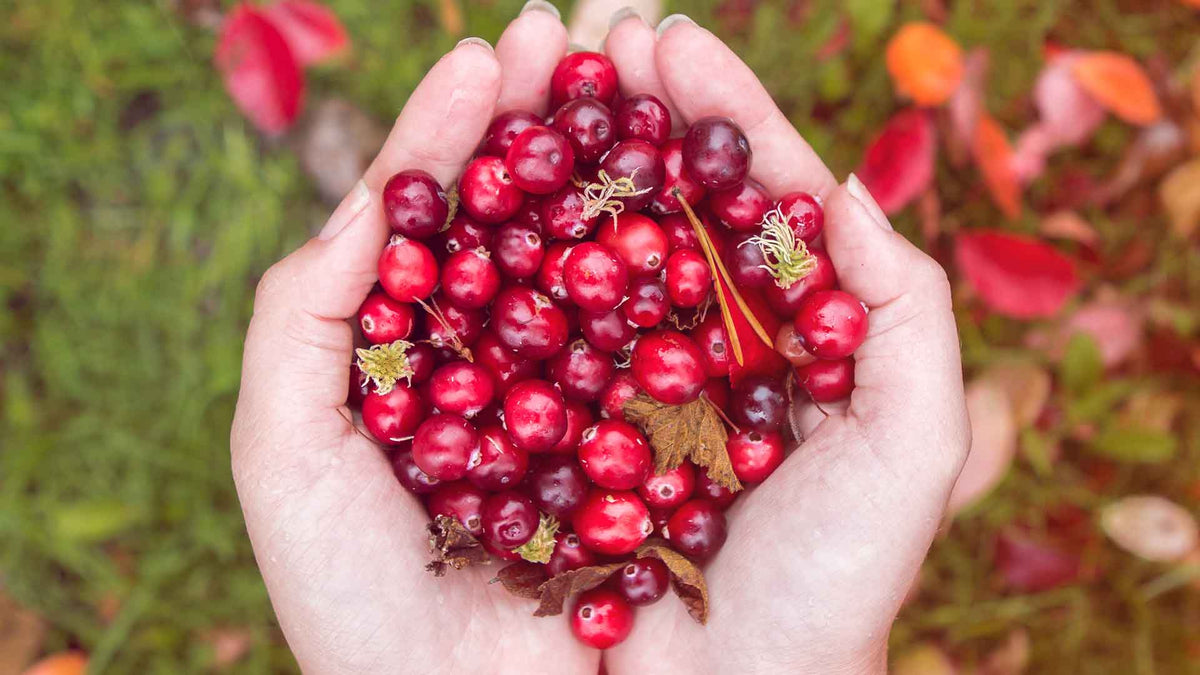
The Native Americans of North America discovered them as a remedy, as a blood-like healing potion, and for purple wound salves. With the vibrant color of the cranberry, also known as the moss berry or crane berry, the indigenous people dyed their hair deep red. Nowadays, this superfood is available in many forms: cranberry tea, juice, cranberry capsules, dried berries, cranberry candies. Whenever the little red berry is mentioned, it is as a natural home remedy for bladder infections and urinary tract infections. Here is an overview of the most important information.
Where does the little red cranberry come from?
The cranberry is closely related to the European lingonberry. It is also called the crane berry or large-fruited moss berry. It originally comes from the northern United States and Canada. The Native Americans had already discovered the berry’s power for health, as well as for cosmetic purposes.
What was the cranberry used for?
Because of its high nutritional value, the cranberry was available as a food paste that stayed fresh for a long time. Due to its purple color, the indigenous people used cranberries to dye clothing and hair, or used them to clean wounds thanks to their antibacterial and anti-inflammatory properties.
What are the ingredients of the red fruit?
The cranberry grows in nutrient-poor, acidic soils but requires a lot of sun. The small, evergreen shrub belongs to the heather family and rarely exceeds a height of 30 centimeters. The white flowers of the cranberry shrub bloom in summer. The bitter to sour-tasting fruits are used to make juice, jam, and much more.
Cranberries contain a number of important antioxidants such as Vitamin C and zinc, which strengthen the body's defense system against free radicals. However, the cranberry gained its fame through its special, highly concentrated tannins, known as proanthocyanidins (PACs), which are abundant in the cranberry. These belong to the health-promoting secondary plant compounds, also known as potent antioxidants.
Studies on cranberries
Numerous scientific studies have now confirmed the antibacterial effect of these cranberry ingredients. The tannins can prevent inflammation-causing bacteria, such as E. coli bacteria, from adhering to the mucous membranes of the urinary tract. The pathogens find no hold and are thus flushed out with the urine. The mucous membranes in the mouth and stomach can also be protected in this way.
What are the health benefits of the cranberry?
Cranberry products are used both for the prevention and treatment of urinary tract infections. Women in menopause and pregnant women, in particular, benefit from the berry, as they are more frequently affected by kidney and bladder infections. The recurrence rate in women who suffer from bladder infections more frequently is said to be reduced by more than half with regular consumption of the fruit juice.
Preventing bladder infections with cranberries
Scientists also found that the cranberry can support the maintenance of healthy bladder and prostate function, and therefore also advise men to use cranberry products. The red fruit helps to significantly reduce symptoms and complaints associated with prostate and bladder ailments.
Tip: Recipes with cranberries are widely available. The superfood can be processed into juice, compote, or jam, or serve as a base for game sauces. You can also eat cranberries raw. As a dried snack, they are popular in muesli and berry mixes. As a baking ingredient, they have a tarter flavor than raisins. Have you ever tried cranberry muffins?
• Are you interested in products containing cranberries? You can find more here.