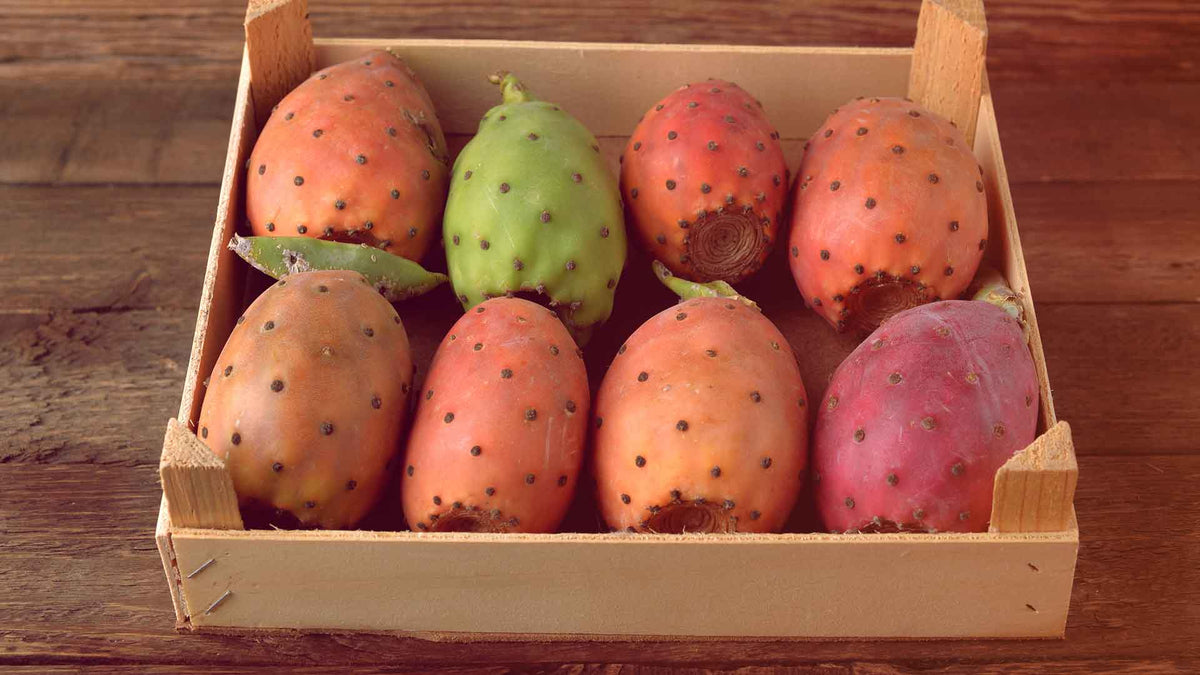
Prickly pears are a thorny affair. Nevertheless, it is worth taking a closer look at the small fruits of Opuntia ficus-indica, as they could help you lose weight by blocking dietary fats. Find all the information on the prickly pear cactus here at a glance.
Prickly pear effect: Greater satiety, less hunger
The ingredients in prickly pears can bind and block fat. Because of their binding affinity, they ensure that the body does not store dietary fats as unsightly fat deposits on the stomach and hips, but instead excretes them undigested. A gel forms from the soluble fibers of the prickly pear, which encloses this fat-fiber complex. This reduces fat absorption from food, thereby lowering calorie intake from dietary fats. The feeling of fullness after a meal is also prolonged. This is also due to the dietary fibers. In addition to fiber, they also contain beta-carotene as well as many minerals and vitamins. The prickly pear is widespread throughout the Mediterranean region, among other places.
Prickly pear with tradition
In Mexico, the prickly pear has been cultivated for about 9,000 years. With the Spanish conquest of the South American continent, the versatile plant arrived in Europe. Opuntia ficus-indica is the sonorous botanical name of this traditional medicinal plant. Commonly known as the prickly pear, this plant species belongs to the Opuntia genus. Of particular interest: the yellow flowers of the cactus plant develop into aromatic fruits the size of a chicken egg, whose grainy pulp tastes reminiscent of pears. The fruits are called prickly pears. Culinary-wise, the Opuntia is of particular importance in South America, where the fruit is pressed into juices or processed into ice cream.
Opuntia ficus-indica: The secret of the Aztecs
The ingredients of the prickly pear possess a number of healing properties. Tea is made from the leaves (fresh or dried), which strengthens the bladder and prostate. In homeopathy, fresh leaves and flowers are also used to treat digestive disorders such as flatulence or colic. The prickly pear is suitable for increasing physical fitness and improving general well-being. The fruit is popular as a quickly available source of energy during mental and physical exertion. The flowers were already used by the Aztecs for strengthening and for religious purposes.
Prickly pears: Energy for athletes
Prickly pears are also interesting for active people. In addition to glucose and fructose, they contain potassium, calcium, and magnesium, plenty of vitamin C, and the full spectrum of essential amino acids that the body cannot produce itself. The conditionally essential amino acid proline is also particularly abundant. The body needs proline to form collagen, connective tissue, and cartilage.
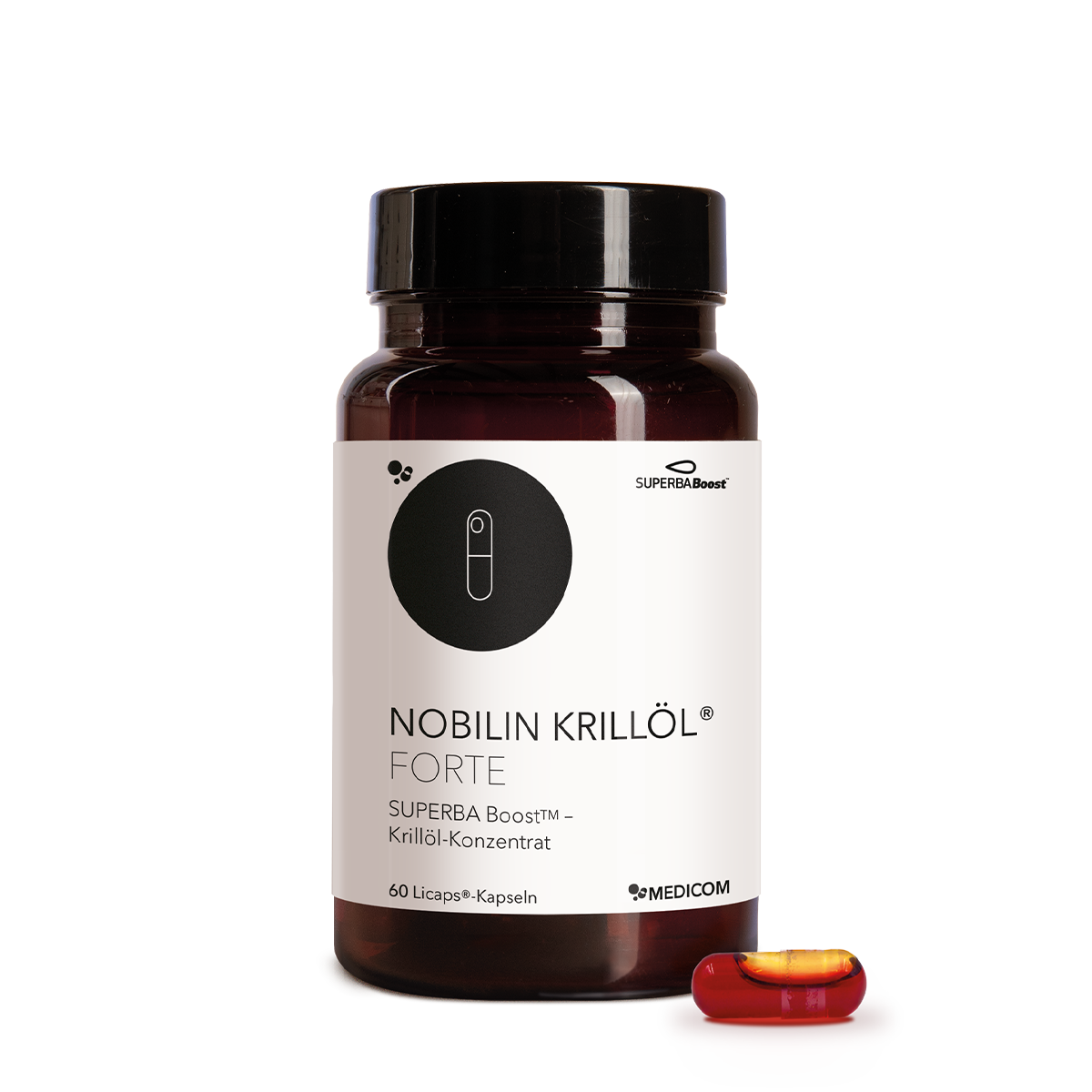
Nobilin Krill Oil® Forte
The best source of omega-3 in capsule form
• Are you interested in weight loss products? You can find out more about them here.