Sweet Temptation, Sweet Summertime, Sweet Dream. These cocktails would probably be unthinkable and taste this sweet without one ingredient: passion fruit, the berry of the passion flower. But passion fruit, also known as maracuja, can do much more. Let's take a look at this nutritional powerhouse. Two well-known celebrities for our well-being immediately stand out: beta-carotene and Vitamin C.
In addition to sugar, the pulp of the passion fruit contains the all-rounder Vitamin C and the secondary plant compound beta-carotene. Vitamin B2, folic acid, and niacin are also found in this sweet fruit.
Antioxidant: Beta-carotene
Beta-carotene possesses antioxidant properties and contributes to cell health by neutralizing free radicals. Beta-carotene is an important carotenoid. In the body, it is converted as needed into Vitamin A, a vitamin that is important for the skin, mucous membranes, and eyes.
The immune system loves Vitamin C
Vitamin C is an all-rounder. It has an antioxidant effect, protects cells and blood vessels, normalizes blood flow, strengthens the immune system, contributes to collagen formation for cartilage and bones, and supports the absorption of iron in the blood.
What else you might want to know about passion fruit ...
Passion fruit is the spherical to oval berry of a species of passion flower called Passiflora edulis. Several forms of this species are distinguished. Passiflora edulis is a woody, evergreen vine with alternate leaves. It can grow up to 80m long. The berries known to us are the yellow granadilla and the smaller, darker purple granadilla, both of which are marketed under the name passion fruit or maracuja.
Where does the passion fruit come from?
The passion fruit originates from the tropics of Brazil and northern Argentina. Nowadays, due to their delicious berries, we find passion fruits worldwide in tropical climates such as in Hawaii, India, or Sri Lanka. Since Passiflora edulis is quite cold-resistant compared to other species, it can be grown at altitudes of up to approximately 2000m.
What is the passion fruit used for?
The jelly-like pulp of the tropical passion fruit tastes delicious eaten raw or as freshly pressed juice. The black seeds are edible. The thick, smooth skin, which becomes thinner and more wrinkled with age, is inedible. Since the yellow granadilla has more acidity, it is more suitable for juice production, while the smaller purple granadilla is more aromatic and therefore usually ends up on supermarket shelves. The oil-containing seeds of the passion fruit are pressed and used in the cosmetics industry.
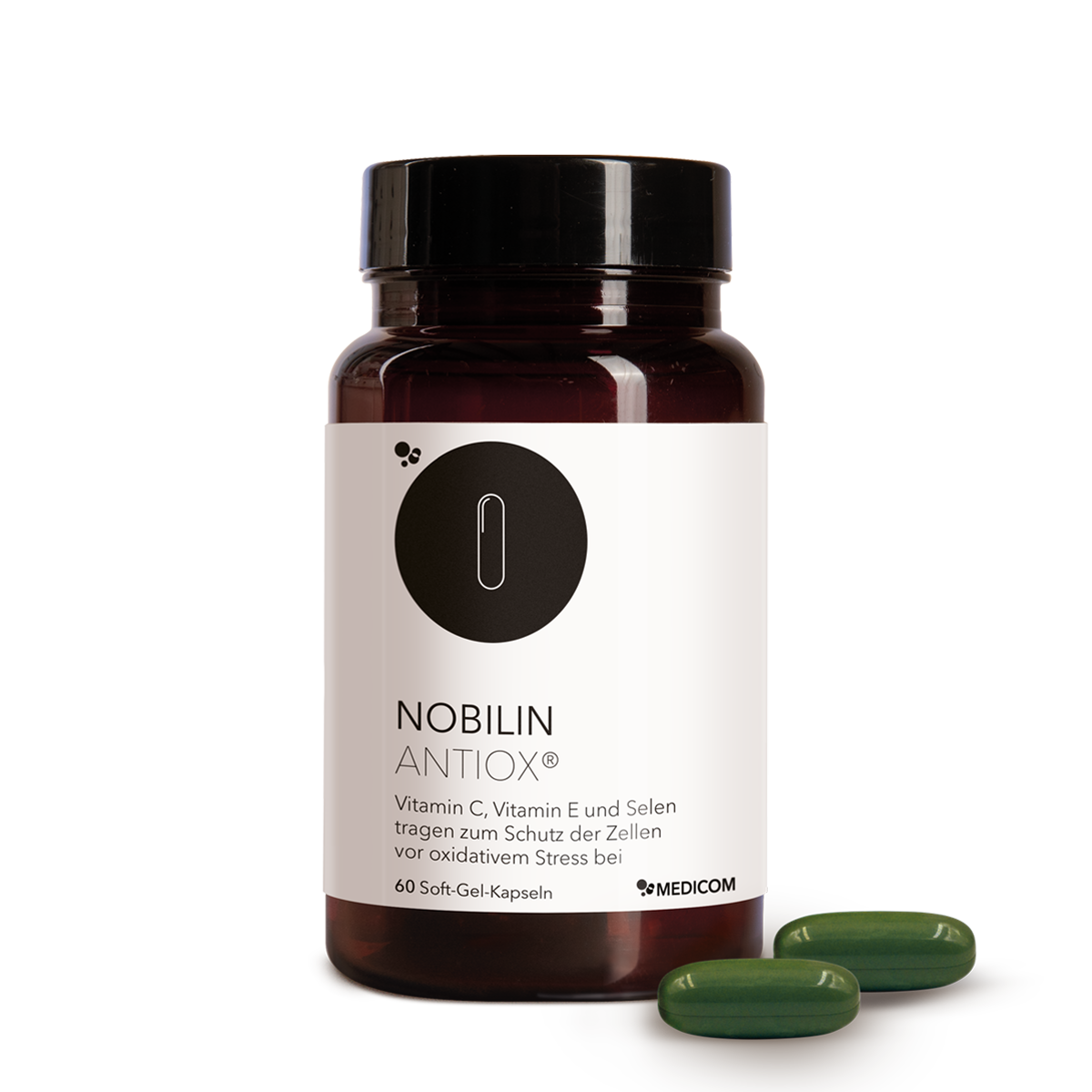
Nobilin Antiox®
Antioxidants from green tea, grape seeds, tomatoes and bitter oranges
• Would you like to know which products contain beta-carotene, Vitamin C, and Vitamin A? Click here.