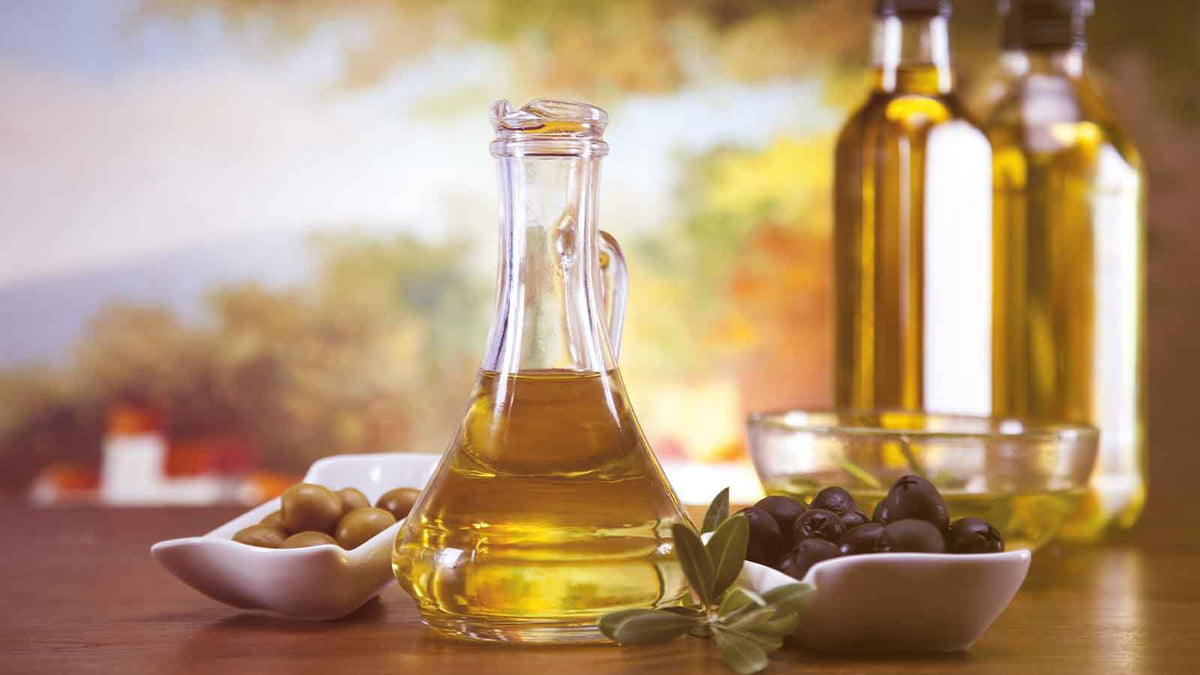
Olive oil comes from the pressed fruits of the olive tree (Olea europaea L.). This evergreen tree from the olive family (Oleaceae) can reach heights of up to 20 m and live for up to 4,000 years. As it ages, the trunk often twists, and the tree becomes gnarled. The olive tree is one of the oldest cultivated plants in existence and was already being grown over 6,000 years ago. Its stalked leaves have small hairs on the underside designed to prevent excessive water loss. The many white flowers that the tree bears in spring develop into olives—drupes—which are harvested from October to December.
Use and distribution
The olive tree is considered a Mediterranean plant, as leaf imprints of the species dating back over 50,000 years have been found in Greece. However, it is also native to the Middle East. By far the most important product of the tree is olive oil, which is used as a cooking oil and for cosmetic purposes. The highest-quality edible oils are produced by pressing the fruits under their own weight. This is followed by the separation of oil and water through centrifugation or by letting the mixture stand for a long time. The fruits end up in markets and on supermarket shelves. Because they are rock-hard and bitter after harvest, they are placed in brine to remove the bitter substances. The tree's wood is used for furniture and instrument making or as firewood for fireplaces.
Ingredients and effects of olive oil
Olive oil consists mainly of monounsaturated fatty acids such as oleic acid (omega-9 fatty acid), which makes up over 70 percent of its content. In comparison, the content of saturated fatty acids (approx. 15 percent) and polyunsaturated fatty acids such as linoleic acid (approx. 10 percent) is low. High-quality, unfiltered olive oil also contains antioxidants. Contrary to popular belief, olive oil contains hardly any omega-3 fatty acids or polyunsaturated fatty acids. The mono- and polyunsaturated fatty acids contained in olive oil support the cardiovascular system and normalize cholesterol levels. Olive oil is easily digestible and also contains large amounts of Vitamin E.
• Freshly pressed olive oil has become indispensable in many delicious recipes today. Take a look at our recipe collection.
• Would you like more information about "healthy fats"? You can find out more here.