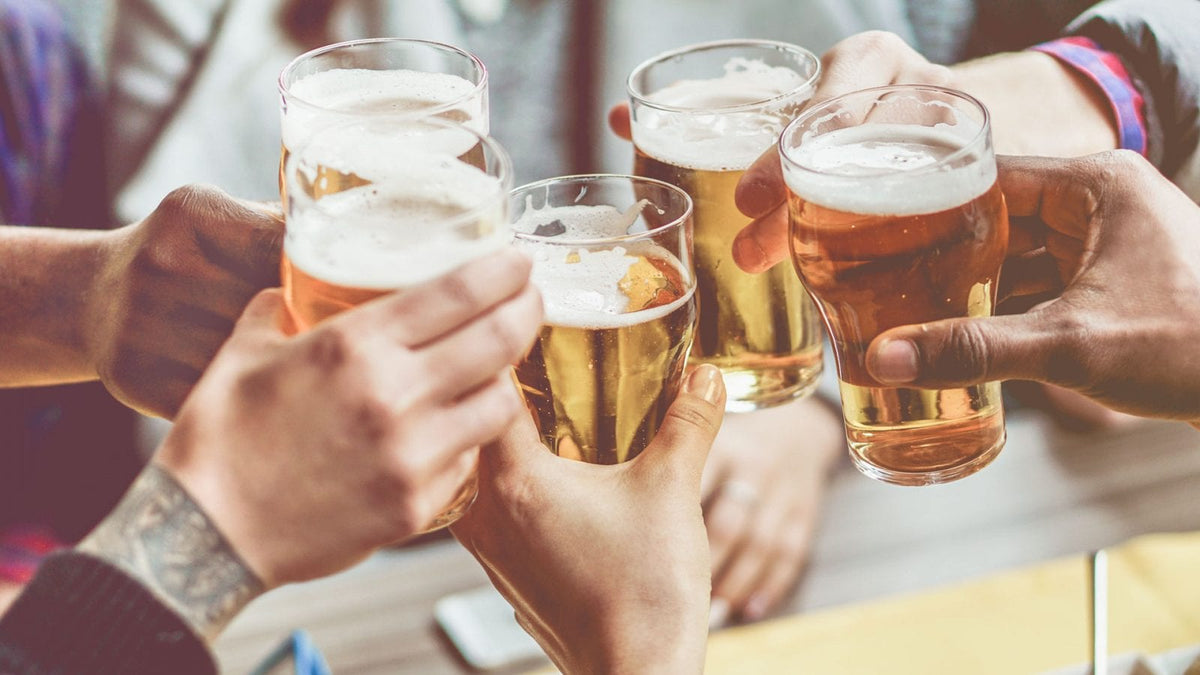
Whether it’s an after-work beer, a glass of sparkling wine at a reception, or red wine at a dinner party – alcohol is a socially accepted drug. And in the lives of adults, it is often not easy to avoid. However, this popular active substance is a health-damaging neurotoxin. And a real calorie bomb.
High calorie count leads to a beer belly
One gram of alcohol contains a good 7 kilocalories. A liter of beer therefore amounts to 470 kcal, and a liter of wine to 660 kcal. Only those who consume oil or butter in larger quantities take in more kilocalories. However, alcoholic beverages are not just significant contributors to weight gain due to their high calorie count – they are not food, but an extra that often further stimulates the appetite. Because: alcohol stimulates insulin secretion, and you get cravings for other fattening foods like chips, peanuts, and fries.
A weight-gain factor that disrupts fat burning
Even worse: As long as your body is busy breaking down the neurotoxin alcohol, your metabolism is disrupted. Consequently, fat burning in particular largely grinds to a halt. Since you primarily burn fat at night, late-night drinking is a real challenge for your goal weight. In short: Alcohol promotes weight gain through a very high calorie count, by creating cravings, and by disrupting fat burning.
Tips for dealing with this weight-gain factor
You can probably guess: For health reasons, it is best to drink as little alcohol as possible. However, since we as humans are also social beings who appreciate pleasure and intoxication, complete asceticism is not exactly desirable for many of us. You are already doing yourself a favor if you drink consciously. Enjoying a glass of red wine mindfully at dinner with friends and simply not having a second or third one – that can be a special treat. At parties, you can drink a glass of water in between, instead of opening the next beer out of boredom or social pressure.
Self-care instead of substance abuse
Excessive drinking is often just a socially learned habit. You won’t miss out on anything if you say goodbye to it. It can be helpful, for example, to practice intermittent fasting. And to make it a routine, for instance, not to consume any more calories after 7 p.m. If you make an exception now and then, that’s okay.
Sometimes drinking alcohol is also an attempt to self-regulate using a substance, to reduce stress, and to suppress unwanted feelings. However, alcohol does not solve problems; it creates them in the long run.
• You can find an interview with psychologist Ulrike Scheuermann on the topic of "self-care" here.