Anxiety and inner restlessness are currently becoming frequent companions for many people. This is a result of external events and negative news – such as the coronavirus and the war in Ukraine – which some are finding increasingly difficult to process. Here, we look at herbal aids & co. against feelings of anxiety.
How do external circumstances burden more sensitive people?
Even the coronavirus crisis led to many people experiencing fear of illness, existential anxiety, and social isolation with all its psychological consequences. Just as this challenge seemed to have been overcome, we are now surprised by a war in Europe. We hear frightening news every day and see terrible images that more sensitive people in particular are struggling to digest.
This can lead to anxiety and physical stress reactions such as inner restlessness and sleep disorders. Depressive moods are also possible. Many people wonder if there is a natural way to do something supportive to respond to this inner imbalance. We would like to address this in the following article.
Which medicinal plants are known for their calming effect?
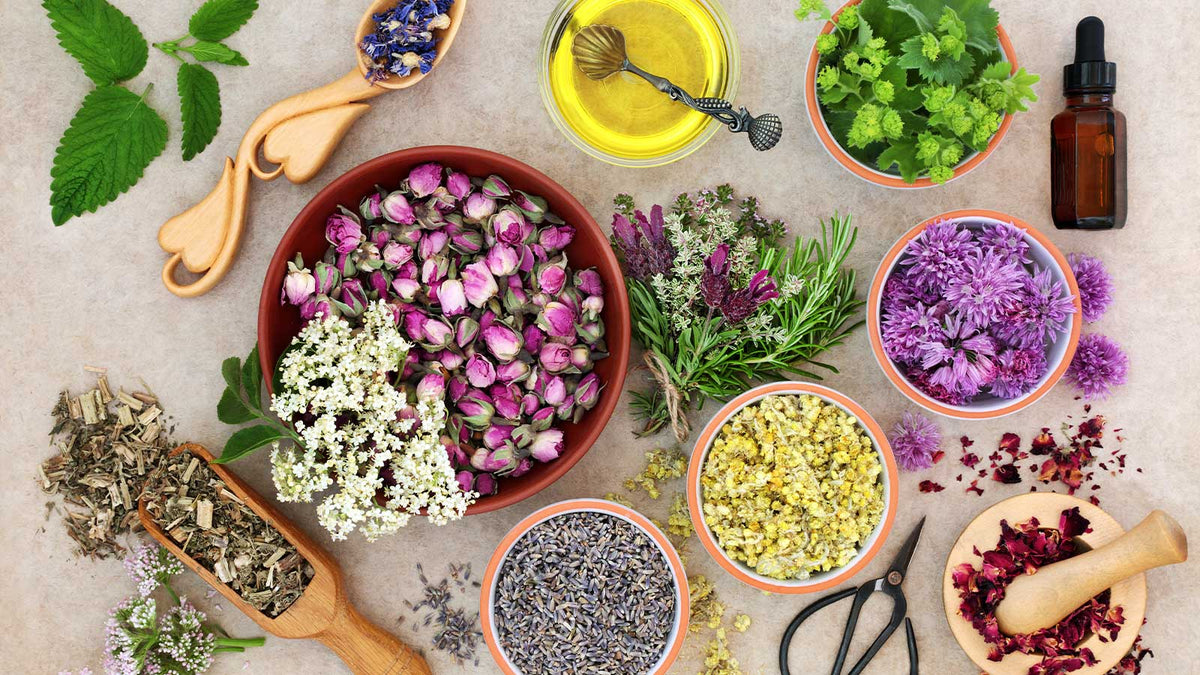
Nature offers a variety of herbal aids that are said to have a balancing, strengthening, and calming effect. The properties of these plants vary and should be selected individually.
- Valerian:
Valerian is particularly well-known as a traditional, calming medicinal plant that can alleviate nervousness and promote sleep. Valerian is often combined with hops, as the synergistic effects of both medicinal plants are believed to optimize the benefits for inner restlessness. Taken during the day, valerian serves to calm the nervous system; in the evening, it can help you fall asleep when the carousel in our head simply won't stop.
- Lavender:
Lavender is, as they say, "the mother who takes you in her arms." According to herbal medicine, the scent of lavender alone is said to be calming and anxiety-relieving, which is why it is often used in aromatherapy. It is also well-known as an herbal medicine for supporting anxiety.
- Lemon balm:
Lemon balm also has a calming effect and can additionally have a positive impact on stress-related digestive problems. The digestive tract is often involved in cases of anxiety. This is due to our vagus nerve, a cranial nerve. This plays a central role in communication between the brain and most organs, including the digestive organs. This is where lemon balm, for example in the form of tea, can particularly demonstrate its calming properties as a medicinal plant.
- Ginseng and Ashwagandha:
Traditional Chinese Medicine and the Indian healing philosophy of Ayurveda also offer herbal elements with their adaptogens like ginseng and ashwagandha, which, according to Eastern teachings, are intended to increase stress tolerance – in other words, to support us in developing a "thicker skin" against external influences. This is especially true in connection with the synergistic effects of certain vital substances, which we will discuss below.
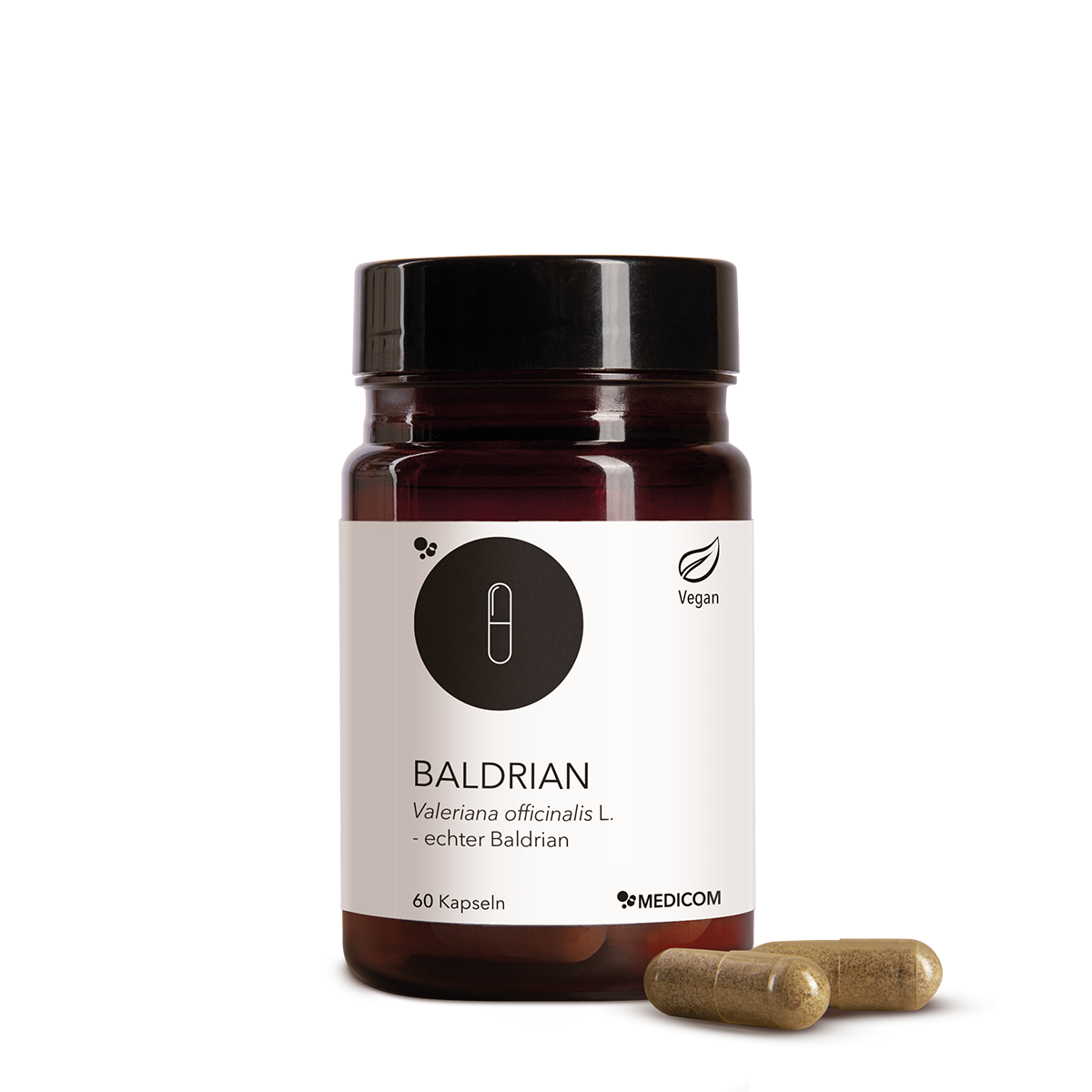
valerian
Valerian for more relaxation
Which vital substances influence mental health and stress tolerance?
Vital substances or micronutrients are vital little helpers that we must ingest through food and that our body requires for the smooth functioning of our metabolic processes. This includes, for example, the production of messengers such as hormones or neurotransmitters, which are known to have a strong influence on our mental state and thus also on the development of anxiety. Vital substances include vitamins, minerals, trace elements, and essential fatty acids, as well as secondary plant compounds. In times of stress, certain illnesses, and also during persistent anxiety, the requirement for vital substances can increase. The following vital substances are important.
- Vitamin B12:
Important vital substances for the psyche are, for example, the B vitamins, also known as "nerve vitamins." A good supply of vitamin B12 is particularly central, as a deficiency of this vitamin can lead to feelings of anxiety and other psychological symptoms. A deficit of this essential nutrient can therefore lead to nervous impairments, reduced stress tolerance, and in the worst case, irreparable damage to the nervous system. B12 supports healthy mental performance and nervous regeneration. Certain medications and diets can lead to vitamin B12 not being absorbed well or not being supplied sufficiently through the diet. Speak to your doctor if you are a vegetarian or vegan or have to take "stomach protectors" such as pantoprazole or diabetes medications like metformin long-term.
- Magnesium:
Magnesium is considered the "relax" mineral. It is involved in over 300 enzyme systems in the body and is by no means indispensable only for muscle function. Magnesium is, among other things, essential for the nervous system and mental health. Various studies even suggest that a magnesium deficiency can be involved in the development of depression. Although the connection between anxious moods and depression is well documented in studies, the exact mechanism remains unclear. However, magnesium plays an essentially important role in the regulation of messengers that are known to be involved in the development of stress.
How can I sensibly combine medicinal plants and micronutrients for inner restlessness and nervousness?
If you want to gently support normal psychological function and increase your own resilience in these times, it can be useful to combine herbal applications, e.g., in the form of tea, aromatic oils, or herbal and traditional medicines, with certain micronutrients that are important for psychological function.
As previously described, certain traditional medicinal plants are suitable for nervousness, anxiety, and inner restlessness to help you find your inner center again. Adaptogens are intended to, among other things, increase resilience, i.e., have a positive influence on stress tolerance. In Ayurveda and TCM, for example, ashwagandha and the famous ginseng root are considered adaptogens. To achieve the stated effects, these can be combined for optimal support of mental health with, for example, vital substances from the B complex, but especially with vitamin B12 and the "relax" mineral magnesium.
Conclusion
We all know anxiety. In certain situations, e.g., in the face of an immediate impending danger, it can be useful and increase our ability to react. However, if anxieties become daily companions, they eventually overwhelm our sensory systems, especially the healthy function of the nervous system as well as our psychological resilience. The consequences can be variably burdensome. In some cases, therapeutic help is unavoidable.
Especially in the beginning, when anxiety and a psychological imbalance only have slight effects, one can try to find one's inner balance again more easily through natural herbal aids and the combined use of certain micronutrients.
• Less anxiety, more inner resilience? Click here for: Practical tips for inner resilience, tips and knowledge from psychiatrist Dr. Sarie-Ann Haisch.
• Would you like to delve deeper into the topic? What is resilience and how can I strengthen it? The answers are provided by expert Dr. Sarie-Ann Haisch in her guest contribution: More resilience