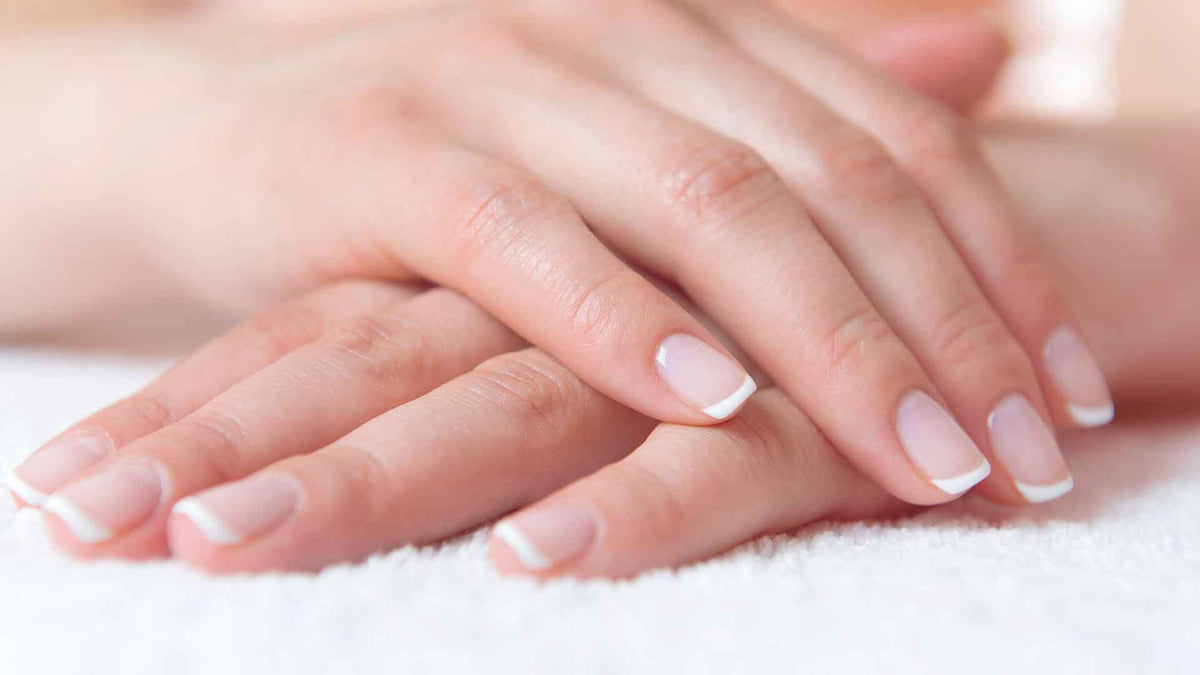
Shiny, firm, and with a pink shimmer: beautiful, well-groomed fingernails are not just an aesthetic ideal, but also a reflection of our health. As such, the condition of body and mind can be read from our nails. We explain the possible causes behind fine ridges, white spots, or brittle tips.
What are the possible reasons for changes in fingernails?
- age-related changes
- use of harsh cleaning agents, drying soaps, or hand sanitizers
- gel or artificial nails, Shellac
- vitamin or mineral deficiencies
- metabolic diseases
- autoimmune diseases, such as rheumatic conditions
- psychological reasons
But how do you distinguish the body's distress signals from harmless phenomena? In this post, we explain which signs are harmless and which may indicate serious health disorders.
What you can read from your fingernails:
1. Longitudinal ridges
If you shine a good light on your nail, you may be able to see fine longitudinal ridges. This structure is harmless and sometimes congenital. Most of the time, however, longitudinal ridges develop with aging: the older a person is, the more likely their nails are to show longitudinal ridges. They can start forming as early as age 35. The cause is likely the irregular activity of the nail matrix. Researchers suspect that the ridges indicate chronic dehydration.
What to do? Try to drink at least one to two liters of water daily. It is possible that the nail surface will grow back smoother. Fine polishing files smooth the surface and make the nails shine.
2. Transverse ridges
Transverse ridges indicate that the nail has or has had growth disturbances. The cause can be infections such as a febrile flu or gastrointestinal disorders. However, if the nail does not grow back smoothly after recovery, it points to metabolic disorders. Frequent dieting, medication use, or emotional crises can be the cause. Transverse ridges can also indicate a deficiency in iron or biotin. They may also reflect poisoning or disorders of the liver, kidneys, or intestines. However, the ridges only appear eight to twelve weeks after the illness. That is how long it takes for the disturbance to grow from the nail matrix to the middle of the nail. Improper manicures can also injure the nail bed and be responsible for transverse ridges.
What to do? If the ridges do not grow out, you should consult a doctor.
3. Clubbed nails
If the fingernail is strongly curved upward, this is called a clubbed nail. This growth pattern can be congenital - in which case you already had rounded nails as a child. However, if the nail suddenly curves on one or more fingers, or if the fingertips are noticeably widened, it can point to internal diseases: heart problems, pulmonary emphysema, asthma, cirrhosis of the liver, or weakened blood vessels. If the function of some of these organs is impaired, it becomes noticeable in the fingers and nails. They receive less oxygen and the connective tissue begins to proliferate uncontrollably.
What to do? If your fingernails change in such a way, you should see an internist and have a thorough check-up.
4. Spoon nails
If the nail plate is depressed inward and the edge sticks up as if a spoon were pressing into it, this is referred to as a spoon nail. This deformity occurs, among other things, when the horny substance is softened by harsh cleaning agents or other aggressive substances. For example, butchers are frequently affected by spoon nails because they work a lot with brine. Other reasons can be iron deficiency, vitamin C deficiency, thyroid disorders, or anemia. By the way: all newborns have tiny spoon nails in the first few weeks - why this is, however, science does not yet know.
What to do? Apply cream generously to your hands and nails after every wash and massage olive oil into the nails. Wear gloves for housework and gardening. If the nails still do not grow back normally, see a dermatologist.
5. Brittle tips
One of the most common nail problems is brittle tips: almost 90 percent of all women complain about nails that break easily. Brittle nails are caused by permanent loss of fat. This happens, for example, during dishwashing, by washing hands too frequently with overly aggressive soap, and by using alcohol-based disinfectants. The skin becomes dry, as does the nail substance. However, brittle nails can also be a sign of malnutrition, such as in cases of anorexia. A deficiency in biotin, iron, or calcium is particularly worth mentioning here. Hormonal disorders, thyroid malfunctions, diabetes, atopic dermatitis, or psoriasis are also possible causes.
What to do? Wear protective gloves for housework and gardening, wash your hands only with moisturizing wash gel, and apply cream to your nails. Since creams usually have a very short contact time on the nail, experts recommend a daily olive oil bath for the nails.
6. No moon
Sometimes the so-called lunula, the small light-colored crescent at the nail root, is not visible. This is usually because it is covered by the nail wall, i.e., the surrounding skin. For some people, the nails are also naturally whiter due to heredity - even then, the half-moon is invisible.
What to do? A missing moon is not a sign of illness, but purely a visual matter.
7. Deep longitudinal fissures
Most of the time, longitudinal fissures can be traced back to harmless nail root injuries. Sometimes, however, organic disorders are behind them, which lead to the nail base not being properly supplied with blood. Deep longitudinal fissures can also be symptoms of joint inflammation like arthritis or genetically determined psoriasis.
What to do? If the fissures appear on several nails and do not disappear despite intensive care, you should seek medical advice for safety.
8. Pitting
Pitting means having small dimples in the nail surface. These dents can be a typical sign of psoriasis. Fine splinter hemorrhages and white spots can also be signs of psoriasis. If the skin disease is very severe, the entire nail can be destroyed.
What to do? People suffering from psoriatic arthritis are at high risk of the disease spreading to the nails, as the inner joint membranes can also be affected. Talk to your doctor about this.
9. White spots
Light dots or spots that slowly grow upward with the nail are, contrary to popular belief, not a sign of malnutrition. The harmless white "clouds" are just small cavities between the horny layer and the pink nail bed. They can be caused by injuries to the still-soft nail matrix, through bumps, or during a manicure.
What to do? Actually, you can only wait for the little beauty flaw to grow out on its own. To avoid white spots in the future, you should be more careful during your manicure: do not remove the cuticle, but simply push it back gently. Massage the cuticle with olive oil beforehand to make it supple. Do not apply pressure to the nail under any circumstances.
10. Yellow, crumbly nails
If the fingernails turn yellowish, respiratory diseases such as chronic bronchitis or chronic edema may be present. Heavy smokers are also often affected. Nail thickening almost always looks yellowish because that is the color of the horn from which nails are made.
However, if the nail is yellowed, it often indicates a nail fungus. This diagnosis is particularly likely if the nail no longer shines, the nail plate is thickened, and the tips are brittle. Diabetes patients are particularly susceptible to nail fungus, but so are people with circulatory disorders, nail eczema, and nail psoriasis. The conditions increase with advancing age. It is estimated that about one in three 60-year-olds is affected.
What to do? Nail fungus is contagious. It requires a longer therapy, which you should undertake with a specialized dermatologist. Nail fungus almost never heals on its own. The earlier treatment begins, the faster success will be seen. On the fingernails, in contrast to toenails, this can be the case after about three months.
Tips against nail fungus
Those prone to nail fungus should always wear dry socks so that fungal spores cannot collect in them. Always let damp shoes dry thoroughly. The same applies to bath mats! Because damp fabric offers ideal breeding grounds for fungi.
What is good for your nails - tips for your nails
Anyone who wants to do their nails a favor should regularly supply their body with biotin and silica. These vital substances ensure strong nails and prevent nail diseases and brittle nails.
Asparagus, soy, and spinach: Nail care while eating
You can also do your nails a favor with your diet. Vitamin A and biotin (vitamin B7), which belongs to the vitamin B complex and is sometimes referred to as vitamin H, as well as calcium and iron, are particularly important for strong nail growth. These vital substances also benefit the skin, hair, and bones. For beautiful nails, you should therefore add the following foods to your diet more often:
- Soybeans, spinach, asparagus, oatmeal, and nuts provide biotin above all. Biotin is considered the most important beauty substance for skin, hair, and nails
- Vegetables in the colors green, yellow, orange, and red contain a lot of beta-carotene, the precursor to vitamin A. Therefore, it is best to eat vegetables in all these colors daily
- Calcium is found mainly in milk and dairy products. Calcium-rich mineral water is also a good source of this important substance
- Meat, lentils, and wheat bran are important sources of iron. Vegetarians and vegans can improve their iron absorption by drinking orange juice at the same time. The vitamin C contained within helps the body utilize the iron from plant-based foods better
Beautiful and well-groomed fingernails – these vital substances can help
Often, not all important substances can be absorbed through food. If you want to do something good for your nails, you should additionally supply yourself with the following vital substances:
- Silicon: The silicon from bamboo shoots helps with brittle nails
- Biotin: A deficiency can lead to brittle nails, so you should ensure an adequate supply of B vitamins - especially biotin - as it strengthens the nails and counteracts brittle nails
- Calcium: can strengthen the nails
- Vitamin C: A good supply of vitamin C supports nail health
- Iron: Chronic iron deficiency can lead to weak, flat, upward-curved, or brittle fingernails
- Zinc: is important for healthy and strong nails. White spots can disappear through the intake of zinc. Zinc deficiency leads to transverse ridges, so-called Beau's lines
- Coenzyme Q10: supports the regenerative capacity of the skin. The skin of the hands in particular is exposed to the stress of solar radiation all year round. Coenzyme Q10 supports the skin's defense systems as a radical scavenger
- Further beauty boosters from nature can be found on our blog

Vitamin C Shot 1,000
High-dose, liposomal vitamin C drinking ampoules
What your nails reveal about you
For holistic therapists, nails provide information not only about deficiency symptoms, poisoning, malnutrition, or diseases, but also about mental processes.
According to their concepts, fate or an inner program that a person follows is also revealed in the nails. According to this theory, every single finger has a specific meaning. Together with the period over which the nail grows, this interpretation allows not only the past to be deciphered but also the future to be predicted precisely. Here are a few interpretation examples:
- Strong transverse ridges: Short-term conflicts that, if they occur again and again, become transverse ridges. They stand for restructuring and upheavals. Once the ridges have grown out, the conflicts have been overcome.
- Dimples: Small, inward-going dents stand for impending decisions. Depending on which finger and which hand they appear on, they stand for a decision that needs to be made in a certain period of time.
- No ridges: People whose fingernails show no longitudinal or transverse ridges lead a life without major conflicts or challenges.
- Small ridges: arise from transverse ridges. They stand for ideas that have not been implemented.
Conclusion on nails
Take a look at your own fingers! In this way, diseases can be recognized and treated in a targeted manner. Prevent issues by regularly supplying your body with the important vital substances that are particularly beneficial for the health and beauty of your nails.
Are you interested in other products that support nails, skin, and hair? Take a look at other vital substances for beauty from Medicom.