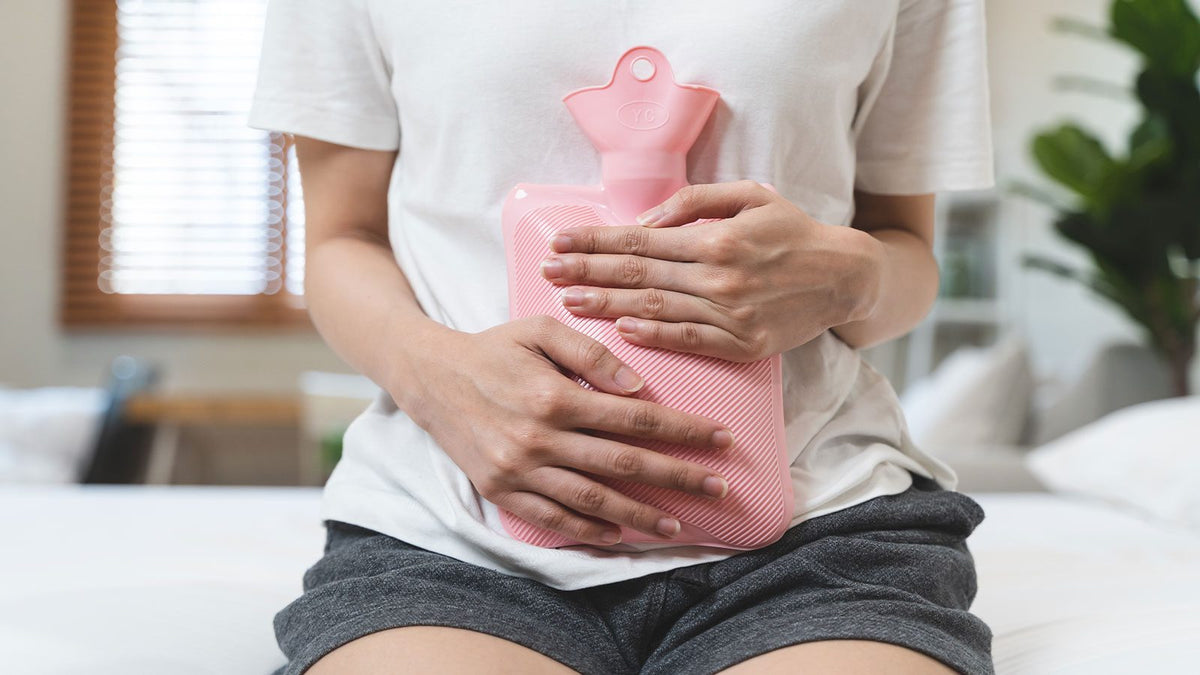
Welcome to a new episode of our podcast in the Krill Oil Special series! Today, we are taking an in-depth look at a topic that has a major impact on the lives of many women: menstrual health, period pain, and discomfort during your period. We also want to find out what role krill oil can play in this. We are going to take a very close look at that now. So, stay tuned.
How is the female cycle structured?
Before we dive into the details, let's talk about the fundamental importance of the female cycle. The menstrual cycle is a highly complex biological process. It is controlled by the interplay of various sex hormones. But what is its purpose? The cycle must prepare the female body for a potential pregnancy. The monthly cycle can vary greatly from woman to woman. As a rule, the first day of your period marks the beginning – and the last day before the next period marks the end of a cycle. It usually lasts between 25 and 35 days.
Around 500,000 eggs are ready in the ovaries from birth. Starting at puberty, five to 15 of these mature per ovary each month, although usually only one makes it to ovulation. In general, the female cycle is divided into three phases:
- Phase 1: the follicular phase
- Phase 2: the ovulation phase
- and Phase 3: the luteal phase
Follicular phase
The follicular phase, or phase 1, describes the time before ovulation. At the beginning of the female cycle, everything is focused on growth – the body is preparing for a potential pregnancy. The uterine lining, which was shed during the previous menstruation, builds itself up again. This is triggered by an rising level of the female sex hormone estrogen. The foundation for the implantation of a fertilized egg is being created. At the same time, egg maturation begins.
Ovulation phase
Now the ovulation phase begins. In this second phase, ovulation occurs. This takes place roughly in the middle of the female cycle – i.e., about 14 days before the next period. The follicle, the small sac in which the egg matures, bursts and releases its egg. This is then flushed from the ovary into the fallopian tube and transported toward the uterus. During this time, the egg is capable of being fertilized for about 24 hours. The remaining eggs die off and are excreted.
Luteal phase
This is followed by the luteal phase, the phase after ovulation. After ovulation, the follicle regresses and develops into a so-called corpus luteum. This, in turn, produces the hormone progesterone. This is a signal for the uterine lining to remodel once again. Less estrogen is now produced. If no fertilization of the egg takes place during the cycle, the egg, along with the uterine lining, is shed in this third phase through menstrual bleeding. This is a mixture of blood, vaginal secretions, and remnants of the lining.
Normally, a woman loses an average of just 60 milliliters during her period, spread over three to seven days. Or to put it another way: one and a half shot glasses. Less than many people would likely suspect. Of course, this can vary from woman to woman.
What menstrual symptoms are there?
A regular cycle often indicates a healthy hormonal balance and reproductive function. Unfortunately, however, up to 90 percent of women experience discomfort during their period. The first symptoms of period pain can appear even before menstruation begins. In the early stages, many women notice period pain through a feeling of pressure in the lower abdomen. It is not uncommon for the abdomen to be bloated at this stage. As it progresses, the period pain can become more intense and turn into strong, sometimes colic-like abdominal cramps.
For some women, constipation, diarrhea, nausea, and vomiting accompany the symptoms of period pain. In addition, menstrual complaints such as a general feeling of illness, fatigue, reduced performance, headaches, migraines, or loss of appetite can occur along with period pain.
How can krill oil affect menstrual health?
Fortunately, women can do something about it. For us, the question is, of course, particularly interesting: "How can krill oil, with its omega-3 fatty acids EPA and DHA, influence menstrual health?" Let's take a look at that below.
These essential fatty acids, EPA and DHA, play a diverse role in the body, and their effects extend beyond heart health. EPA and DHA are known for their anti-inflammatory properties. Inflammation can not only impair the hormonal balance but also lead to menstrual complaints. The regulating effect of omega-3 fatty acids could help to support a stable menstrual cycle. There is evidence that they can reduce the production of inflammatory substances that lead to increased pain during menstruation.
Another fascinating aspect of krill oil is its phospholipids. We talked about this in detail in our Krill Oil Special episode 6 titled: "Phospholipids and what makes them so special". The phospholipid molecules are not just simple carriers of omega-3 fatty acids, but could play an important role in menstrual health. Phospholipids are building blocks of cell membranes, including those in the reproductive organs. Phospholipids could thus not only improve the bioavailability of omega-3 fatty acids but also support the structural integrity of the cells. A stable cell membrane is crucial for smooth signal transmission and, therefore, for a balanced hormonal level.
What do studies say about krill oil and menstruation?
And what does science have to say about it? In fact, numerous studies have examined the link between omega-3 fatty acids, krill oil, and menstrual health.
A Canadian study was able to show that taking krill oil can lead to a highly significant improvement in complaints during menstruation. The use of painkillers by women also decreased significantly.
This study also showed that omega-3 fatty acids from krill oil are more effective for menstrual complaints than fish oil. Krill oil can significantly reduce dysmenorrhea, which is severe period pain, and the emotional symptoms of premenstrual syndrome, and has proven to be significantly more effective than omega-3 fish oil for the comprehensive treatment of premenstrual symptoms. (1)
Another study from 2021 found that women who regularly consume omega-3 fatty acids have a lower severity of strong period pain. This result indicates that an adequate intake of omega-3 fatty acids could indeed help to alleviate distressing symptoms that many women suffer from monthly. (2)
A recently conducted study from 2023 concludes that regular intake of omega-3 fatty acids over a period of two to three months helps to reduce pain and thus reduce the intake of painkillers. (3)
If you would like to learn more about these scientific findings, you can find all the studies mentioned here linked in the show notes, as always.

What is the recommended dosage for krill oil?
Before we slowly come to an end, we would like to give you a few practical tips on how you can incorporate krill oil into your everyday life to support your menstrual health. Start with a daily dose of 178 mg EPA and 82 mg DHA and adjust it if necessary to your individual needs. It is best to take krill oil capsules with a meal, because together with the fat in your food, they reach the blood from the intestine better.
And please don't forget: dietary supplements are neither magic pills nor a universal solution. A balanced diet, regular exercise, and stress management also play a decisive role. Consult your trusted doctor before changing your dietary habits to ensure they fit your personal health situation.
What else can I do about period pain?
Apart from krill oil and a balanced diet, there is more you can do about period pain. Stay active. Exercise is always good, but especially for period pain, physical activity is a good tip. This is because the pain is mainly caused by the uterine muscles cramping and, as a result, being poorly supplied with blood. Exercise can be helpful here because movement stimulates blood circulation throughout the entire body. The muscles of the uterus also benefit from this, and the pain subsides. At the same time, happiness hormones are released, which additionally help with mood swings. Incidentally, yoga is very well suited for alleviating period pain, as it relaxes the body and mind.
Take time for yourself. Whether it's a hot tea with yarrow, relaxing breathing exercises, a massage, or a cozy bath with antispasmodic chamomile. Simply relax and take it easy when the symptoms are particularly severe.
Other vital substances, such as magnesium, vitamin E, vitamin D, zinc, and vitamin B1, can also provide support during menstruation.
Conclusion
And with that, we have reached the end for today! If you found our special on the topic of menstruation and the potential benefits of krill oil interesting, please recommend our podcast. And please remember, health is not something to be taken for granted. We all can and must take active measures for our health. So, check back in with us for more exciting episodes and stay active.
Links to the cited studies:
• Link to study 1.) https://pubmed.ncbi.nlm.nih.gov/12777162/
• Source for study 2.) https://pubmed.ncbi.nlm.nih.gov/35059756/
• Study 3.) https://pubmed.ncbi.nlm.nih.gov/37545015/
• If you have further questions and would like to learn more about krill oil, do not hesitate to contact your trusted doctor or our free vital substance consultation at Medicom at 0800 50 400 50. And of course, you can also find more articles and podcasts here in our online magazine in our Krill Oil Special or under Podcasts