Phospholipids are natural, integral components of cells. What are their health benefits and where are they found? We will clarify this in this episode.
What are phospholipids?
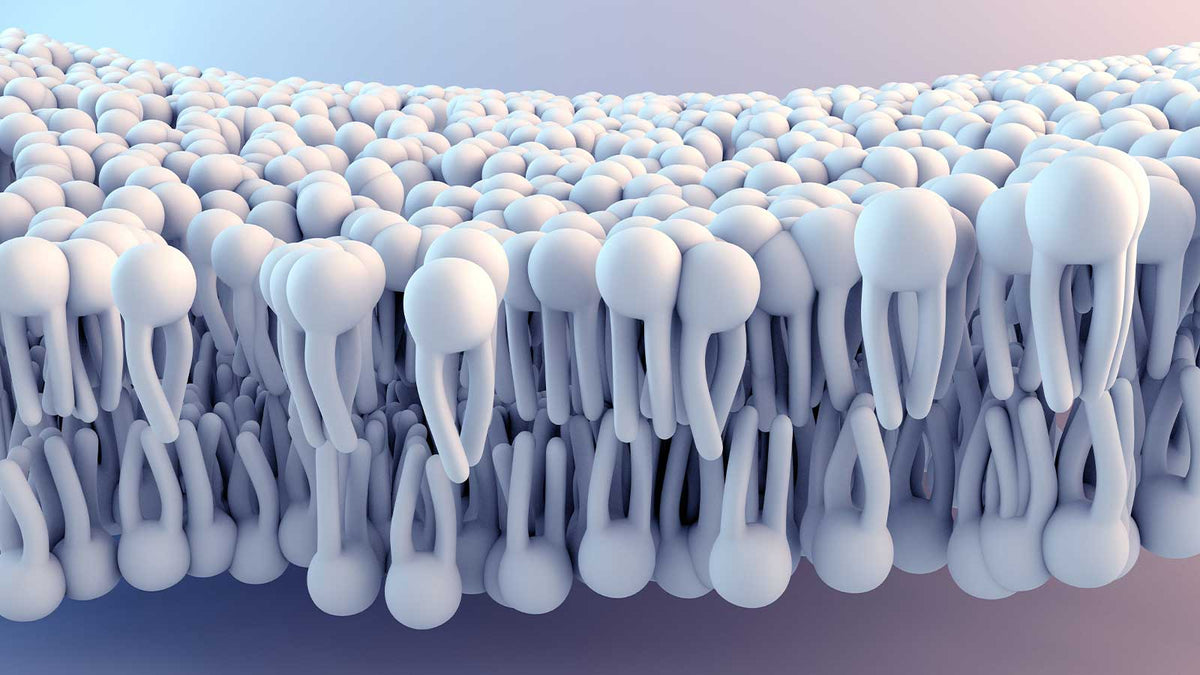
First, we want to know what phospholipids actually are and how we should visualize them. Phospholipids are structural components of cell surface membranes and membranes within the cell interior. They help maintain their strength, flexibility, and integrity.
That sounds very scientific, so let's make it more understandable: Phospholipids are a type of molecule found in our cells. You can think of a cell as a small building. Phospholipids are the building blocks that make up the walls and doors of the building.
The special thing about phospholipids is that they consist of different parts that are both water-loving and fat-loving. It is best to imagine a rod with a water-loving part and a fat-loving part attached to it.
Inside the cell, the phospholipids are arranged in a specific order. The water-loving parts of the phospholipids point outward, while the fat-loving parts are located inside the cell.
This arrangement allows the phospholipids to form the cell membranes that surround the cell. You can think of this as a shell or protective layer that holds the cell together and protects it from external influences.
Phospholipids also allow cells to communicate with each other and transport various substances. They are, so to speak, the "master builders" of the cells and have an important function for the functioning of our body.
Some scientists refer to phospholipids as the "molecules of life," because without them, we would suffer from critical cellular dysfunction, which would have enormous consequences for our health.
Phospholipids are not just elementary components of cells; they also have the task of transporting the vital long-chain omega-3 fatty acids eicosapentaenoic acid (EPA) and docosahexaenoic acid (DHA) into the cell membranes. These nutrients make the cell supple. They travel through the body to supply various tissues and organs.
Special features of phospholipids
The phospholipids in krill oil transport omega-3 fatty acids to the parts of the body that need them most, such as the brain, heart, eyes, and liver. Phospholipids therefore act like a highway for omega-3 fatty acids.
By the way, we cannot produce omega-3 fatty acids ourselves, which is why it is so important to know good, natural sources. So we ask ourselves: Where do phospholipids and omega-3 fatty acids occur together? The answer is: in krill and the krill oil extracted from it. In other fish oils, the omega-3 fatty acids are present as triglycerides.
And here another difficult word appears that we want to explain: triglycerides. Triglycerides are fat molecules that are also found in our body. They are important for energy production and the storage of fat reserves.
What is the difference between omega-3 phospholipids and omega-3 triglycerides?
The difference between omega-3 phospholipids and omega-3 triglycerides lies in their physical properties. Omega-3 phospholipids dissolve easily in water, while omega-3 triglycerides are not water-soluble. This means that omega-3 phospholipids mix well with the water in the stomach, while omega-3 triglycerides tend to float on the surface of the stomach contents.
And do you remember that we said the rods point with the water-loving part outward? This also explains why phospholipids affect the tolerability and absorption of omega-3 fatty acids. When taking nutritional supplements that contain omega-3 triglycerides, it can sometimes lead to a fishy aftertaste.
Omega-3 phospholipids, on the other hand, are better tolerated.
How the body processes omega-3 fatty acids bound to phospholipids is the subject of exciting studies and research. Among other things, it has already been shown that taking krill oil increases EPA and DHA levels in blood plasma more effectively than taking omega-3 triglycerides from fish oil.
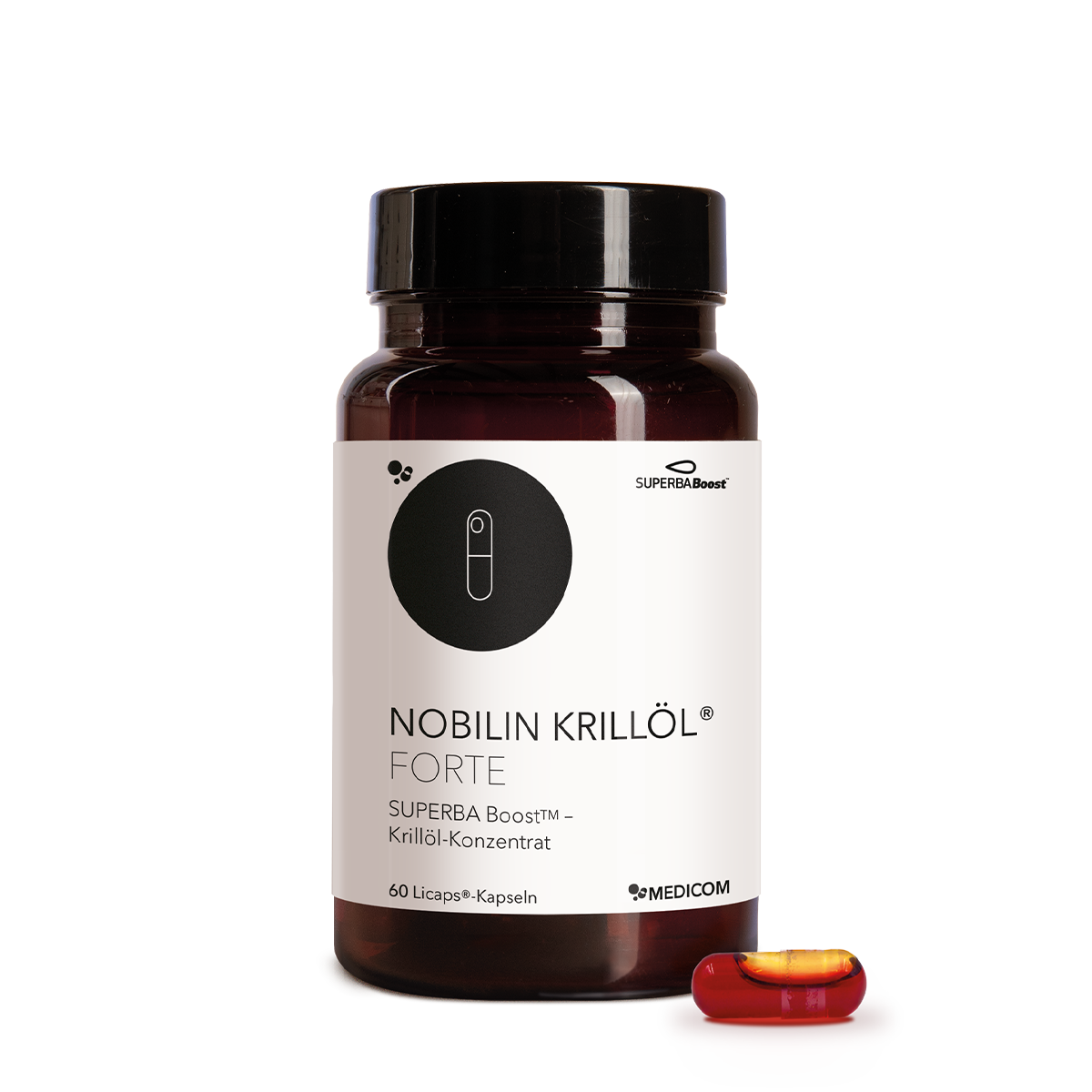
Nobilin Krill Oil® Forte
The best source of omega-3 in capsule form
Why are omega-3 phospholipids good for health?
However, their importance goes far beyond mere cell structure. Phospholipids play a crucial role in the protection and repair of damaged cell membranes. As a kind of molecular builder, they create the foundation for healthy cells.
Due to their unique structure, phospholipids also enable the transport of important nutrients and signals between cells. They are, so to speak, the body's messengers that ensure all our organs and tissues can effectively communicate with each other.
The role of phospholipids in the brain is particularly fascinating. There, they form the foundation for the synapses, the connections between nerve cells. Without them, thinking, remembering, and learning would not be possible.
But phospholipids are indispensable not only in the brain. In the heart, they ensure that the heart muscle cells function optimally. In the eye, they protect the sensitive retinal cells from damage caused by oxidative processes. And in the liver, they help with the detoxification and regeneration of this important organ.
It is fascinating that krill oil, which contains phospholipids in high concentration, can help us maintain all these vital functions. It is a true miracle of nature that it provides us with the building blocks we need for a healthy life.
So, the next time you use a product with krill oil, remember that you are not just consuming omega-3 fatty acids, but also valuable phospholipids. They are the key to optimal cell function and thus to your health and vitality.
In this sense, we should not underestimate the importance of phospholipids in our diet. They are the secret weapon for a long, healthy, and fulfilling life.
Conclusion
Phospholipids are components of our cells. They occur naturally in krill oil. Phospholipids transport the vital omega-3 fatty acids EPA and DHA to where they are needed: brain, heart, eyes, and liver. Omega-3 phospholipids are more bioavailable than omega-3 triglycerides.
If you are interested in a health product containing phospholipids, you can find it here.