Aching joints define the everyday life of many people – at any age. But are painkillers always the solution? No, says biologist Peter Emmrich, M.A. In this interview, the specialist in general medicine and naturopathy sheds light on surprising natural aids and explains what the gut has to do with joints.
About the person:
Dipl. Biol. Peter Emmrich, M.A., is President of the European Naturopathic Association (Europäischer Naturheilbund e.V.), and a specialist in general medicine and naturopathic treatments. He is the author of several books on naturopathy. Mr. Emmrich sees a close connection between joint problems and gut health.
Medicom: Mr. Emmrich, right at the beginning, a very fundamental question: What exactly is joint pain? Or to put it another way: What is it that actually causes the pain in the joint?
Peter Emmrich: As a rule, joint pain is caused by inflammation. This can either be due to an injury to a joint, which allows bacteria such as staphylococci to enter. On the other hand, these bacteria can also reach the joint via the bloodstream and establish themselves there. If the joint is then suddenly overstressed through sports or gardening, these bacteria can trigger inflammation – accompanied by the typical signs of swelling, pain, overheating, redness, or restricted function.
This can cause chronic, degenerative pain – acute inflammation, i.e., arthritis – to transition into osteoarthritis. When the joint cartilage is worn away, inflammatory reactions can occur there as well.
However, we also have muscles around the joint. It is often the case that a pelvic tilt, a difference in leg length, or even an imbalance in the temporomandibular joint (for example, after a filling) causes the patient to react in other areas. This is fascinating and is exactly why there is interest in holistic medicine: What came first, what was the consequence, and where do we start the treatment?
Joint pain is a form of inflammation...
In summary, it can be said: Joint pain is a form of inflammation that heals after a few weeks in healthy people – and if it persists, it is usually due to an overload.
Can faulty movement patterns also lead to joint problems?
Exactly! But the patient is usually not aware of this. Take the example of a marathon runner who trains a lot. One day he runs through the woods, steps on a sharp stone with the inside of his foot, and initially feels a painful stimulus. He keeps running, however – but on the outer edge. And that leads to the pain eventually shifting to the knee or the hip because, due to the pain, he adopts a protective posture and exhibits a new type of movement pattern. Such traumas can be triggers for pain without the patient having any idea. A gastrointestinal infection can also cause irritation in the joint due to shigella bacteria. The acute diarrhea in the gut is gone soon, but a year later the bacteria take off a kind of "tarnishing cap" and cause local inflammation.
A gastrointestinal infection can also cause irritation in the joint due to shigella bacteria.
What role do lifestyle habits play in or for joint problems?
Let's assume the patient's diet is poor – too low in fiber, too high in gluten. This can cause a so-called leaky gut syndrome. This can be verified via laboratory analysis. It can show whether or that the gut is allowing putrefaction and fermentation processes to enter the bloodstream through the intestinal wall unhindered. Toxins then end up in the liver, and at some point, it becomes overloaded. And that is the real crux! Because: If you send the patient for a colonoscopy, the colleague will only see polyps, inflammation, or something similar there. But the finest structural changes cannot be detected that way – while the patient develops silent inflammation. And that is where we have to take action! Healthy oils play a decisive role, especially omega-3 fats. They are anti-inflammatory.
Healthy oils play a decisive role, especially omega-3 fats. They are anti-inflammatory.
Omega-6 fats, which are found in rapeseed and sunflower oil, for example, tend to increase inflammation. For patients who consume a lot of grain, I recommend gluten-free amaranth, gluten-free quinoa, gluten-free buckwheat, and similar gluten-free grains – and they usually see soon that they feel better. In South America, a lot of corn is eaten; in China, a lot of rice. Both are gluten-free grains. In Europe, however, we consume foods that are absolutely not compatible with our bodies. A six-week cure with gluten-free alternatives and the avoidance of dairy products can have an enormous effect here.
Women's menopause also leads to a more frequent occurrence of joint pain.
Are there differences in joint problems between men and women? And what role does age play?
The lack of movement during the COVID era has favored the development in all age groups. We used to walk back and forth at work. Now it remains the walk from the desk to the dining table. What we also notice again and again: Menopause in women also leads to a more frequent occurrence of joint pain. The monthly cleansing of the body no longer takes place, and additionally, acids cause a deterioration. In men, factors like diet are all the more decisive. Alcohol and meat consumption do the rest. That is why we also have an increased risk between the ages of 30 and 50 due to over-acidification. Clearly at an advantage are those who exercise a lot, go to the sauna frequently, and help the body actively set the sweating process in motion.
You must therefore welcome the development of recent years and the hype around all these grain alternatives. Right?
Yes! And above all because the patient feels immediately that they are better for it. Putrefaction and fermentation processes are also favored by a very high-protein diet. This causes *Escherichia coli* to proliferate (Editor's note: also known as the colon bacterium). Even with very environmentally and health-conscious patients, exactly that happens: even the home-grown salad eaten in the evening can cause symptoms such as a bloated abdomen right in time for bedtime. Even though one is actually eating low-carb and high-protein, i.e., supposedly healthy.
The colon bacterium kicks in, a reduced stock of lactobacilli and bifidobacteria does the rest, and if there are also naturally gas-forming substances circulating, this leads to discomfort after just a few bites. Subsequently, these are the patients who try to clarify everything possible through various specialists. But no one thinks of leaky gut syndrome. In such cases, I recommend simple things like the use of turmeric, the consumption of the highly praised ginger, more omega-3-containing fish, and more cooked than raw vegetables on the menu.
If I change my diet according to all these principles: When can I expect relief at the earliest – for example, regarding joint problems? To what extent is patience required?
Most patients notice a significant improvement after just two to three weeks. The swelling and pain subside – and that is already something. If one then additionally supports the whole thing with preparations containing high-dose turmeric, hemp oil, or frankincense extracts, we have been able to achieve significant improvements after about six weeks. Because all these substances are pain-relieving, anti-inflammatory, and harmonizing. Thanks to them, the organism finds its way back – but the body does the healing! However, only if it gets enough help to do so. Some patients can walk pain-free again after just a few weeks.
Only through movement can the patient stimulate the production of synovial fluid, which in turn nourishes the cartilage.
It is important to note: Only through movement can the patient stimulate the production of synovial fluid, which in turn nourishes the cartilage. The latter does not have its own blood supply. If the joint is moved less, this results in less synovial fluid and thus delayed regeneration.
In any case, the good news is: We can "eat ourselves pain-free."
Exactly! Or to put it another way: Most people eat in a way that promotes pain.
What do you recommend for more movement and thus for nourishing the joint?
A recommended measure is "cycling" in the air in the morning. For older people, I recommend ten minutes of pedaling on a home trainer without incline two to three times a day. After a certain time, this can also be increased by five minutes each.
Before we look at the individual substances: What makes the difference compared to painkillers?
Painkillers inhibit the information that something is wrong. However, they have no healing or circulating effect on blood flow and cell regeneration for the synovial fluid. Thus, while pain information is reduced, nothing is changed regarding the true cause.
Which nutrients could be on the menu more often for a pain-free everyday life?
Omega-3 acids are very important. That is why, for example, linseed oil and gold-of-pleasure oil are to be preferred over rapeseed oil and sunflower oil, which are rather rich in inflammation-promoting omega-6 fats. Additionally recommended are minerals like zinc, copper, and manganese. But overall: the proportion of vegetables in the current diet is simply too low. In Europe, it makes up just one-third!
In addition, increased alcohol consumption leads to a reduction of magnesium in the organism, as it can only be maintained in the alkaline state. This creates more tension in the muscles, the bone ends rub against each other, and that produces inflammation – and thus pain. If I had to give a school grade for the diet of Germans, it would be a D (four).
Many complain about back pain – but the real cause is the gut.
Anyone who is healthy and has no inflammation, however, deserves an A (one). This is particularly evident in back pain: Many complain of back pain – but the real cause is the gut. Many orthopedists do not recognize this connection; they look after tendons and ligaments. If there is nothing wrong there, a painkiller is prescribed, and the patient is sent home. But usually, there is pain in the sacroiliac joint. On the right side, it lies on the same anatomical structural level as the transition from the small intestine to the large intestine.
Sedentary activities in particular promote complaints here. On the left side, protrusions in the intestinal wall can be the cause, which in turn are caused by a diet that is too low in fiber.
A change in diet is one thing, exercise is another, which can help. What role do additionally ingested substances play in joint problems?
It can be even more important, alongside these initial behavioral changes, to ingest substances that have proven themselves for millennia. For example, curcumin: It is antioxidant, cell-protective, anti-inflammatory, and has a positive effect on the immune system – and on digestion. Vitamin C (for example via the acerola cherry, which has 30 times more vitamin C than the lemon!) is also decisive because it promotes iron absorption in the body. This applies especially to smokers. And anyone who smokes can, in my opinion, also afford acerola as a natural source of vitamin C.
For example, curcumin: It is antioxidant, cell-protective, anti-inflammatory, and has a positive effect on the immune system – and on digestion.
Frankincense also enjoys great popularity – especially in naturopathy. What is known about the anti-inflammatory effect of frankincense?
Frankincense, *Boswellia*, is a wonderful plant. It has not only been used in the Catholic Church for meditation for thousands of years, but it also has an anti-inflammatory effect – and thus also helps with joint problems from head to toe. It harmonizes, lowers stress levels, and drives away anxiety. It makes all the more sense to use high-quality frankincense. A study by the University of Heidelberg proved, for example, that frankincense can provide excellent service, especially in chronic intestinal inflammation like Crohn's disease. And if we have previously determined that the gut is the true source of silent inflammation, it is all the more logical that we fight the true cause with the resins of frankincense.
Frankincense, *Boswellia*, is a wonderful plant. ... it also has an anti-inflammatory effect – and thus also helps with joint problems from head to toe.
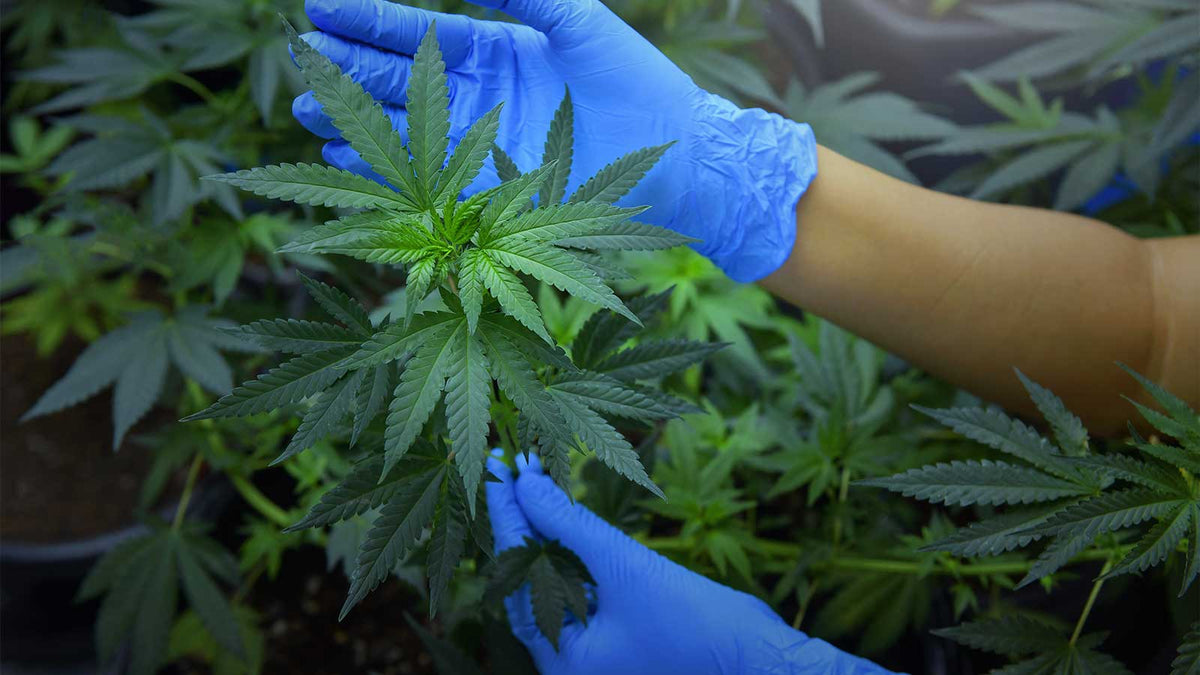
And what do we know about the "superfood of the hour," hemp and hemp oil?
Hemp is trending. But it is by no means a novelty: in ancient China, the plant was used 5,000 years ago. Hemp was used especially for rheumatism and generally for inflammatory processes or even for malaria. Interestingly, the oldest hemp find dates back to Eisenberg in Thuringia – and hemp played a decisive role in paper printing. That is why it was cultivated on a large scale.
Today, we know that there are two ingredients in hemp, namely CBD and THC. The former, in particular, is now used in many ways: CBD is not only antispasmodic but also pain-relieving, anti-inflammatory, and counteracts nausea. Research is currently being conducted as to whether CBD should also be used more frequently in tumor patients.
For chronic pain and conditions such as arthritis, hemp is a substance that has been used for ages – and we are just now realizing it again and using it more. Fortunately, the rethinking has already begun. In addition to the "good" fatty acids, hemp also offers proteins that contribute to the nourishment of the cartilage. If positive effects can be activated from the outside thanks to hemp oil, that makes pain patients very happy.
Impressive! So there are many natural remedies that can be used for joint problems.
Correct! Naturopathy offers many approaches – we just have to rediscover them and successfully incorporate them into therapy concepts. And especially combined preparations with all these substances like hemp oil, frankincense, and turmeric can be the key. However, it is important that the substances are of high quality and exhibit high bioavailability. Certain curcumin concentrates in liquid form exhibit special bioavailability. In contrast to the powder form, this can be absorbed better by the body – from the intestinal wall into the bloodstream and from there into all joints.
Finally: What kind of awareness would you like to see in five years in general regarding the connection between gut health and joint problems?
I would like everyone to take responsibility for their own body again. I have seen it so often in recent years that patients seek advice from doctors but ultimately do nothing themselves. It is about realizing for oneself that exercise, a basic diet, time in nature, allowing oneself breaks, and a healthy lifestyle do one good. Perhaps it is only a bone fracture that shakes people to their foundations. But we can shorten that with more personal responsibility and openness to natural sources of aid. This way, we and our fellow human beings will find our way back to quality of life much sooner – and can take our own destiny into our own hands with *joie de vivre*.
Nobilin Joint Complex® With curcumin extract, frankincense and hemp oil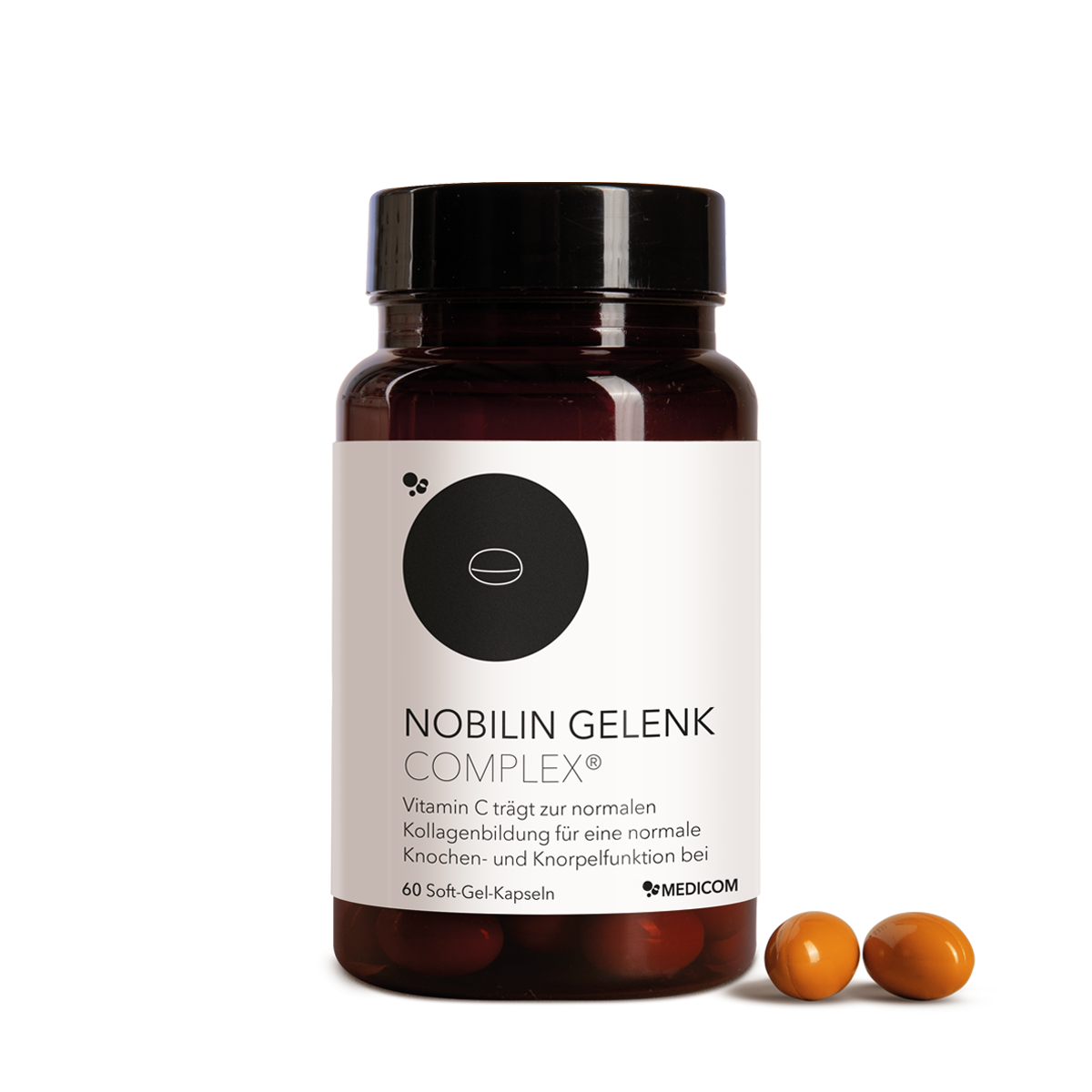
In keeping with the topic, you might be interested in: Diet for the joints? Here is how.
Also read: Joint pain – most common causes and therapies.