Movement after knee or hip replacement is essential for rapid healing and the recovery of mobility and activity. We want to know from expert Prof. Heller why exercise and movement are also important with a joint replacement and which sports are sensible.
Sports with a prosthesis? Yes, says Prof. Karl-Dieter Heller, MD, President of the German Society for Endoprosthetics (AE), Medical Director of the Herzogin Elisabeth Hospital in Braunschweig, Chief Physician of the Orthopedic Clinic
Medicom: Have surgeries for hip or knee joint replacement seemed to have increased significantly in recent years?
Prof. Heller: In the years 2012/2013, the number of surgeries stagnated a little. Now, however, we are seeing a slight increase from year to year due to demographic developments. The so-called baby boomers (the high-birth-rate generations) are now reaching the point where they need to have their joints treated.
Medicom: Does this mean that there is already a demand starting at age 50 or in the mid-50s?
Prof. Heller: We have about 20 percent of endoprostheses in patients under 60; the rest are significantly older, with the peak being around 70 to 75 years of age. However, we are seeing more and more younger patients with severe osteoarthritis who require treatment.
“We must adapt our recommendations regarding sports activities following the implantation of a hip prosthesis and now not only clearly allow moderate exercise but also recommend it.”
Medicom: How do you explain the fact that there are more and more younger people?
Prof. Heller: Various factors play a role here. One is extremely intensive athletic activity, during which the joints can be damaged. We also have more and more obese (overweight) patients, and we know that the risk of needing a prosthesis is significantly increased with obesity. The risk of having complications with a prosthesis is also significantly increased. Obesity is therefore an important topic.
Medicom: So nutrition in general is also a major topic. Apart from a calorie-conscious diet, what would your recommendations be here?
Prof. Heller: I am, of course, primarily a surgeon and someone who replaces joints. One should always pay attention to body weight. Obesity is a disease, and with a BMI over 30, we see clear risk factors: first, developing osteoarthritis, but also overloading the prosthesis. The revision rate among obese patients is several times higher, as is the infection rate, because the entire metabolism, right down to protein metabolism, is problematic.
It is definitely important to think about calcium and vitamin D levels, which should be monitored especially in winter. Through nutrition, it is possible to counteract osteopenia and osteoporosis, from which many female patients in particular also suffer. From a certain age and even if one has a prosthesis, it is certainly advisable to also have calcium and vitamin D levels as well as bone density determined.
Medicom: Another major point for improving quality of life and bone quality is movement.
Prof. Heller: Yes, one absolutely must move, because good musculature can relieve the prosthesis. A significant problem in older patients is so-called sarcopenia, which means the loss of muscle mass. And here the excuse, “I have a prosthesis now, I don’t want to break anything,” is wrong. The prosthesis is there so that you can move, and you must do that to maintain your musculature. The musculature has two effects. First, it relieves the joint because stronger musculature strengthens the joint, and second, strong musculature protects against falls.
We know that muscle mass can be kept constant between the ages of 30 and 60. From 70 onwards, it breaks down massively, and one must consistently counteract this. We motivate patients not to become couch potatoes with the excuse that they have a prosthesis.
It doesn’t have to be road cycling or extreme running right away. It’s just about moving properly for an hour a day. That can be walking, hiking, and it can also be dancing. Dancing is something quite great, namely, firstly for the muscles and secondly also for coordination. Another problem that older people have, and that too must be practiced.
Medicom: Are there sports that you particularly recommend or advise against?
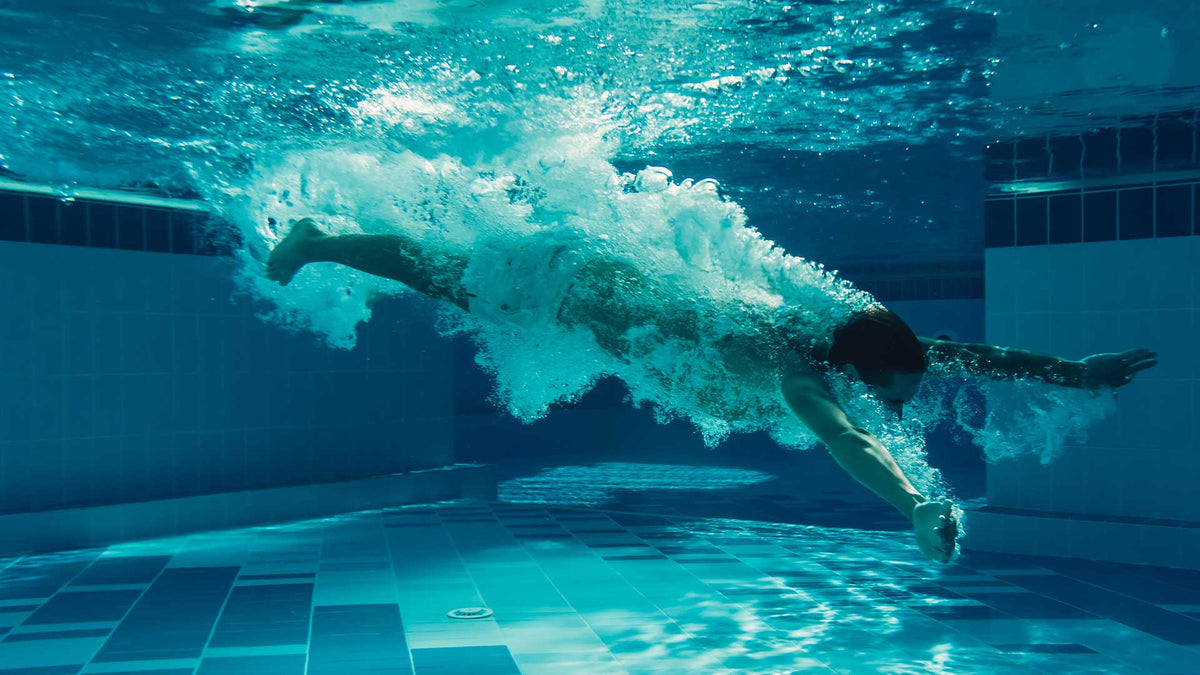
Prof. Heller: Yes, we like to recommend swimming, hiking, walking, cross-country skiing (diagonal stride), cycling, gymnastics, rowing, paddling, and also dancing, which I would also like to call a sport because we truly know that coordination is trained there. Conditionally suitable are jogging, golf, table tennis, and above all, bowling, because of the extreme movement involved, but if you are careful, you can do it. Not suitable are abrupt rotational movements, stop-and-go, significant abduction, scissoring, and crossing the legs—so caution is advised with yoga. One should rather keep hands off ball sports such as soccer or tennis, basketball, and volleyball.
“Many factors contribute to an implant serving its purpose for a long time: “From the patient’s side, these are, for example, weight control, the avoidance or rapid elimination of sources of infection in the body, appropriate daily movement to maintain joint-stabilizing musculature—though not extreme strain—and regular medical monitoring of health.”
Medicom: Has the behavior of implant patients changed in recent years, and if so, how?
Prof. Heller: Behavior per se has not changed; however, we see a change in the older generation. My grandmother was a very nice old lady at 70; my mother, on the other hand, was in top shape at 70 and is still in top shape today at 80. Of course, she is getting older, but she also has high standards for herself. She moves a lot, and that corresponds to the development we are seeing.
And the retiree with more leisure time is at least as active as the working fifty-year-old who has no opportunity to move adequately. Here we see a clear shift. In that case, it is even trending toward a "wellness surgery." People want to be able to move better again or do something. Or also the request: “Make me fit again; I want to play with the grandchildren.” That is also a kind of sport. Being able to run after the grandchildren, accompany them while they cycle, etc.
Medicom: Are there risks regarding movement and sports?
Prof. Heller: Yes, of course. Falls are problematic because, while not the prosthesis, the bone around the prosthesis breaks. The aforementioned stop-and-go is a problem if too much stress is placed on the prosthesis, if the wear is too high, and with stop-and-go, with shear and jumping loads, higher wear occurs, and one should counteract that.
Medicom: What is the current status of surgical techniques and prostheses?
Prof. Heller: Surgical techniques are becoming more and more refined, and more and more operations are being performed minimally invasively. This means less muscle trauma, which is what enables sports. This limping that we used to see frequently is no longer there, and the patients have more muscle strength and can thus live their lives correspondingly more fully. Robotics is also being increasingly used, which can ensure the greatest accuracy in the positioning of the joint. In the case of prostheses, it is particularly the quality, the bearing surface—more and more ceramic, highly cross-linked polyethylene with a ceramic ball—that means wear is lower, which is more advantageous because wear generates inflammation, which in turn generates loosening.
Medicom: What is your message to patients or people who already suspect they might need a joint replacement?
Prof. Heller: Definitely listen to your own body, seek a confidential discussion with an expert, and get advice. The decision is a very personal one, and we do not take it away from our patients. What is certain is that life has a different quality when you can move independently and pain-free again.
Medicom: Thank you very much for the interview!
• Here you can learn more about knee and hip surgery.