Joint pain in the legs, shoulders, knees, or fingers can occur particularly during the menopause. The joints in the body have to perform and endure a great deal over many years. Those who did not have joint pain before may notice newly emerging symptoms in the joint apparatus during the menopause.
What causes joint pain during the menopause?
The cause of joint pain during the menopause can be a drop in estrogen and progesterone levels and the associated hormonal imbalance.
When natural estrogen levels fall during the menopause, this natural joint protection can sometimes weaken, leading to joint pain and stiffness. This joint pain and swelling most frequently affect the small joints of the hands and feet. However, other joints such as the knees, elbows, and neck joints can also be affected, causing stiffness and restricted movement. It is normal to experience general aches and pains as you age due to normal wear and tear of the joints. Therefore, joint pain is not always necessarily attributable to the menopause, even if it can occur during this time.
Possible symptoms of the menopause
- Hot flashes, night sweats
- Sleep disorders
- Mood swings
- Dry skin
- Dryness of the mucous membranes
- Joint discomfort
Osteoarthritis during the menopause
The menopause is associated in some women with the onset and progression of osteoarthritis. Osteoarthritis is a progressive joint disease characterized by joint inflammation, pain, and stiffness. It is more common in women than in men.
It has been shown that a change in diet combined with exercise can reduce the symptoms and progression of osteoarthritis during the menopause.
How can joint pain during the menopause be treated?
There are various ways to alleviate joint pain during the menopause, ranging from lifestyle changes to medical treatments. Lifestyle changes include:
- Controlling overweight or obesity. Weight control can be beneficial for musculoskeletal pain.
- Reducing stress levels. Stress can sometimes cause joint pain to worsen. Pain and stiffness can also worsen if you feel anxious or depressed. Cognitive behavioral therapy (CBT) can help you change your way of thinking about joint pain and break the cycle of pain, low mood, stress, and anxiety.
- Getting enough high-quality sleep. Pain often feels worse when you are tired or suffer from insomnia. A good night's rest is therefore important.
- Hormone replacement therapy in the form of estrogen treatment can lead to a lasting reduction in menopausal joint pain. There are different types of therapies – it is best to speak to your doctor about which options are most suitable for you.
In addition to hormone replacement therapy, there are other alternatives for alleviating joint discomfort during the menopause.
- A generally healthy lifestyle with a balanced and joint-friendly diet
- Sufficient exercise (joint-friendly sports such as swimming, walking, Nordic walking, cycling)
- Regular and active relaxation (yoga, meditation, autogenic training)
- Supportive plant extracts such as cold-pressed hemp oil and Indian frankincense
However, if you have joint pain of unknown origin, you should always consult a doctor first to rule out other possible causes!
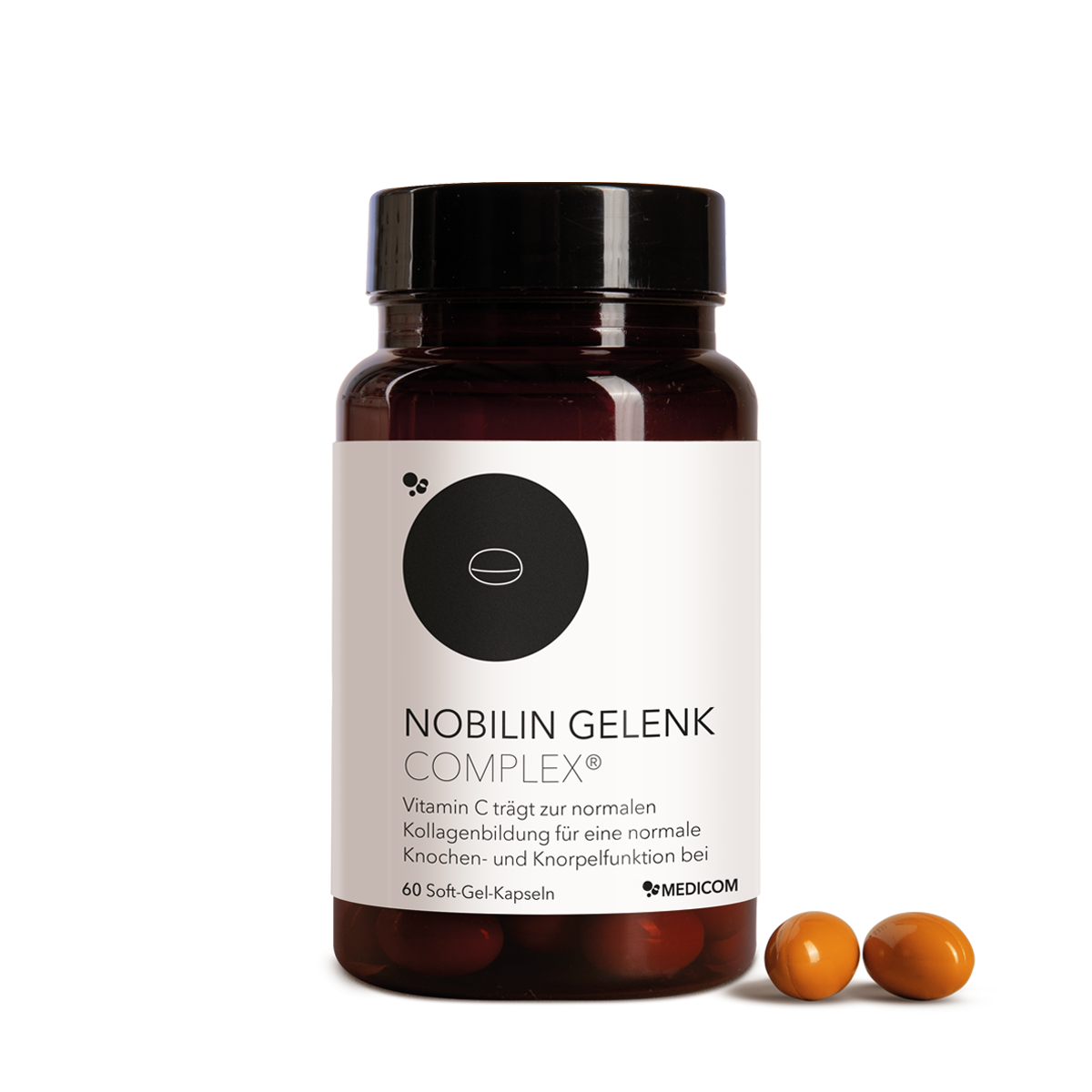
Nobilin Joint Complex®
With curcumin extract, frankincense and hemp oil
Why exercise for joint pain?
Experts advise continuing to exercise even when in pain. This is because exercise makes it easier to control weight; the less body mass you have, the less weight is exerted on the bones and joints. With less weight, it is also easier to play sports. With regular exercise and moderate sports, we also train our muscles and ligaments. This in turn relieves the strain on our joints and prevents joint wear and thus joint pain. In general, exercise is considered the high-dose pill for health.
Summary
The menopause occurs when periods stop permanently and pregnancy is no longer possible. The drop in hormone levels in the body can lead to various symptoms. Joint pain is a common symptom of the menopause, with an increase in osteoarthritis often occurring during this time. All joints in the body can be affected.
The hormone estrogen plays an important role in keeping joints healthy and supple. Low estrogen levels during the menopause can lead to symptoms such as aching joints and stiffness.
Joint pain during the menopause can be treated in various ways, from natural treatments and lifestyle changes, support with dietary supplements, to hormone replacement therapy.
You can listen to why exercise is so important for muscles and joints in this podcast interview with Prof. Wessinghage: Osteoarthritis, rheumatism, etc. – preventing joint discomfort with exercise
Would you like to know what other vital substances can support you in getting more exercise and fitness? Read the article on this here: More exercise and fitness with these vital substances.