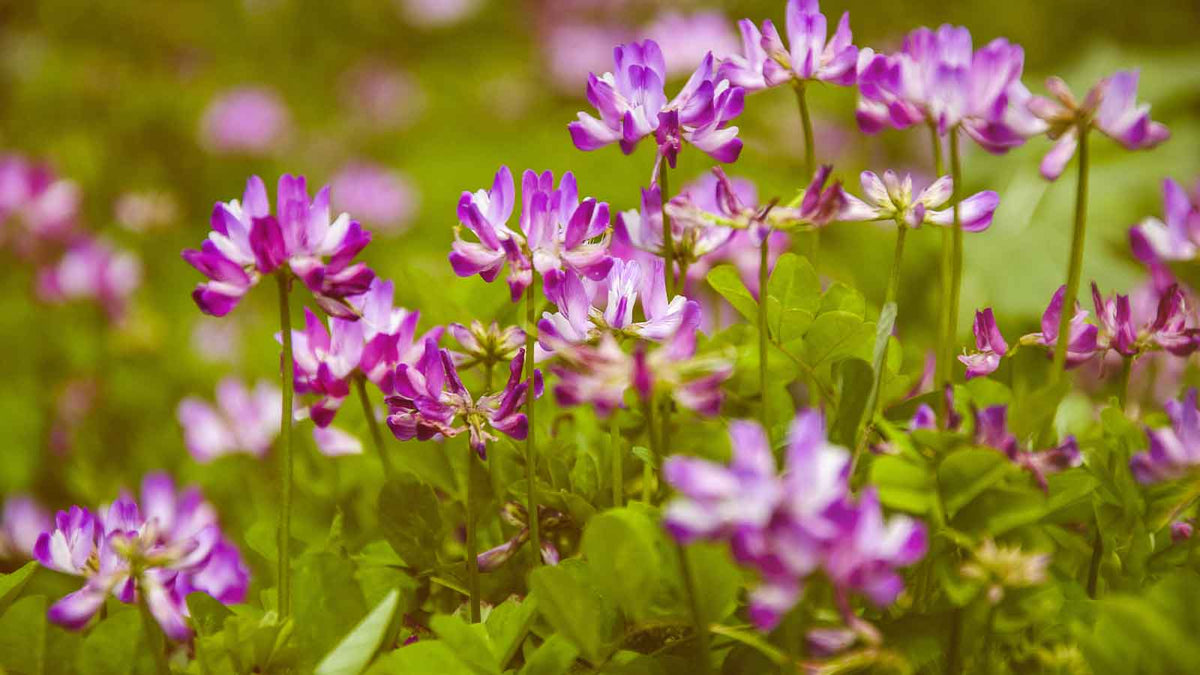
In traditional Chinese medicine (TCM), astragalus has been known for thousands of years as a vitalizing tonic and outstanding medicinal herb. In the meantime, the West has also discovered the beneficial properties of the Asian tuber for itself, utilizing the root extract to strengthen the immune system, reduce stress, provide general vitalization, and increasingly to prevent allergic symptoms.
Highly interesting ingredients
Originally native to Mongolia and northern China, "Mongolian milkvetch" has long been found in many parts of Asia. The plant is also known by the name Astragalus mongholicus or Astragalus membranaceus. The most important ingredients are found in the tuberous root of the deciduous plant, which grows up to 1 meter high. In addition to amino acids, fatty acids, and minerals, secondary plant compounds such as isoflavonoids or astragalosides deserve special attention. They are attributed with antiviral, antibacterial, anti-inflammatory, and antioxidant properties. According to alternative medicine practitioners, the polysaccharides contained therein are primarily thought to have immunomodulating effects. If the immune system overreacts, as is the case with allergic reactions such as hay fever, the consumption of astragalus is said to have a regulating effect.
Astragalus as an adaptogen
When an adaptogen is mentioned in natural medicine, it generally refers to plants or ingredients that help with adaptation to stress-inducing factors. In this context, the phenomenon of stress is viewed by natural practitioners as holistically as the human being as a whole. Environmental factors, emotional stress, severe physical exertion, or the complex effects of illnesses and exhaustion states are all taken into consideration. Astragalus is also said to have an immunomodulating effect. This means that it stimulates the immune system when it is working too weakly, but it also dampens an overactive immune system and alleviates allergic reactions like hay fever. Furthermore, astragalus is said to possess anti-inflammatory, cell-protecting, and generally vitalizing properties.
Astragalus in traditional Chinese medicine (TCM)
According to legend, the legendary Emperor Shennong already knew the astragalus plant and described it in a three-volume book. However, this "Classic Work of Roots and Herbs by Shennong" was demonstrably compiled only at the end of the Western Han Dynasty, approximately around the turn of the era. The manuscripts that have survived to this day present 365 medicinal plants, including astragalus or Astragali Radix. Presumably due to its yellow coloration, the root is called "Huang Qi" in the classic of traditional Chinese medicine, which translates to "yellow leader" or "yellow life force." In the compendium, astragalus is described as one of the outstanding medicinal plants that helps with, among other things, "hundreds of childhood ailments." In TCM, however, astragalus attained special significance primarily as a Qi tonic, i.e., a fortifying agent that supports the organism in allowing the universal life force to flow freely through the entire body while also helpfully accompanying mental and emotional processes.
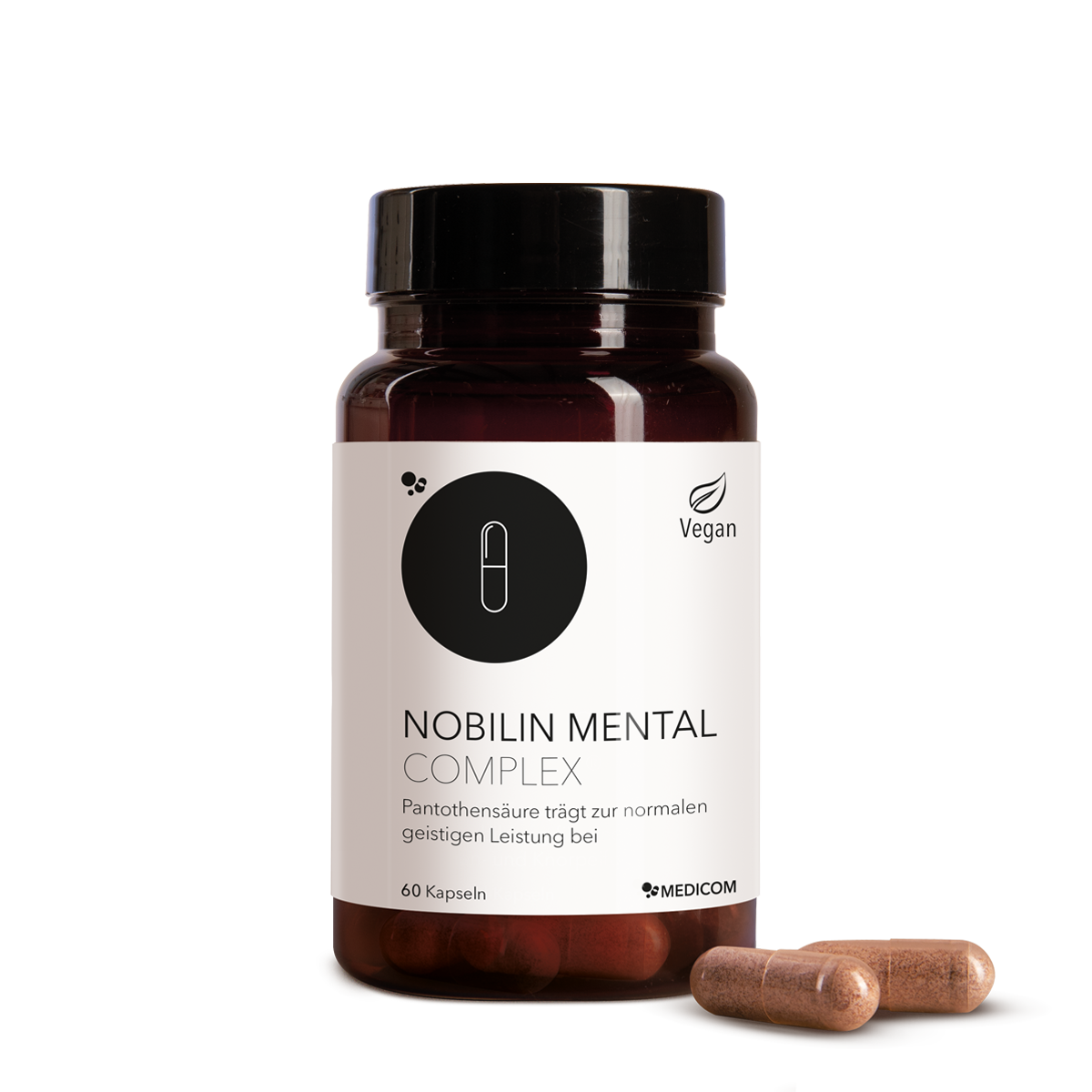
Nobilin Mental Complex
With Lion's Mane medicinal mushroom & 4 B vitamins for the brain
The doctrine of Qi
Qi is a central concept of the Chinese wisdom teaching of Daoism. What is meant by this is not easily put into words, for one would have to delve deeper into the philosophical spirit of the ancient worldview. Roughly speaking, Qi denotes a universal life energy that permeates the entire cosmos like a fluid. Hence the literal translation "air," "breath," "atmosphere," but also "power." It is a substance that is of neither a material nor a spiritual nature, but which pervades all physical, emotional, and mental processes. Qi is the only thing that is imperishable. If Qi flows freely in a person, they are healthy.
Astragalus as a treat in everyday life
In Asia, the astragalus root is processed into decoctions or soups. Serving it as a tea is also known. People in our latitudes who wish to take astragalus generally resort to extracts in capsule form, which are easy to transport and precisely dosable. Either way, extracts can be stirred into water, sprinkled over food, or incorporated into energy balls and smoothies. In the process, the astragalus root extract can be combined with other popular medicinal plants from Ayurveda and TCM. For example with ginseng, schisandra, or reishi.
Preparation tip for astragalus smoothie:
Blend 250 ml of almond milk with a banana (frozen), one teaspoon of astragalus root extract, one teaspoon of chia seeds, a handful of spinach, and a pinch of turmeric in a blender for a delicious and healthy drink.
• Further tips for smoothies can be found under recipes.