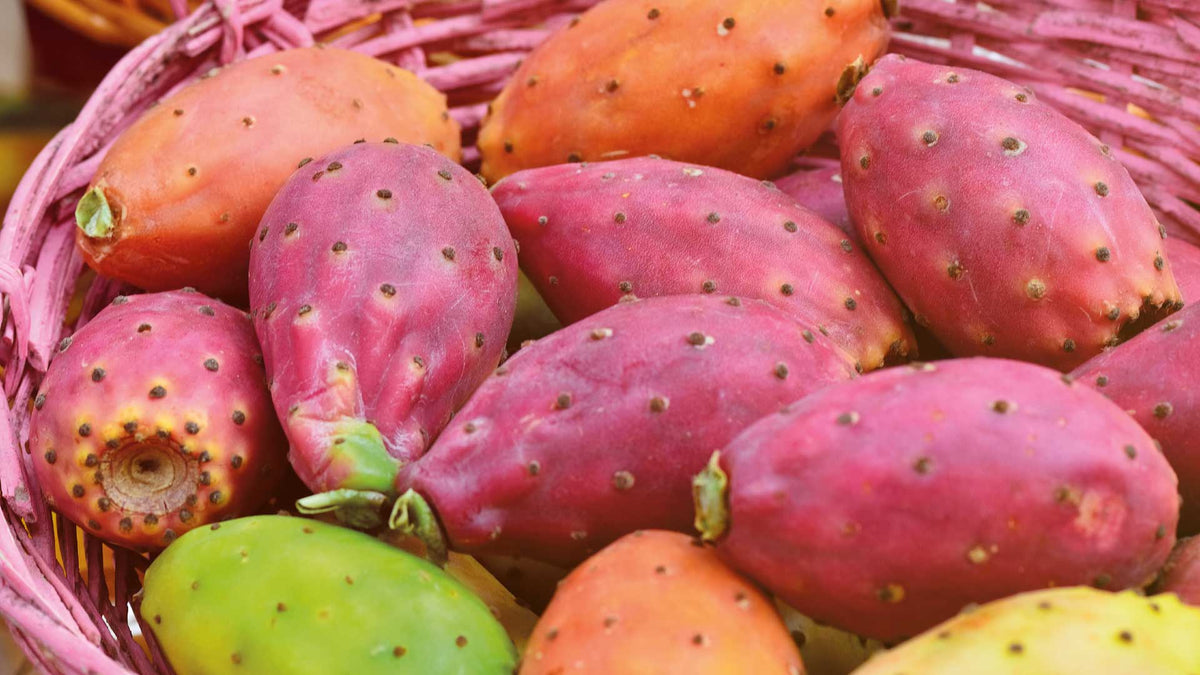
The prickly pear provides valuable nutrients such as minerals (potassium) as well as B vitamins, vitamin C, and fiber. You can read an overview of this fruit and why the prickly pear can help with weight control here.
What does the prickly pear look like?
The prickly pear grows in a shrub-like fashion up to a height of 6 m. The initially soft, disc-shaped shoots are covered with small thorns, which in turn have barbs. The flowers are yellow to red. The oval, yellow-green to orange fruits (prickly pears) are approximately 8 cm long and are also covered with barbs or thorns. The prickly pear and the Opuntia cacti have high ecological significance in the fight against desertification.
Distribution and use of the prickly pear
Opuntia ficus-indica likely originates from Mexico, but the cacti are also found in the subtropical climate zones of Europe, especially Spain and Italy. Other cultivation areas include Australia and South Africa. Nearly 1,000 years ago, the Aztecs used Opuntia to produce the red dye carmine. In the 17th century, it was discovered that the dye did not come from the Opuntia itself, but from the cochineal scale insects living on it. In South America, the prickly pear is currently used for juices and ice cream. The fruits are also suitable as feed for pigs and goats. In Mexico, the young, soft shoots are eaten as a vegetable. In recent years, the prickly pear has also begun its triumphant advance as a fiber-rich superfood in our latitudes.
What are the ingredients and effects of the prickly pear?
The prickly pear contains glucose and fructose, abundant minerals such as potassium and calcium, B vitamins, and plenty of vitamin C. In addition, it contains pigments and dietary fiber. Thanks to these ingredients, the fruits of the prickly pear are a rapidly available source of energy, especially for athletes and during periods of mental strain. Their high antioxidant potential supports cell health, and their fiber content aids digestion. Their fiber complexes have a high binding affinity for dietary fats and are used to support reduction diets or weight control as part of a fat-conscious diet and to prolong the feeling of satiety.
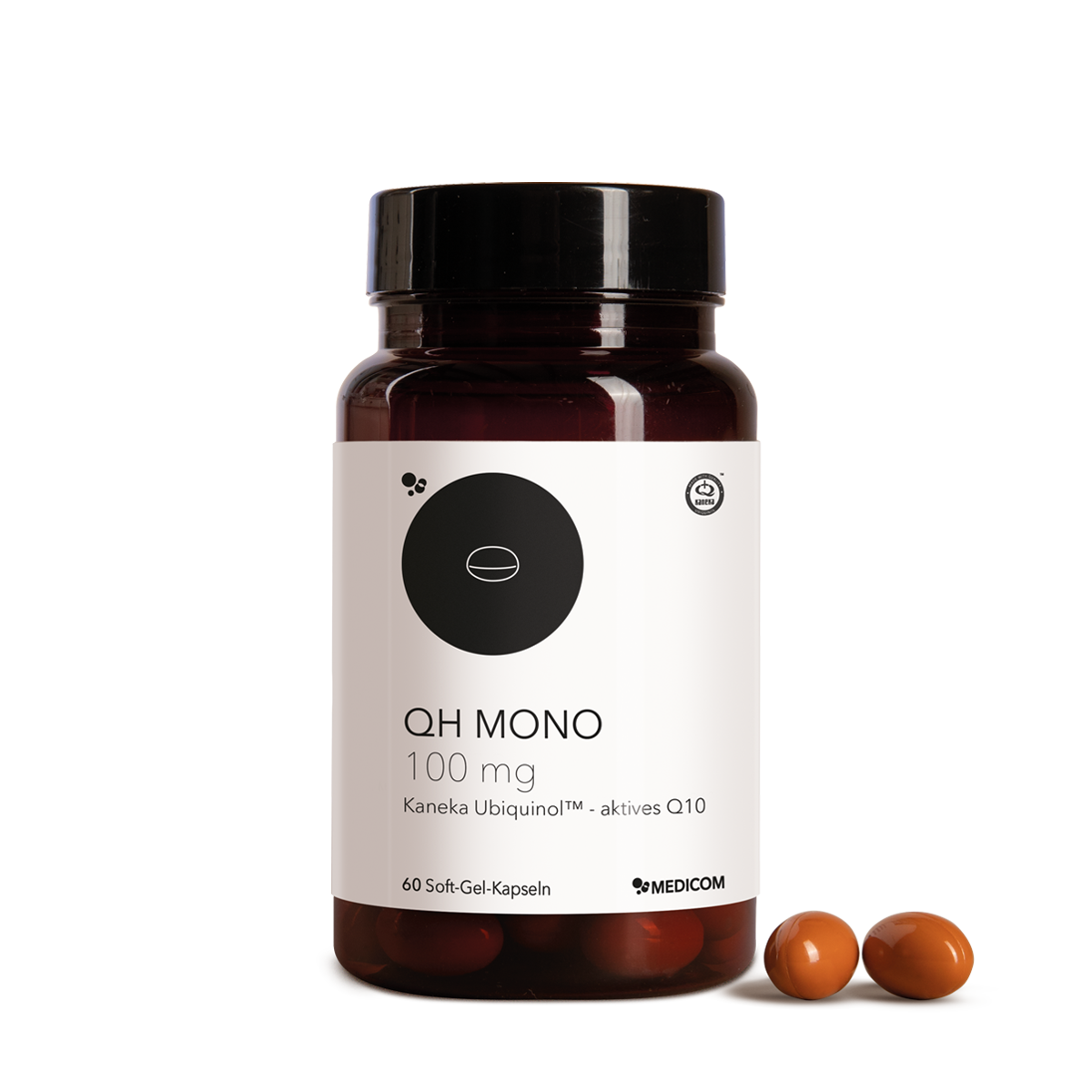
QH Mono 100 mg
High-dose bioactive coenzyme Q10
Tip: You can grow the prickly pear yourself on your balcony. When opening fresh prickly pear fruits, you should watch out for the barbs and thorns. The fine spines can easily end up in your fingers.
The fiber in the prickly pear is particularly good for your gut feeling. If you would like to learn more about this topic, you can find the most important 10 facts about fiber in an overview here.
• Are you interested in products for weight loss? You can find out more about them here.