
Hard stools are one of the most common digestive problems. Yet it has long been known that your gut has a direct influence on your health and well-being, as it is a major source of energy. Furthermore, around 70 percent of your immune cells are located in the gut. So give this all-rounder at your core some attention. You will quickly notice that your whole body benefits from it.
Hard stools and their causes
Stools that are too firm are as widespread as they are unpleasant. The immediate cause: chewed food moves too slowly through the gut, losing liquid in the process. This results in stools that are far from soft, and can lead to constipation. This is not only uncomfortable. Hard stools also promote hemorrhoids, anal fissures, and diverticular disease. The actual causes for hard stools can be irritable bowel syndrome, neurological disorders, an underactive thyroid, or bowel diseases such as Crohn's disease. Medications or bowel tumors can also have an unfavorable effect on bowel movement. As a rule, however, the background is much more harmless: We don't get enough exercise, drink too little fluid, and don't consume enough fiber.
Nutrition for hard stools
Let's start with nutrition: You should eat plenty of fresh fruit and vegetables, as they are low in calories and high in vital nutrients. Your gut, for example, gets a real workout from eating fresh sauerkraut. So-called dietary fiber is particularly important here. These indigestible food components can support your core particularly well. The German Nutrition Society recommends a daily intake of at least 30 grams of fiber, mainly from whole grain products, fruit, vegetables, and pulses. People with a tendency towards chronic constipation are advised to consume 32 grams. Wheat bran, psyllium husks, and flaxseeds are true fiber bombs. They are able to store water in the large intestine, i.e., they swell in the gut and thereby increase stool volume.
Where can I find fiber?
Wheat bran, psyllium husks, and flaxseeds, in particular, are very good sources of fiber. They are able to store water in the large intestine, i.e., they swell in the gut and thereby increase stool volume.
Soluble fiber, such as that found in oats, oat bran, barley, barley bran, acacia powder, and corn dextrin, also contributes to the maintenance of normal cholesterol levels when consumed regularly.
So-called prebiotics also belong to the indigestible fibers; they promote the growth of certain gut bacteria in the large intestine, such as bifidobacteria, inhibit undesirable germs, and have a regulating effect on bowel activity. Prebiotics occur naturally in plant-based foods such as Jerusalem artichoke, chicory root, or in garlic and onions.
High fiber – drink plenty
To ensure that fiber can be utilized properly, plenty of fluid is required. Insoluble fiber in particular absorbs large amounts of water in the large intestine like a sponge and can reach up to 15 times its own weight. By swelling up, they stretch the bowel wall and signal the muscles to move the food pulp along. This prevents constipation and the occurrence of diverticula. Therefore, especially with a high-fiber diet, drink at least 1.75 to two liters of fluid daily. Then hard stools will soon be a thing of the past for you.
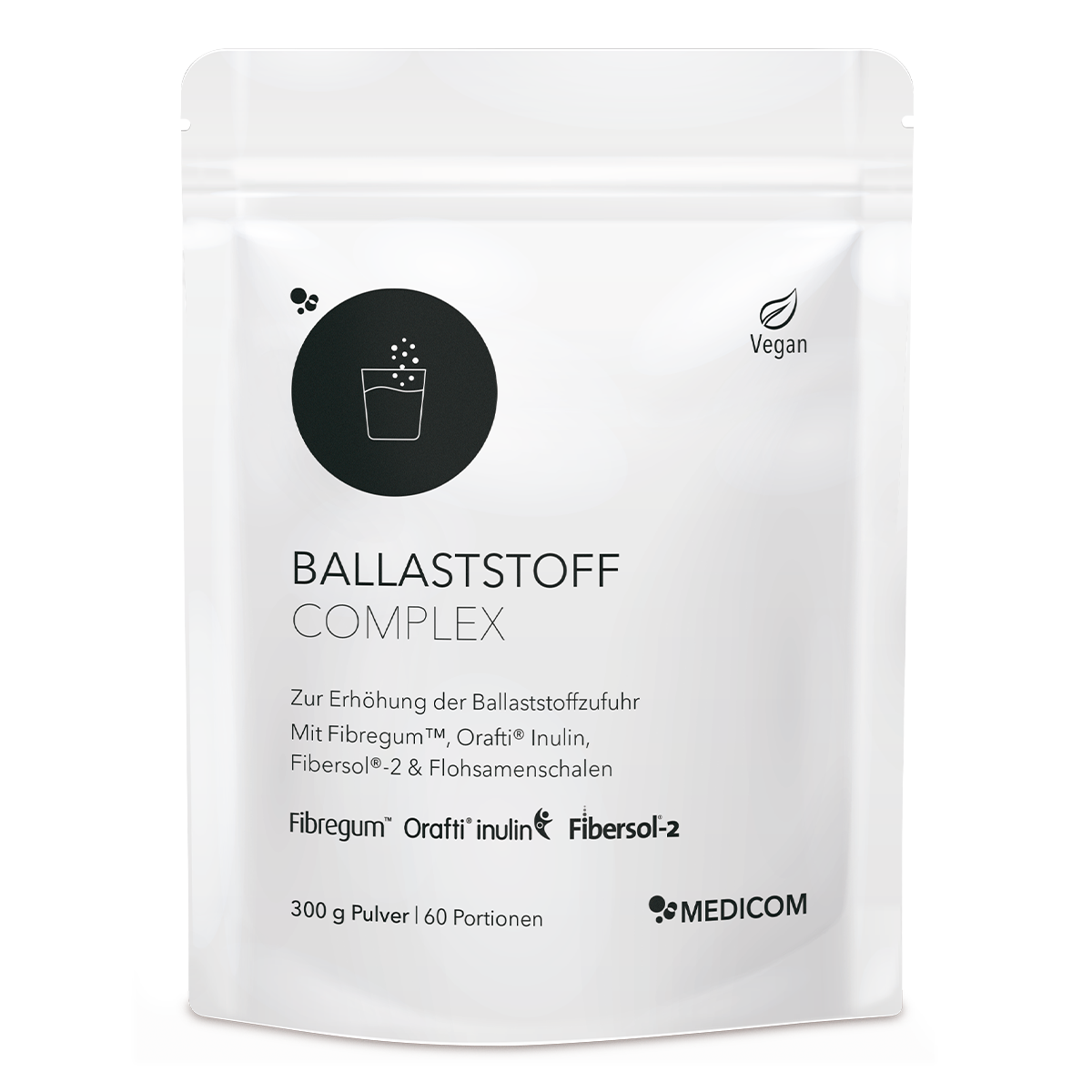
Fiber Complex
Fiber Powder: A Plus for Digestion
Herbal teas for hard stools
Not only is water a good source for this, but unsweetened herbal teas are also a proven remedy for stomach and gut problems. Whether chamomile, anise, fennel, or caraway – herbal infusions have an additional positive effect on your digestive system. The essential oils they contain support digestion in a natural way by acting as antispasmodics and carminatives. So: don't wait, drink tea! If the tips here do not help or if you want to be on the safe side from the start, you should definitely consult a doctor and have yourself thoroughly examined.
• Would you like to know more about fiber? Learn more here.
• Would you like to know more about the stomach, gut, and digestion? Learn more here.