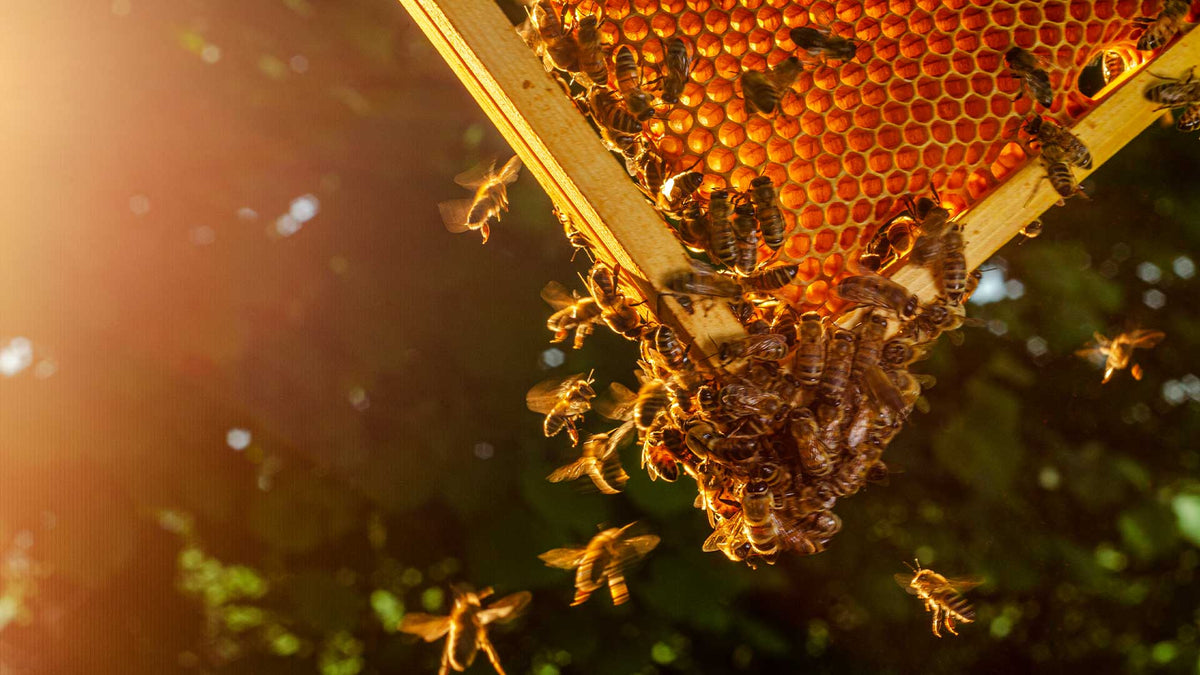
Nature has many active ingredients to offer that can make an important contribution to our well-being. When the days grow shorter and temperatures drop in autumn, the body mobilizes our defenses. Our immune system now has to perform heavy duty. With the help of nature, we can support our defense system. The natural substance propolis comes directly from the natural world of bees.
Propolis – Nature's weapon against germs and pathogens
Propolis is a bee glue produced from the resin collected by bees from flower buds and trees, along with their glandular secretions. With this glue-like mixture, the bees disinfect the interiors of their hive. They use it to seal small cracks, thereby protecting their beehive from viruses, fungi, and bacteria. The bees cover every single brood comb with a thin film of propolis. With this propolis layer, no germs can destroy "their city." Propolis comes from the Greek ("pro": "before, for"; "polis": "city") and means something like "for the city."
The coloring of propolis varies. The bee resin can be light yellow, brown, or even black. The taste is sharp and bitter, combined with a sweetish smell. This can also vary depending on the origin. It depends on several factors. Consequently, the season of the year and the region in which the bees collect the resin also play a role in the composition of propolis.
Which active ingredients in propolis are valuable for our health?
The numerous active ingredients in propolis include essential oils, flavonoids, vitamins, and minerals. In naturopathy, propolis is valued for its antibacterial, healing-promoting, and antifungal properties. In short, it is considered a tonic for the defense system. It was used in ancient times as a natural remedy for skin and gastrointestinal ulcers. The Romans used it in war as a wound disinfectant. The Incas used it for febrile infections.
What in propolis is antioxidant?
The flavonoids in propolis, i.e., the water-soluble plant pigments, are of particular importance. They are considered to be vascular-strengthening, antiviral, and anti-inflammatory. Their antioxidant properties are also being increasingly researched. Flavonoids are able to neutralize free radicals. In doing so, they protect lipids and other compounds such as Vitamin C from oxidation.
Free radicals are of great significance for diseases caused by cell aging. These include, for example, cardiovascular diseases, arthritis, cancer, diabetes mellitus, Parkinson's disease, and Alzheimer's disease. The flavonoids from propolis can have a positive influence on the cardiovascular system.
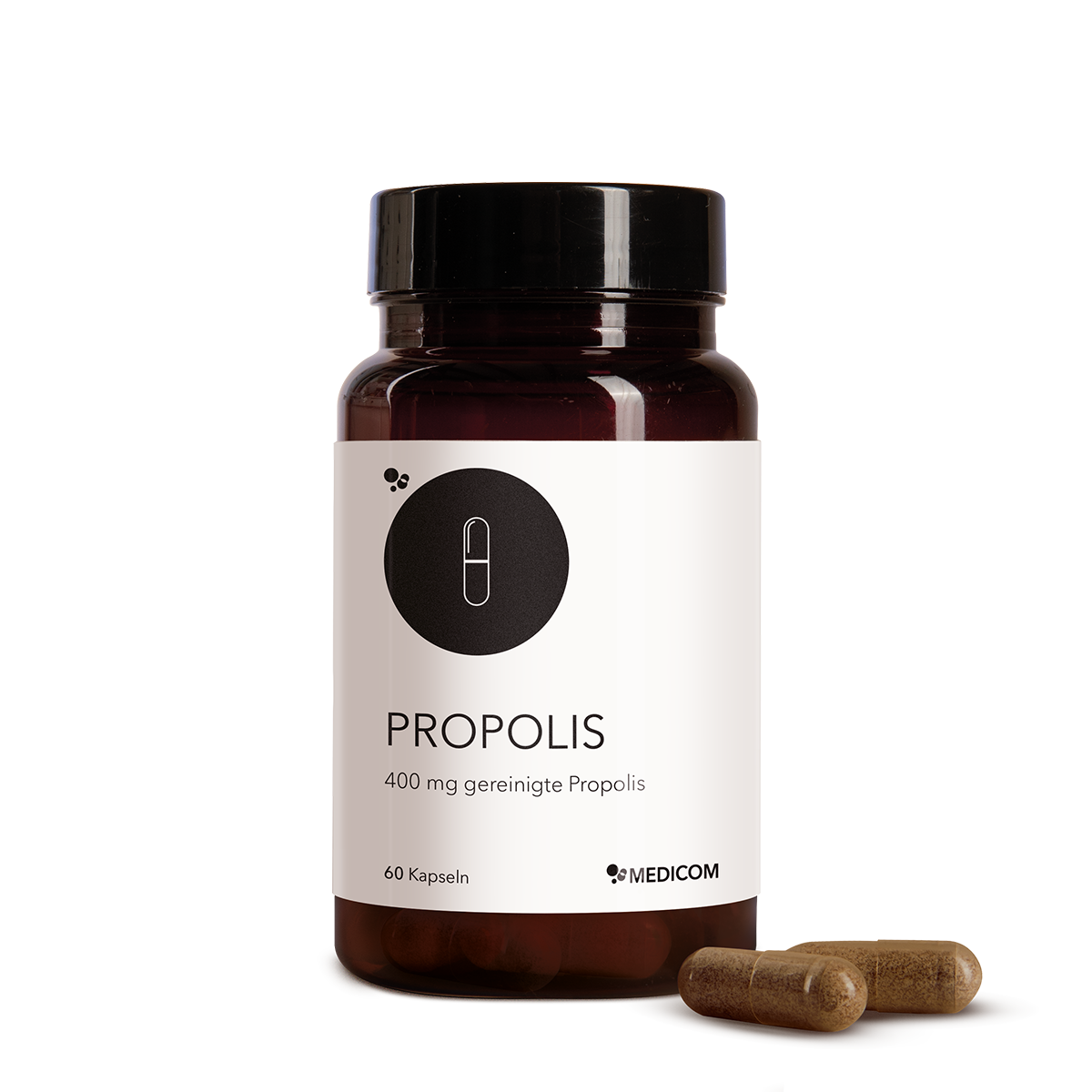
Propolis
The Power of the Beehive: Propolis
Conclusion: Propolis at a glance
- can have a positive influence on the cardiovascular system
- is used for mucous membrane inflammation and skin diseases
- promotes the activity of various enzyme systems, cell metabolism, healthy blood circulation, and collagen formation
- improves wound healing for injuries and burns
- is considered in naturopathy as a tonic for the defense system
You can find more on the subject of propolis here.