Omega-3 fatty acids have several positive effects on health. According to scientific studies, the cardiovascular system, eyes, and brain benefit from these polyunsaturated fatty acids. Further international studies now show that omega-3 is also good for the immune system.
What does the study show about omega-3 and the immune system?
An international research team from the University of Jena and Harvard Medical School in Boston was able to demonstrate that omega-3 plays an important role in inflammatory processes in the body.* Bacterial infections can promote inflammation in the organism. The defense system responds to these pathogens with immune cells, such as macrophages. When these macrophages become active during a bacterial attack, inflammatory processes are initiated as a defense. Fatty acids like omega-3 fatty acids are building blocks in these inflammatory processes.
How do omega-3 fatty acids act on inflammation?
The research team led by Prof. Dr. Oliver Werz was able to discover that omega-3 is a building block for substances in the body that allow inflammation to subside. These are the so-called resolvins, lipoxins, maresins, and protectins. These are formed from omega-3 fatty acids. It was already known that omega-3 acts on prostaglandins, which are also involved in inflammatory processes. In this way, these unsaturated fatty acids strengthen the immune system. The study results on omega-3 fatty acids and the immune system were summarized in the journal "Nature Communications".

What are the sources of omega-3 fatty acids?
Fish with a high fat content and polyunsaturated fatty acids are:
- Mackerel
- Herring
- Tuna
- Salmon
- Krill
- Phytoplankton (microalgae)
The German Nutrition Society recommends 150 to 220 grams of fish per week. If you do not want to or cannot eat fish, or for vegans and vegetarians, there are also plant-based sources of polyunsaturated fatty acids. However, the omega-3 fatty acid from plants, ALA (alpha-linolenic acid), must be converted in the body by enzymes into the valuable omega-3 fatty acids EPA and DHA. The problem: the body has difficulty converting ALA into EPA and DHA. For those who follow a meat-free diet and pay attention to a very balanced diet, the following plant-based sources of ALA are suitable:
- Pumpkin seeds
- Flaxseed
- Chia seeds
Conclusion
The organism cannot produce omega-3 itself, except via the plant-based omega-3 source ALA. However, the body's own conversion is not very efficient. The best sources of omega-3 fatty acids are certain microalgae and omega-3 from krill, which feeds on these microalgae. Omega-3 fatty acids are indispensable for the body. They are building blocks of the cells and have an anti-inflammatory effect. Omega-3 fatty acids have positive effects on the immune system.
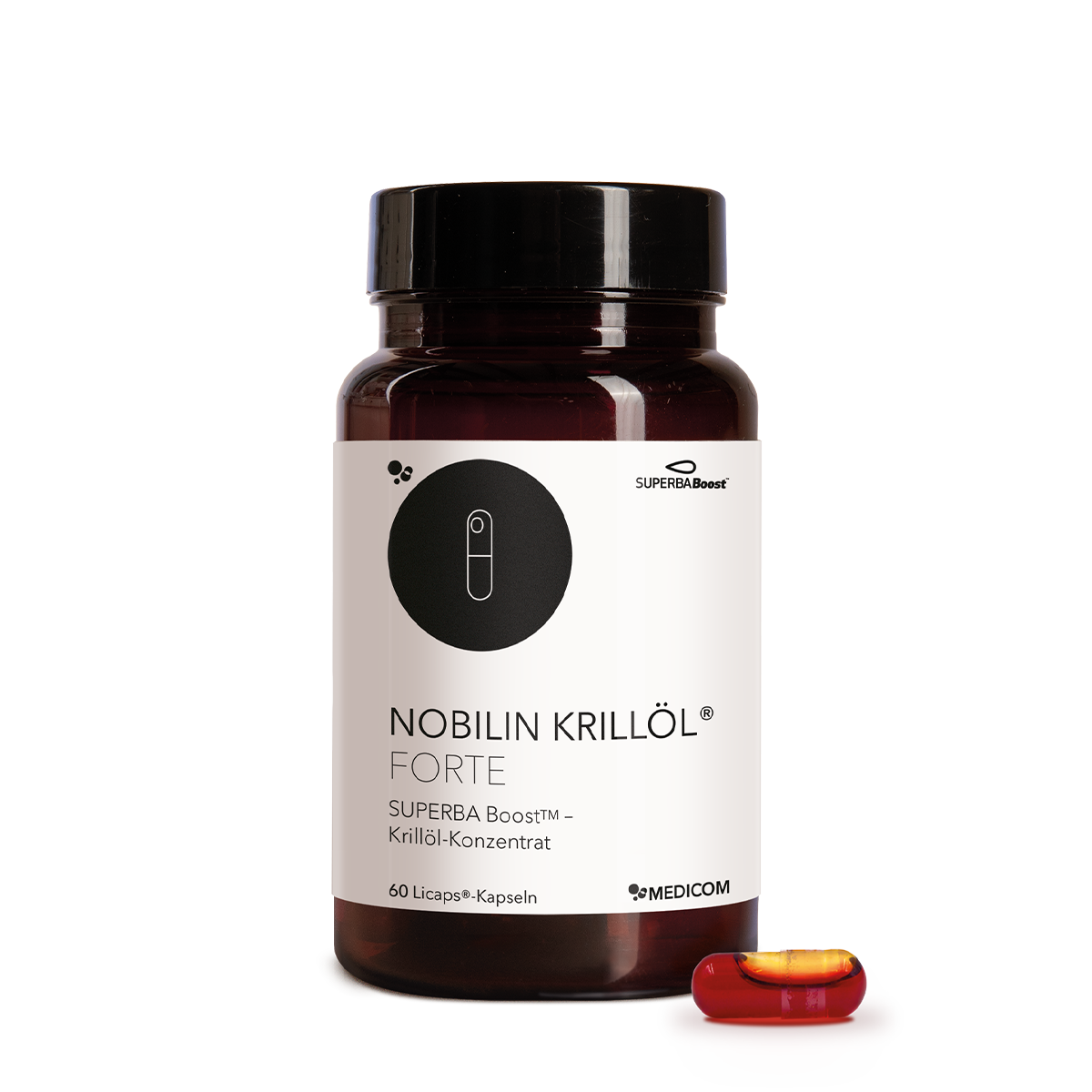
Nobilin Krill Oil® Forte
The best source of omega-3 in capsule form
- Source of the study: https://idw-online.de/de/news687274
- Further study on the positive effect of omega-3 fatty acids on the immune system: https://www.mdpi.com/1422-0067/20/20/5028