In addition to the causes typical of joint pain, such as osteoarthritis and arthritis, there are other diseases whose origins do not lie in the joint itself, but rather result from metabolic disorders. Gout (arthritis urica) is one of these. Here is an overview of the most important information on how to recognize and treat gout.
What is gout?
Gout, also known as arthritis urica, is a metabolic disorder that can lead to painful joints. It is triggered by high levels of uric acid (hyperuricemia) in the blood. This arises due to poor dietary habits, genetic predisposition, or medical conditions in which uric acid cannot be sufficiently excreted by the kidneys. Gout or a gout attack can then lead to severe pain in the affected joints.
The root cause is that too much uric acid accumulates in the body or the concentration of uric acid in the blood rises, causing the resulting uric acid crystals to deposit in various places, especially in the joints. This initially results in painful inflammation, and later in joint damage. It can take years before a dreaded gout attack occurs.
The disease often manifests itself quite unexpectedly, frequently immediately after a high consumption of meat and alcohol (for example, classically after the holidays). Other stressors, such as stress or infections, can also trigger an attack. Gout is often associated with metabolic syndrome and is one of the most common metabolic diseases. The trend is rising sharply.
Who is affected by gout?
Significantly more men than women suffer from gout. Approximately 950,000 people in Germany suffer from gout. As already mentioned, men are affected significantly more often than women. Approximately eight out of ten patients are male. The peak age for the disease often occurs only after the age of 40. For women, the onset of menopause and falling estrogen levels can play a role.
What are the symptoms of gout?
Anyone who has ever had a gout attack usually knows from that point on that they suffer from gout. This is mainly because the first gout attack, in a negative sense, is often very memorable because the pain can be extremely severe. Classic symptoms of a gout attack, and how one recognizes gout, include:
- very intense pain
- signs of inflammation such as redness, swelling, and heat in the affected joint
- extreme sensitivity to touch: patients literally "hit the roof" when the affected joint is touched
- occasionally, accompanying symptoms such as fever, headache, or nausea occur
However, the gout attack is often preceded by various painless warning signs. Initially, often for decades, only the uric acid level in the blood is elevated. Kidney gravel and small kidney stones can also be an indication without one physically feeling anything. Therefore, one should be vigilant, especially with a genetic predisposition, because an early change in diet can prevent worse later on. An acute gout attack is only triggered when the uric acid level exceeds a certain value. If no countermeasures are taken after this, the gout attacks will recur and cause long-term damage to the joints.
How is gout treated?
In the case of an acute gout attack, various medications are used. For example, NSAIDs (non-steroidal anti-inflammatory drugs) are used, which have an anti-inflammatory and pain-relieving effect and are intended to provide quick relief. Examples include ibuprofen or diclofenac. In addition, cortisone preparations are used, sometimes in combination with NSAIDs for severe discomfort.
Colchicine is another medication that is no longer used as frequently today and is a naturally occurring, inherently toxic substance from the autumn crocus plant. Due to its side effects, it is usually only recommended today if the aforementioned medications do not show the desired effect or are contraindicated.
What can I do myself for gout?
The right diet is crucial for preventing a gout attack. If you are treating gout, you should not hesitate during an acute gout attack and should consult a doctor immediately. The earlier the disease is detected, the better you can prevent recurring attacks. In addition, one should immediately switch to a low-purine diet. More on this below. The following measures can help with gout:
- Alcohol must be reduced as it inhibits the excretion of uric acid. It is best to avoid alcoholic beverages altogether.
- Do not rely solely on medication, which is essential during an acute gout attack but also has side effects. The key is a consistent change in diet.
- In addition, one should consume enough fluid (approx. 2 liters daily), preferably clear water, as good hydration promotes uric acid excretion.
- Excess weight should be reduced slowly. Radical fasting cures with rapid fat loss can trigger a gout attack. Gentle weight reduction, however, is an important and sensible measure.
- Antioxidants such as vitamin C and anthocyanins (for example, secondary plant compounds in sour cherries, resveratrol, and OPC) are also said to have a positive influence. Various studies have shown, for example, that administering vitamin C can lead to a reduction in uric acid in the blood. Another study on sour cherries and the secondary plant compounds they contain showed that the frequency of attacks could be reduced.
However, you should not consume high quantities of fruits high in fructose, such as grapes, because fruit sugar can have a negative effect. A high intake of vitamin C combined with secondary plant compounds, such as natural vitamin C from the acerola fruit or sea buckthorn, can be a useful support, but it can never replace necessary medications.
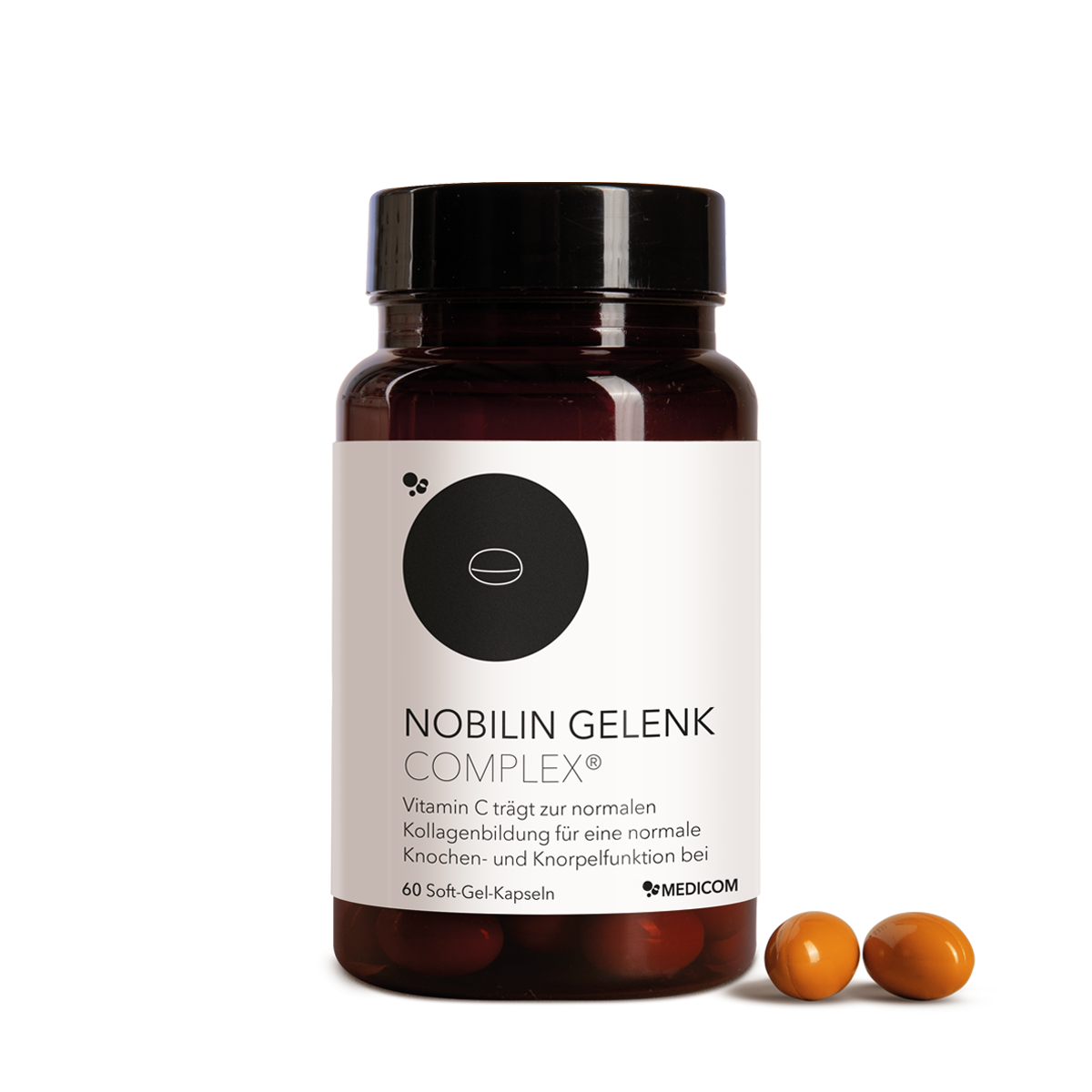
Nobilin Joint Complex®
With curcumin extract, frankincense and hemp oil
What diet is recommended for gout?
When treating gout, the magic formula is "low-purine diet." You don't have to give everything up; you just need to strictly reduce purines. Certain foods are rich in purines. Purines are broken down into uric acid, and too much uric acid in the blood is the culprit that causes gout attacks.
Purines are organic compounds and are produced by the human organism itself. They are a component of cells and are necessary for genetic material as well as for the construction of new cells. However, they also occur in foods, especially in animal products. An excessive intake of purines, paired with a genetic predisposition or a metabolic disorder in the kidneys, can lead to gout. These foods should therefore be avoided as much as possible, and permanently, especially if you have already had a gout attack or have permanently elevated uric acid levels in your blood.
To find out which foods have a particularly high proportion of purines, it is recommended to download a "purine table" from the internet and check your diet for the proportion of purine-rich foods. The devil is in the details, which is why such an overview is a real relief.
In principle, a high purine content is primarily found in animal products. Certain types of vegetables and fruits also contain purines. For example, various types of cabbage, asparagus, and mushrooms are quite high in purines. One should also pay attention to foods with a high proportion of oxalic acid, such as spinach and chard, or not consume them in large quantities, as they can impair kidney function.
You should also avoid dried fruits due to the high proportion of fructose, as a high proportion of fructose also has a negative effect. Animal products are particularly problematic because they are especially rich in purines. These primarily include meat and sausage products as well as fish.
Pork and offal in particular are best avoided entirely.
Prefer lean types of meat (lean poultry, lean beef, or game) and always without the skin. For example, a chicken breast fillet is definitely to be preferred over a roast chicken. Pork and offal in particular are best avoided entirely.
For fish, a low-fat fish fillet, for example, cod without skin, should be chosen. It is better to avoid herring, sprat, tuna, and shellfish.
Also, yeast—especially yeast flakes, baker's yeast, and beer, which contains high proportions of yeast—as well as highly sugary foods and convenience products are absolutely not recommended. If you already suffer from gout and find it difficult to implement the appropriate recommendations, ask your doctor about nutritional counseling.
Conclusion
Gout is a metabolic disease. The predisposition to gout is usually hereditary. Nevertheless, it is mostly lush eating and a high consumption of alcohol and meat, as well as the associated excess weight and lack of exercise, that lead to the dreaded pain attacks.
Therefore, gout is considered a disease of affluence today and is often associated with metabolic syndrome. If gout remains untreated, the attacks occur more and more frequently and at ever-shorter intervals. In chronic cases, the pain attacks may subside, but uric acid crystals continue to be permanently deposited in the joints. The result is chronic destruction of the joints with catastrophic consequences. Therefore, do not take elevated uric acid levels lightly.
Those treating gout turn to a low-purine diet. In this way, everyone can influence the progression of the disease themselves. When diagnosed with gout, a doctor should also regularly monitor the development of the disease and weigh whether medical adjustment is necessary.
Here you will find a podcast interview on the connection between joint pain and nutrition: Joint pain: The cause lies in the diet.
Would you like even more information on the topic? Exciting podcast interview with expert Prof. Döll: Treating joint pain with medicinal plants and mindfulness