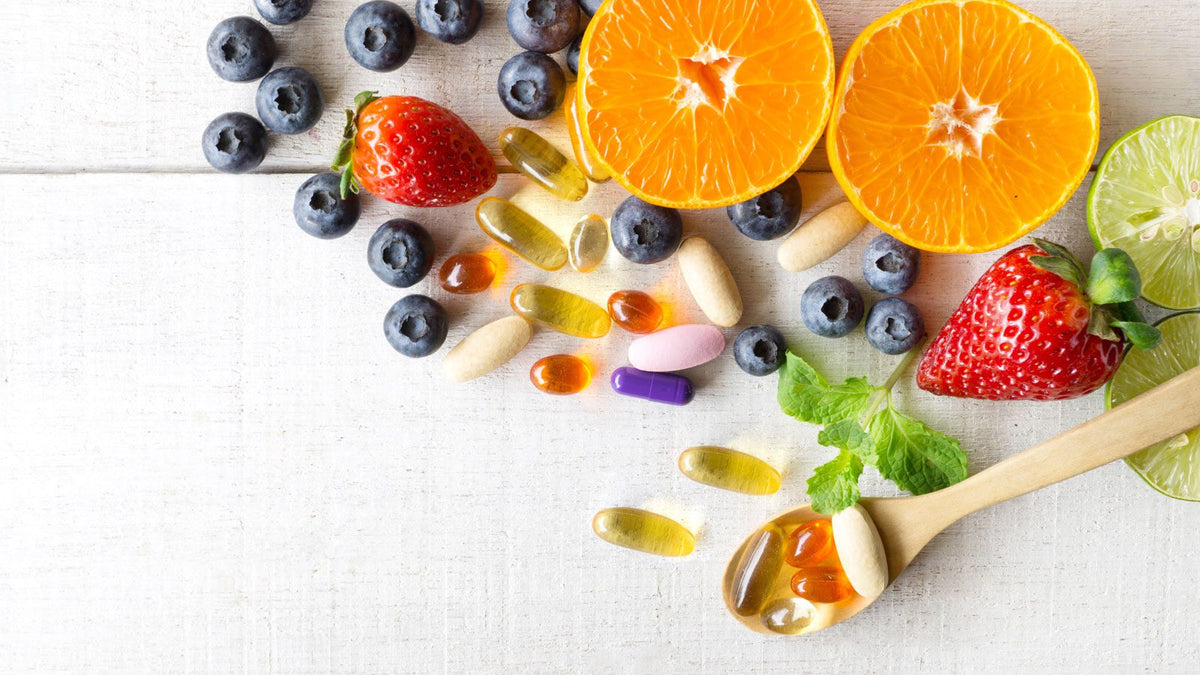
Coming down with another infection? Strengthen your defenses in advance so it doesn't even get that far. Our immune system knows the seasonal challenges and is naturally well-prepared, especially if we have taken good care of our body all year round. At least as well as we take care of our car!
Since we're on the subject: A balanced diet and exercise are part of the basic equipment, but your defenses will appreciate a regular boost even more. This can be in the form of natural combinations of plant extracts, probiotics, and micronutrients such as essential vitamins. They help to strengthen the immune system. But where the selection is vast, good advice is often hard to find. Medicom helps you find exactly the vital substances that support your immune system. Read on!
When does it make sense to support the immune system with essential micronutrients?
If we seem to "magically attract" infections, we should think about this type of prevention, especially in old age, in cases of chronic inflammatory diseases, diets low in vitamins, or stress, or when we are repeatedly exposed to large crowds in winter. Some vitamins and other natural helpers are often a blessing for strengthening the immune system.
Good to know: When taken as dietary supplements, vital substances should be consumed in sensible combinations due to their interdependence and should be based on individual needs.
Almost too late: When the immune system needs quick help
A proven combination for the normal function of the immune system is a good supply of the antioxidant Vitamin C and the trace element Zinc, which is important for antioxidant defense systems. This is particularly true if you are affected by a deficiency due to an increased need or an unbalanced diet, for example.
Oxidative stress, for instance, increases during physical and mental strain. Especially in such cases, and particularly during the cold season, a vitamin-rich diet or the intake of sensibly dosed dietary supplements can be a good idea.
Tip: for short-term support of the normal function of the immune system, a combination of Vitamin C and Zinc is ideal.
Good Vitamin C sources in your diet include, for example:
- Red bell peppers
- Green vegetables such as Brussels sprouts, kale, or broccoli
- Rose hips
- Sea buckthorn juice
- Citrus fruits
- Papaya
- Kiwi
Top Zinc sources in your diet include, for example:
- Oysters
- Liver
- Beef
- Good plant-based sources include poppy seeds, pumpkin seeds, sunflower seeds, and legumes
Tip: Medicom product combo of Zinc plus Vitamin C tablets or, for short-term use, an extra high-dose Vitamin C shot (1000 mg).

Vitamin C Shot 1,000
High-dose, liposomal vitamin C drinking ampoules
In the long run: Strengthening immune function long-term
It has long been known that the gut and the immune system are closely connected. The gut contains a multitude of important immune cells (80 percent) that play a significant role in warding off unpleasant pathogens. Without a healthy gut, our defenses are also weakened.
In addition to the gut-associated immune system, the intestinal flora (microbiome) also plays an important role. The microbiome, i.e., the composition of the gut flora, is vital for the immune system and a healthy immune response. This has been shown by studies conducted by Charité Berlin, the Berlin Institute of Health, and the German Rheumatism Research Center (DRFZ).
Chronic stress, frequent use of antibiotics, and a diet too high in sugar and carbohydrates are among the factors responsible for reducing this important protective system (the natural gut flora consisting of microorganisms) and disrupting its function. This has an impact on our immune system. You can specifically support a healthy gut flora.
Probiotic foods include, for example:
- Yogurt
- Sauerkraut
- Kefir
- Miso (a Japanese seasoning paste)
- Raw milk cheese
- Pickled cucumbers
- Kimchi
Furthermore, there are certain natural substances that serve as a kind of health guardian and can be seen as a form of training for the immune system. These are a specific type of dietary fiber called beta-glucans!
These indigestible fibers are recognized by "phagocytes" in the gut as foreign bodies and are then broken down into "small bits." This attracts granulocytes, a type of white blood cell, which occupy themselves with the harmless "bits," but at the same time, their presence on site destroys pathogens, thereby also strengthening the immune system.
Foods that contain beta-glucans include, for example:
- Oats
- Barley
- Algae
- Asian mushroom varieties such as Reishi, Shiitake, and Maitake
A combination of probiotic products and certain beta-glucans is suitable for long-term immune system training.
What should I consider when taking dietary supplements?
- While Zinc as a dietary supplement is absorbed particularly well on an empty stomach, it can cause stomach discomfort and nausea. A good tip is therefore to take zinc in the evening, 1 to 2 hours after your last meal.
- High-dose Vitamin C should always be chosen in a "buffered" form by those with sensitive stomachs, as this has an almost neutral pH value.
- The intake of probiotic products containing lactic acid bacteria can preferably be started immediately after a course of antibiotics. Tip: As a "gut cure," it should be taken daily over a longer period (4 to 8 weeks) without interruption.
- If you are taking medication prescribed by a doctor, you should always consult them regarding potential interactions when taking additional high-dose dietary supplements. The Medicom team is happy to help with a free consultation on vital substances!
- Other nutrients important for the immune system are the trace element selenium and the most important fat-soluble antioxidant Vitamin E; both are involved in cell protection. These should definitely be supplied to the immune system in cases of deficiency, but not overdosed. Synergistic effects exist between selenium and Vitamin E.
Tip: Vitamin E from Medicom
- Secondary plant compounds such as carotenoids (e.g., lycopene, lutein, zeaxanthin) and flavonoids (e.g., flavones, isoflavones, anthocyanins) can effectively supplement vitamins due to their high antioxidant potential.
Tip: Take Vitamin C as a supplement with a glass of freshly squeezed orange juice (contains citrus flavonoids) or tomato juice (contains lycopene).
Medicom product combo: Nobilin Lyco® and Vitamin C lozenges
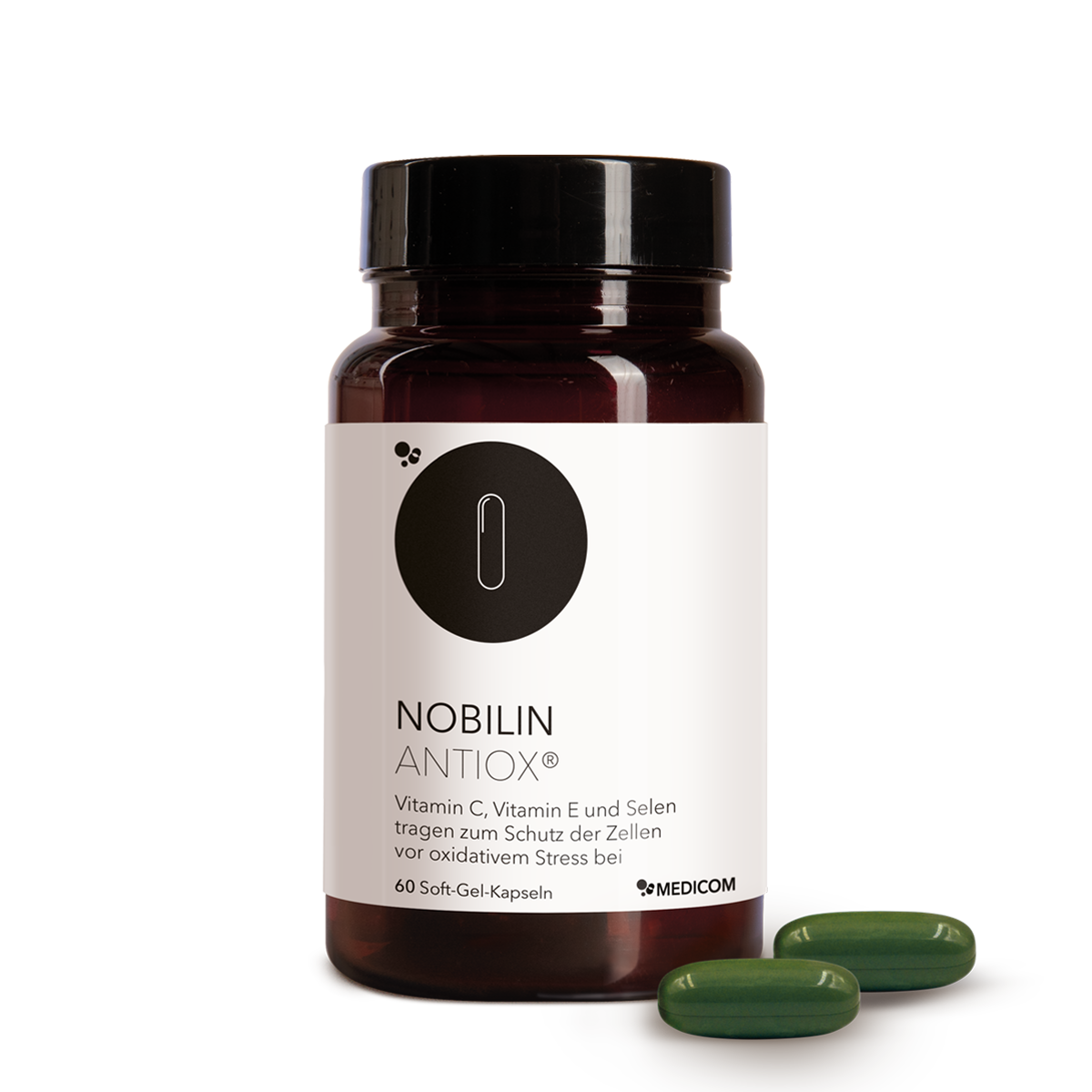
Nobilin Antiox®
Antioxidants from green tea, grape seeds, tomatoes and bitter oranges
Conclusion
Synergistic effects can be utilized through an optimal combination of micronutrients. With certain combinations of micronutrients, the immune system can be strengthened. Many over-the-counter products already take these optimal combinations into account. If you take several substances together, you should always ensure that they sensibly complement each other and seek expert advice.
Would you like to know more about the immune system? Find out more here!