
Welcome to today's Krill Oil Special podcast. Today we are talking about a fascinating topic that affects many expectant mothers: the role of omega-3 fatty acids, particularly from krill oil, during pregnancy and breastfeeding. These are critical phases in a woman's life, and proper nutrition plays a key role during this time. In this podcast, you will learn what the stages of pregnancy look like, what happens during breastfeeding, and which nutrients—above all, omega-3 fatty acids—are especially important during this period.
What are the stages of pregnancy? (Minute 1:14-3:28)
Why is breastfeeding so important? (Minute 3:29-7:43)
What kind of nutrition is important during pregnancy and breastfeeding? (Minute 7:44-11:01)
Why are omega-3 fatty acids important during pregnancy and breastfeeding? (Minute 11:02-12:15)
What do studies say about omega-3 fatty acids in pregnancy? (Minute 12:16-17:05)
Conclusion (Minute 17:07-18:03)
What are the stages of pregnancy?
Pregnancy is an exciting journey, divided into three phases called trimesters. In each trimester, the female body undergoes amazing changes to create a new life. Hormonal adjustments and the baby's development define this time.
Let's look at these three phases in detail:
1st Trimester:
In the first twelve weeks, the miracle of pregnancy begins. The body goes through a phase of intensive cell division. The baby's first organs form. Hormonal changes are particularly noticeable during this time.
2nd Trimester: This period is characterized by active growth and the baby's noticeable movements. But the baby is not just growing: it is also training its breathing, learning to use its muscles, and beginning to see and hear.
In the second trimester, the baby still has plenty of room in the womb, allowing it to go about its gymnastic exercises in peace. These exercises also strengthen joints and bones. The brain is forming valuable neural connections, preparing the nervous system for exploration after birth.
3rd Trimester:
As the 32nd week of pregnancy begins, the brain, nervous system, and organs are ready for life outside the womb. They have reached the necessary maturity and begun their functions. The baby's muscles and bones grow stronger and stronger, preparing for the adventure of life.
To this end, the brain works at full speed: even at the end of pregnancy, dozens of new neural connections are formed. This means the grasping and sucking reflexes are as well-developed as the ability to sniff out and latch onto mom's milk. The baby is now prepared for food intake outside the womb. After birth, this is ideally followed by the breastfeeding period with the mother's own breast milk.
Why is breastfeeding so important?
Breastfeeding is a time of intense bonding and essential nutrition for the newborn. Breast milk provides all the vital nutrients needed for a baby's healthy development. It is easy to digest and contains many immune-boosting and protective substances—making it the best and most natural food for infants in their first half-year of life.
Children who were breastfed often have many health benefits later in life. For example, breastfed babies are less likely to suffer from chronic illnesses in the long term, such as obesity and type 2 diabetes. Breastfeeding for at least five to six months can also protect against and prevent allergies.
But not only the infants, the mothers themselves also benefit health-wise from breastfeeding. In addition to the positive effect on postpartum recovery, it can also reduce the risk of breast and ovarian cancer, as well as the risk of type 2 diabetes. Breastfeeding does not just satisfy the baby's hunger and thirst; it primarily promotes the physical and emotional bond between mother and child.
During the first few days of life, important bacteria colonize the baby's gut. Breast milk creates the optimal breeding ground for the development of a healthy gut flora in the baby.
What does breast milk contain?
Breast milk contains important bioactive proteins, such as immunoglobulins, antibodies, cytokines, and lactoferrin, which contribute to the newborn's immune protection. They slow the spread of pathogens until the child's own immune system gradually takes over this function after a few weeks. The composition of breast milk changes over time.
The first milk produced by the breast after the baby is born is called colostrum. It is produced only in tiny amounts, about 40 to 50 ml in 24 hours. Just as much as the baby's tiny stomach can hold. Colostrum is thick and has a yellow to orange color. It is particularly nutritious—and protects like a first vaccination! Its proportion of antibodies and white blood cells is particularly high, and it seals the permeable gut wall of the baby so that no harmful substances can enter the blood. It also has a laxative effect to make it easier for the baby to pass the first stool, the so-called "meconium."
How breast milk changes
In the baby's first week of life, the amount of breast milk usually increases. This is also referred to as "transitional milk." It becomes creamier in color and texture and has a higher fat, calorie, and lactose content. It is the ideal food for the rapidly growing newborn. The amount the baby drinks also increases now.
From the fourth week onward, breast milk no longer changes as drastically: the nutrient content and concentrations of ingredients in mature breast milk generally remain relatively constant. It is rich in proteins, sugar, vitamins, and minerals, as well as numerous bioactive ingredients—such as hormones, growth factors, enzymes, and living cells. In this way, breast milk ideally promotes the baby's growth and development.
Nevertheless, the composition of breast milk can change from day to day and from feeding to feeding! If, for example, the mother or baby gets sick, the body produces corresponding antibodies to fight the illness.
After six months, solid foods are gradually introduced, but breast milk remains an important source of nutrients. The mother and baby decide when the right time for weaning has come.
What kind of nutrition is important during pregnancy and breastfeeding?
A balanced diet is crucial now. Actually, this starts from the moment the desire for a child is actively planned. The right vital substances prepare the body for a future pregnancy, support the mother's health, the baby's development, and provide for both mother and infant during the breastfeeding period.
It is advisable to cover the increased calorie requirements with nutrient- and fiber-rich foods that contain many vitamins and minerals: fruits and vegetables, whole grain and dairy products, potatoes, rice, and legumes. Unsaturated fatty acids are important for the development of the child's brain, while milk sugar helps to build up a healthy gut flora.
Why iodine during pregnancy?
Furthermore, the requirement for iodine is increased during breastfeeding, and the iodine content of breast milk depends largely on the mother's own iodine supply. Since iodine deficiency during breastfeeding—just as during pregnancy—can impair the physical and mental development of the child, a sufficient iodine supply is therefore important.
Calcium during breastfeeding
During breastfeeding, the mother's bone density decreases. Once menstruation starts again, remineralization of the bones occurs—the body needs calcium for this.
Iron during pregnancy
The body loses a lot of iron due to pregnancy. During breastfeeding, the body should therefore be supplied with plenty of this trace element. Meat, oats, kale, whole-grain bread, carrots, and millet are the best sources of iron. It is best to take these together with a glass of orange juice or, for example, eat pieces of bell pepper on whole-grain bread. Orange juice and bell peppers contain vitamin C, which improves iron absorption.
Folic acid during pregnancy and breastfeeding
Folic acid is essential both during pregnancy and breastfeeding to support cell growth processes and promote blood formation in the child. In addition, if folate levels are too low during pregnancy, there is a risk of neural tube defects in the child. The neural tube is the precursor to the brain and spinal cord in the embryo. It normally closes within the first four weeks after the egg is fertilized. Sufficient folate levels should therefore be reached at a time when many women do not even know they are pregnant yet.
According to the German Nutrition Society (DGE), all women who want to or could become pregnant should take 400 micrograms of synthetic folic acid in the form of a dietary supplement in addition to a folate-rich diet to prevent neural tube defects.
Vitamin D - Preventing pregnancy complications
The intake of vitamin D is also recommended. The "sunshine vitamin" is not only important for bone metabolism. A vitamin D deficiency can increase the risk of gestational diabetes (pregnancy diabetes), as well as preeclampsia, a pregnancy-related condition, and premature birth. You can find more information on this in the show notes of this podcast below. (1)
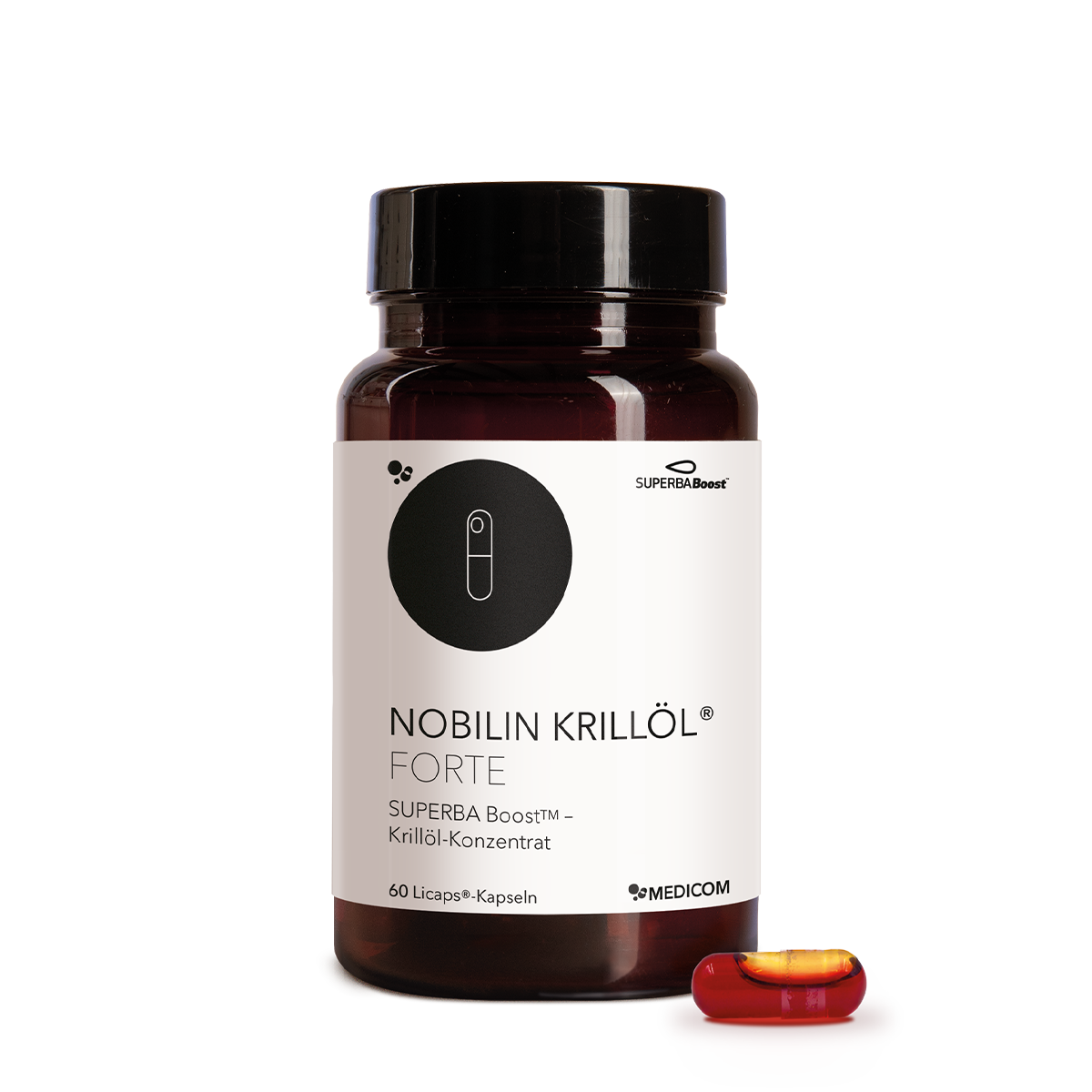
Nobilin Krill Oil® Forte
The best source of omega-3 in capsule form
Why are omega-3 fatty acids important during pregnancy and breastfeeding?
Let's now turn to krill oil and the special significance of its long-chain unsaturated omega-3 fatty acids, EPA and DHA, during pregnancy and breastfeeding. DHA, in particular, is the key player in the baby's neurological development. It promotes the formation of brain and nerve cells and is important for eye development.
EPA and DHA are contained in both fish oil and krill oil. Those from krill oil are bound to phospholipids and are therefore more tolerable and more effectively utilized by the body than those from fish oil. Omega-3 fatty acids are like a natural powerhouse for neurological development. According to the European Food Safety Authority, maternal intake of omega-3 contributes to the normal development of the eye and the normal brain development of the fetus and breastfed infants. This applies with a daily intake of 200 mg of DHA in addition to the recommended daily intake of omega-3 fatty acids, 250 mg of EPA and DHA, for adults.
What do studies say about omega-3 fatty acids in pregnancy?
Let's take a look at the scientific side. Numerous studies show that omega-3 fatty acids have positive effects on the health of mother and child.
Study: Fewer premature births due to omega-3 fatty acids
In 2006, a fascinating meta-analysis provided exciting insights: sufficient supply of the omega-3 fatty acids DHA and EPA to expectant mothers could extend pregnancy duration slightly but significantly. Consequently, the little ones tended to be born larger and with a higher birth weight.
Interestingly, a Cochrane Review in the same year supported these findings. A brief explanation: a Cochrane Review is a systematic review of scientific studies conducted by the independent Cochrane Collaboration. These reviews are, so to speak, the gold standard in medical research and offer a comprehensive summary of existing research results on a specific medical topic.
In this case, it turned out that the rate of premature births before the 34th week was one-third lower than in the general population, i.e., those mothers who consumed less omega-3 in comparison. Exciting findings from the world of health research! (2)
Meta-analysis: Omega-3 fatty acids and the baby's brain functions
Especially the omega-3 fatty acids EPA and DHA accumulate in the brain and nerve tissue, and the fetus stores them there in exponentially increasing concentrations, especially from the 25th week of pregnancy.
Various meta-analyses document the significance of this, especially in the last trimester and in the first months of life. These show that pregnancy lasts slightly but significantly longer in women who are well-supplied with DHA and EPA. Their babies tended to be larger, heavier, and had a larger head circumference. Furthermore, there were significantly fewer premature births, which may be due to the influence of omega-3 fatty acids on uterine contraction and inflammatory processes. (3)
Study: Omega-3 fatty acids good for the baby's visual function
The results of another study from 2018 suggest that the consumption of omega-3 fatty acids during pregnancy and the perinatal serum fatty acid status may be linked to the neurological development of the visual system in infancy. Here, perinatal means between the 22nd week of pregnancy and the days after birth.
This study investigated how the nutrition of pregnant women, especially the consumption of omega-3-rich fish, influences the development of the babies' visual system. The results suggest that fish consumption during pregnancy could be linked to improved neurological development in the visual system in infancy. Briefly explained: neurological development in the area of the visual system includes the maturation of the eyes, the optic nerve, and the visual cortex in the brain, i.e., the center of visual perception. (4)
Therefore, it is recommended for pregnant women who do not regularly eat fatty sea fish to supplement the omega-3 fatty acid DHA via dietary supplements. This can be read in the recommendations for action on the topic "Nutrition in Pregnancy" from the German Nutrition Society (DGE). (5)
But which omega-3 source should one choose to ensure the best possible supply during pregnancy and breastfeeding? Omega-3 fatty acids from fish oil are a good source, but omega-3 fatty acids from krill oil are more tolerable and have particularly high bioavailability. We already spoke about this in detail in episode 3 of our Krill Oil Special series titled: What are the advantages of krill oil over fish oil? A quick reminder: the omega-3 fatty acids in krill oil are bound to phospholipids, which is why they are better incorporated into the cells. Krill oil also offers another interesting ingredient: choline.
Choline from krill oil during pregnancy and breastfeeding
The European Food Safety Authority also recommends the intake of choline. An additional intake of choline by women during their pregnancy and breastfeeding period contributes to normal liver function in fetuses and exclusively breastfed children. (6)
You can find the sources for this and all other previously mentioned studies linked in the show notes, as always.
Conclusion
Let's move on to the conclusion. In this podcast, we have explored the fascinating phases of pregnancy and breastfeeding. During these life phases, proper nutrition is worth its weight in gold. Omega-3 fatty acids from krill oil play a crucial role in the baby's neurological development and vision. Studies support the positive effects of omega-3 fatty acids during pregnancy and breastfeeding. A comprehensive diet with other important nutrients such as folic acid and vitamin D is the key to the health of both mother and child.
Thank you very much for joining us. We hope that this podcast has provided you with helpful insights. Stay healthy, and we wish you all the best if you are trying to get pregnant, are currently pregnant, or are breastfeeding. Goodbye, and see you next time.
Show notes
Sources:
1.) https://www.aerzteblatt.de/nachrichten/54513/Vitamin-D-Versorgung-in-der-Schwangerschaft-nicht-ausreichend
2) https://www.pharmazeutische-zeitung.de/ausgabe-202007/folsaeure-und-omega-3-fettsaeuren-auch-fuer-stillende/
3) Citation: Middleton P, Gomersall JC, Gould JF, Shepherd E, Olsen SF, Makrides M. Omega-3 fatty acid addition during pregnancy. Cochrane Database of Systematic Reviews 2018, Issue 11. Art. No.: CD003402. DOI: 10.1002/14651858.CD003402.pub3
4) https://europepmc.org/article/med/30237571 (2018)
5.) https://www.dge.de/gesunde-ernaehrung/gezielte-ernaehrung/ernaehrung-in-schwangerschaft-und-stillzeit/handlungsempfehlungen-ernaehrung-in-der-schwangerschaft/
6) EFSA assessment: Choline is essential for pregnancy and breastfeeding (deutsche-apotheker-zeitung.de)
Are you interested in products that support your relaxation and sleep? You can find more on this here.