
Magnesium is also known as the anti-stress mineral. Most people associate the word magnesium with a remedy for muscle cramps. However, this mineral fulfills many other important functions in our body.
What is magnesium used for?
Magnesium is essential for all organisms. This vital mineral is found, for example, in the chlorophyll of plants, such as that contained in matcha tea. The body of an adult human contains approximately 20 grams of magnesium, which performs many important functions: the mineral is indispensable for your energy metabolism, ensures the balance between tension and relaxation of your muscles, inhibits the release of stress hormones, and supports the mineralization of your bones and teeth.
In fact, the role of magnesium for your organism can hardly be overestimated. It is, for example, involved in the activation of over 300 enzymes and thus in numerous metabolic processes. Free magnesium ions play a role in the immune system as secondary messengers and stabilize the resting potential of cells not only in the muscles but also in the nerves. Also important is the mitigating influence that this essential mineral has on the stress hormones adrenaline and noradrenaline. The performance of your muscles relies on magnesium. This also includes your heart muscle.
What does magnesium have to do with calf cramps?
As an essential mineral, magnesium is one of the electrolytes and plays a decisive role in their balance within your body. A balanced ratio of electrolytes ensures the perfect equilibrium of muscle tension and relaxation. If you suffer from muscle cramps more frequently – calf cramps are typical – then the calcium concentration in your organism is likely too high in relation to magnesium. Magnesium relaxes the muscles by reducing the influx of calcium and thus the tendency toward cramping.
Which foods provide this mineral?
A high concentration of magnesium per 100 grams is found primarily in pumpkin and sunflower seeds. But flaxseeds, nuts, dark chocolate, whole grain products, corn, spinach, bananas, and fish also contain significant amounts of magnesium. Mineral water also provides you with magnesium, often together with calcium, where a 1 to 2 ratio is optimal.
How much magnesium do I need?
The German Nutrition Society recommends a daily intake of 300 milligrams of magnesium for women over 25 years of age. For breastfeeding women, it is as much as 390 milligrams. Men should consume 350 milligrams per day, while male adolescents and young adults between 15 and 25 years of age have the highest daily magnesium requirement at 400 milligrams.
Some scientists, such as Nicolai Worm, a professor at the German University for Prevention and Health Management (DHPG), consider these guidelines too low and recommend higher doses for optimal supply. The National Consumption Study II, published in 2008, identified a magnesium deficiency in a good 25 percent of adults in Germany. Special risk groups include pregnant women, breastfeeding women, seniors, and above all girls between 14 and 18 years of age.
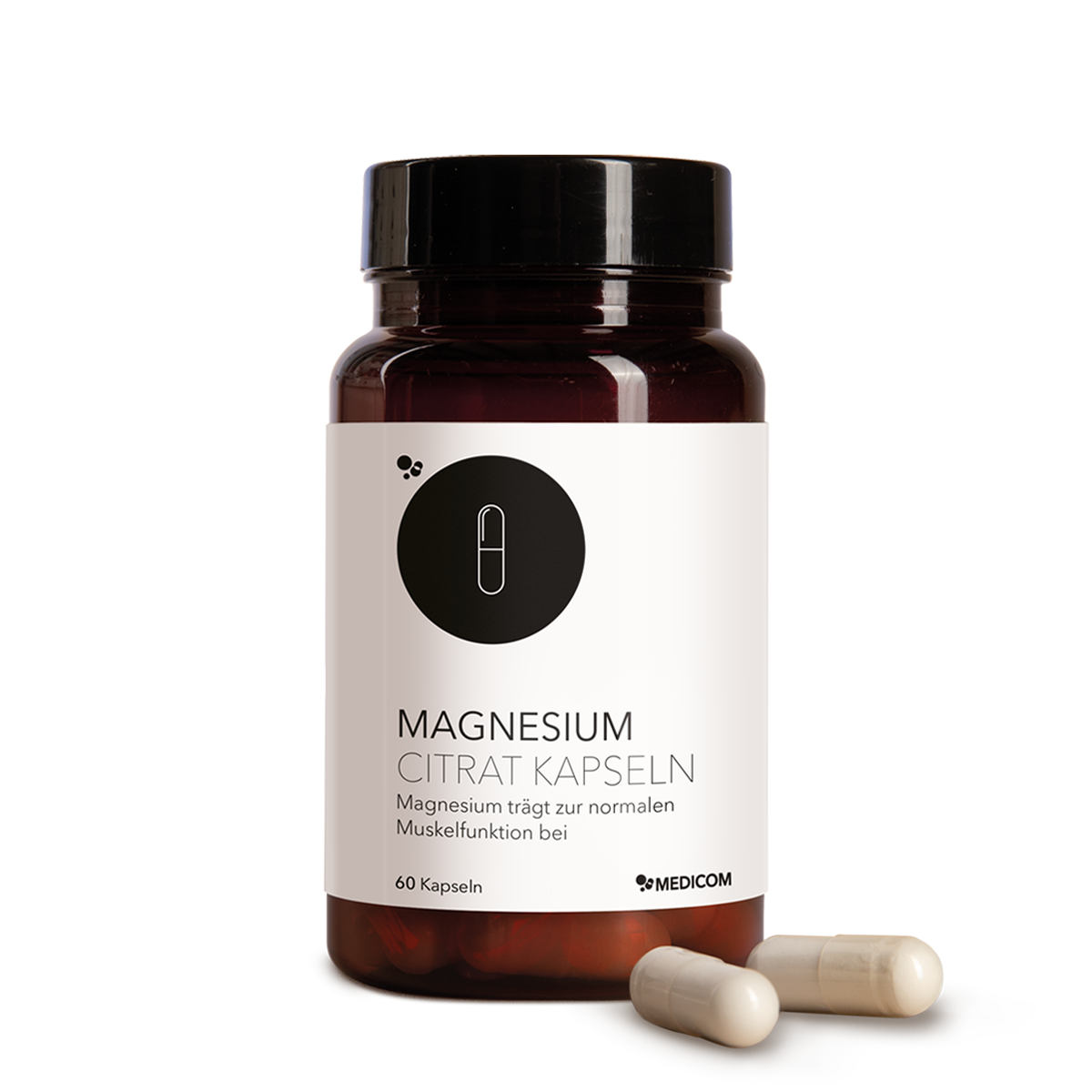
Magnesium Citrate Capsules
The anti-stress mineral
What promotes magnesium deficiency?
People who exercise heavily and intensely, work physically hard, and sweat a lot lose a great deal of magnesium in the process. The requirement is also increased for pregnant and breastfeeding women. If you are under a lot of stress, suffer from diabetes, or drink alcohol more than twice a week, your risk of a magnesium deficiency is also increased.
How do I recognize a deficiency?
Only a drastic magnesium deficiency can be detected through a blood count. As a rule, your magnesium stores are already quite heavily depleted by then. There are a number of symptoms that can indicate deficiency symptoms earlier. In addition to the aforementioned muscle cramps, these include cold feet, difficulty falling asleep, restless legs, twitching eyelids, and tense back or neck muscles. Increased irritability, heightened nervousness, as well as fatigue, listlessness, and concentration problems are also typical. Headaches and cardiac arrhythmias can also indicate a long-lasting deficiency.
What should I consider when taking magnesium?
To prevent deficiency symptoms or to remedy them, taking magnesium supplements can be useful. You should be aware that your body only utilizes a portion of the orally ingested amount of magnesium. According to various studies, absorption depends on the size of the dose. Accordingly, about 35 percent of 120 milligrams of orally ingested magnesium is absorbed, but at 360 milligrams, it is only 18 percent.
For magnesium from dietary supplements to remain in your organism, there must be enough binding molecules present. Since these only form through biochemical adaptations over the period in which you are taking an increased amount, you should use such dietary supplements for at least four weeks. Also note that magnesium forms a particularly good combination with calcium.
Conclusion
Magnesium is a vital mineral that fulfills diverse functions in our body because it is involved in numerous metabolic processes. Magnesium supports the entire musculature, including the heart muscle. The mineral is also known as the "anti-stress mineral." It is responsible for the tension and relaxation of the muscle and the transmission of nerve impulses.
Incidentally, 95% of the total magnesium supply is located in the cells, more than half of which is stored in the bones, from which magnesium can be released quite quickly when needed. A magnesium deficiency is therefore often not recognized, as it is difficult to detect in the blood.
Symptoms such as muscle tremors or muscle cramps, calf cramps, back and nerve pain, susceptibility to stress, insomnia, and internal states of tension are often well-known.
• Are you interested in products with magnesium? Then read on here.